
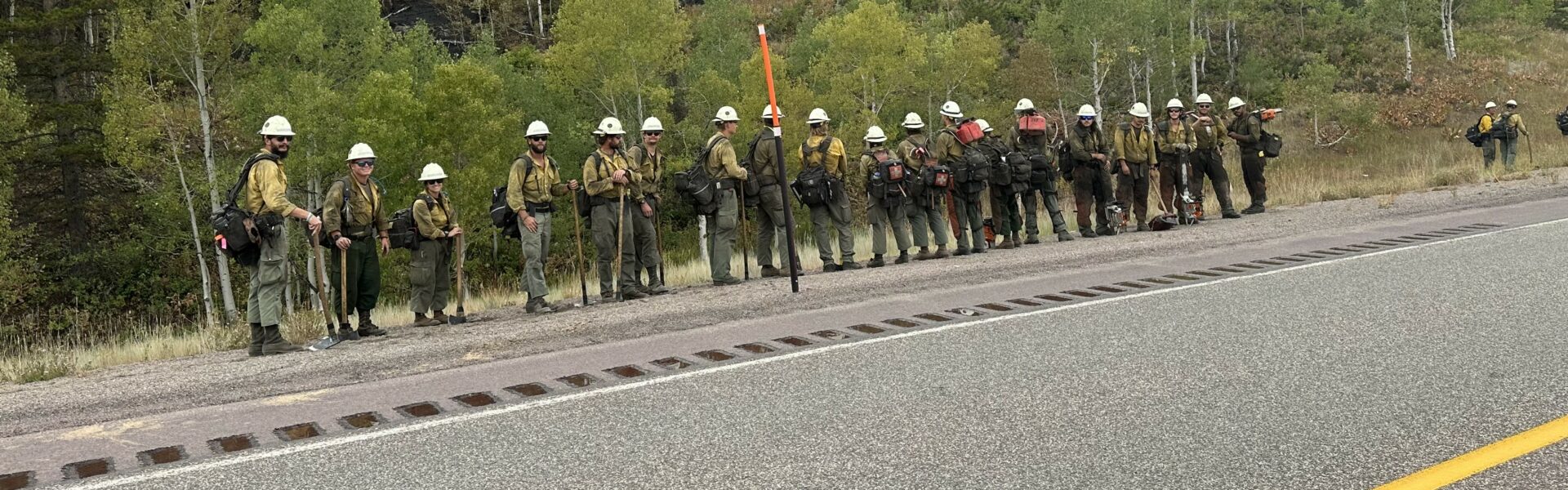
SVI Radio Interview: Kade Johnstone, Hot Shot crew fighting the Willow Creek Fire

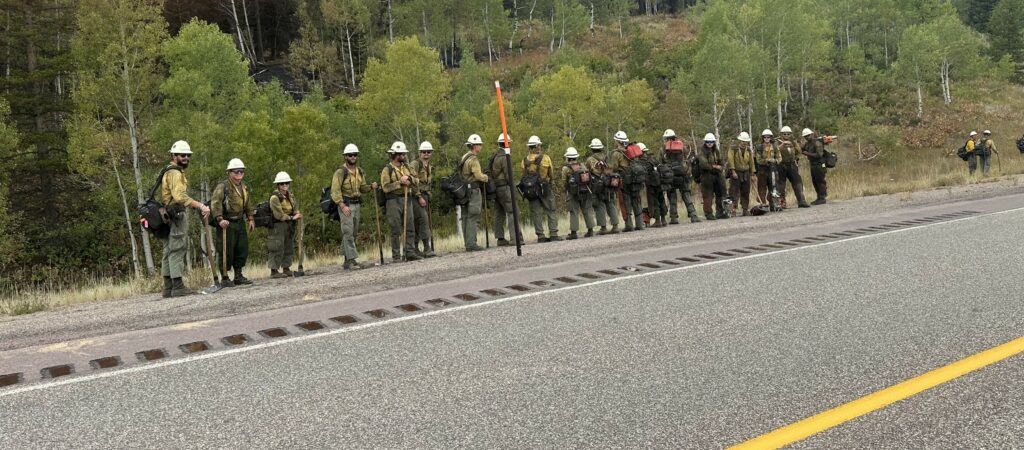
Kade Johnston, Crew Boss Trainee for the hot shot crew currently fighting the Willow Creek Fire south of Smoot, called into the Weekday Wake-up on Tuesday, August 26 to talk about keeping the fire from jumping the highway Saturday night, the current status of the fire and the plan of attack moving forward.
(0:00) It’s 8.03 this morning live on Swift 98 and the Spur. A chance to touch base with one of the (0:05) firefighters working on the Willow Creek fire this morning, Cade Johnstone. He’s the crew boss (0:10) trainee.
He’s one of the hotshot crews working on the Willow Creek fire. Cade, good morning. Thank (0:15) you so much for your time.
How are you today? Doing good, Duke. How are you doing? Hey, doing (0:19) well. Thank you for your time.
First off, tell us about yourself, where you’re from, and how long (0:23) have you been fighting wildfires? Yeah, so I’m based out of Southern California. The crew is (0:29) based out of Mentone in San Bernardino National Forest, and I’m going on my third year with (0:33) the Willow Creek Hotshots. Okay, and what got you into this? Why did you decide one day that you’re (0:38) like, I’m going to go fight wildfires? How did that work? I mean, my dad’s a firefighter.
He (0:44) works in Redlands over there in SoCal, and I wanted to become a firefighter at some point, (0:47) and being a hotshot, I saw what they do, the hard work, the camaraderie, all that kind of stuff. (0:53) That’s what made me want to do this job and got me into it, playing baseball. Camaraderie is the (0:57) main thing for me, and just hard work and being around fire.
Very cool. Well, we appreciate what (1:01) you guys are doing for the Willow Creek fire, and I’d like to go to Saturday night specifically. We (1:06) had one of our reporters up there, and during that time when it was burning right up next to (1:11) the highway at the top of the pass, and you guys were there trying to make it from, well, you did (1:16) a great job keeping it from jumping the highway.
So walk us through that, maybe Saturday night (1:20) specifically, and how you guys use the road as a fire break and how that works. Yeah, so driving up (1:26) on the fire, we came late in the afternoon, and we saw a trajectory going straight for Highway 89. (1:32) So our main objective was to hold that, so we put our troops in there.
We watched the fire, (1:37) see what it was doing, see where it was throwing spots, and our main objective was if you got a (1:41) 50-foot fuel break already, naturally made. So holding that was the main priority that day, (1:47) and with it burning up to the highway, we just watched, made sure that it didn’t spot over, (1:51) and if it did spot over, we attacked it, made sure that it wasn’t going to. And yeah, that was our (1:56) main priority for that day.
When you say you attack it, what does that mean? How does that work? (2:01) What’s that process? Yeah, so like we have guys looking on the green side of the Highway 89, (2:06) making sure that the spots aren’t taking, you know, making runs, anything like that, and we just, (2:11) you know, start burying any spots, you know, all the embers are getting thrown by the trees. That’s (2:14) the main fuel type out here. So making sure all those embers, you know, are put to bed and making (2:18) sure, you know, they’re all good for the next day.
Talking with Kay Johnstone this morning. He’s one (2:23) on the hotshot crew working at the Willow Creek Fire. So Saturday night was, for us that live here, (2:29) it was kind of an eye-opening night because we’re seeing pictures and images and videos of the (2:34) flames burning right up next to the highway like that.
The evacuation order goes into effect for (2:39) some people in that area, but it seemed like that was kind of a transition point, if I’m not (2:45) mistaken, between Saturday night and Sunday. And give us your thoughts on that. What happened (2:51) between all those amazing images we saw Saturday and then compare it to Sunday, (2:55) where it seemed like things were a lot more controllable? Yeah, so that day, you know, (3:00) the fire activity was picking up and right when we drove up, you know, it started torching and (3:03) running towards the highway.
So right when it hit the highway, you know, we were able to, (3:06) you know, control, you know, fight the fire up from the highway, do some burning operations to (3:10) put fire down on our own terms. And going on to the next day, you know, it doesn’t have any fuel (3:15) to burn. So with the weather coming in, you know, the rain, I think it’s a great turning point for (3:20) us, you know, be able to attack the fire direct and, you know, be able to put this thing to bed (3:23) pretty soon.
What’s the strategy now moving forward specifically when you guys are now (3:28) attacking the fire and put it to bed in your words, what specifically are you doing there? (3:34) Yeah, so we’re trying to go direct to the Black Sedge, you know, find the Black Sedge and cut (3:38) the fuel out before the fire is able to burn it. And that’s probably the best way we’re able to (3:42) fight fire and that’s our bread and butter over there in Southern California. So going direct, (3:47) kind of fuel out and make sure it’s not going to go anywhere.
And, you know, just finding points (3:51) of access to get to the fire because there are some areas that we can’t get access to, but the (3:55) locals out here, you know, they’re great. You know, see TV rides and making sure that we’re able to (3:59) fight the fire as efficient as possible. Okay, Johnstone, he’s a crew boss trainee with the (4:04) Hotshot crew working on the Willow Creek Firecade.
Thank you again for your time. Anything else you’d (4:08) like to mention here on the air while we got you in regards to the Willow Creek Fire? (4:13) Yeah, I really appreciate the community. You know, the community has been really helpful.
A lot of (4:18) people bringing in care packages, stuff like that, but that’s not, I mean, we enjoy that stuff, but (4:22) the people that, you know, brought us out there and UTVs get local knowledge, that’s probably the (4:27) best thing, our best asset right now is the community. So we appreciate the community out (4:31) here, especially coming from Southern California. Everyone’s so helpful and so nice.
So yeah, we (4:35) really appreciate that. All right, Kade, thank you for your time. Wish you guys the very, very best (4:40) and good luck.
I appreciate it. Thank you. Have a good one, Duke.
That again is Kade Johnstone. (4:45) He’s the crew boss trainee on the Hotshot crew that’s currently working on the Willow Creek (4:49) Fire right now. It’s all part of the weekday wake up this morning on the SVI Radio Network.

1 COMMENTS
Comments are closed.