

By Carrie Haderlie
Wyoming Tribune Eagle
Via- Wyoming News Exchange
CHEYENNE — With just over two weeks until the 2026 budget session, the Wyoming Legislature’s Select Committee on School Finance Recalibration voted Friday to sponsor a 95-page, estimated $1.8 billion bill covering K-12 public school funding.
For two days, the committee listened to members of the public express concerns about potential decreased funding for classroom teachers and increased class sizes, among other proposed changes.
The draft bill is largely intended to achieve recalibration, or an update, to the state’s K-12 funding model, which is mandated every five years.
By midday Friday, lawmakers had offered a dozen amendments to the bill, including some that would mean more funding for education statewide. Lawmakers voted 12-0 to approve the draft bill, which will need legislative approval during the budget session that begins Feb. 9.
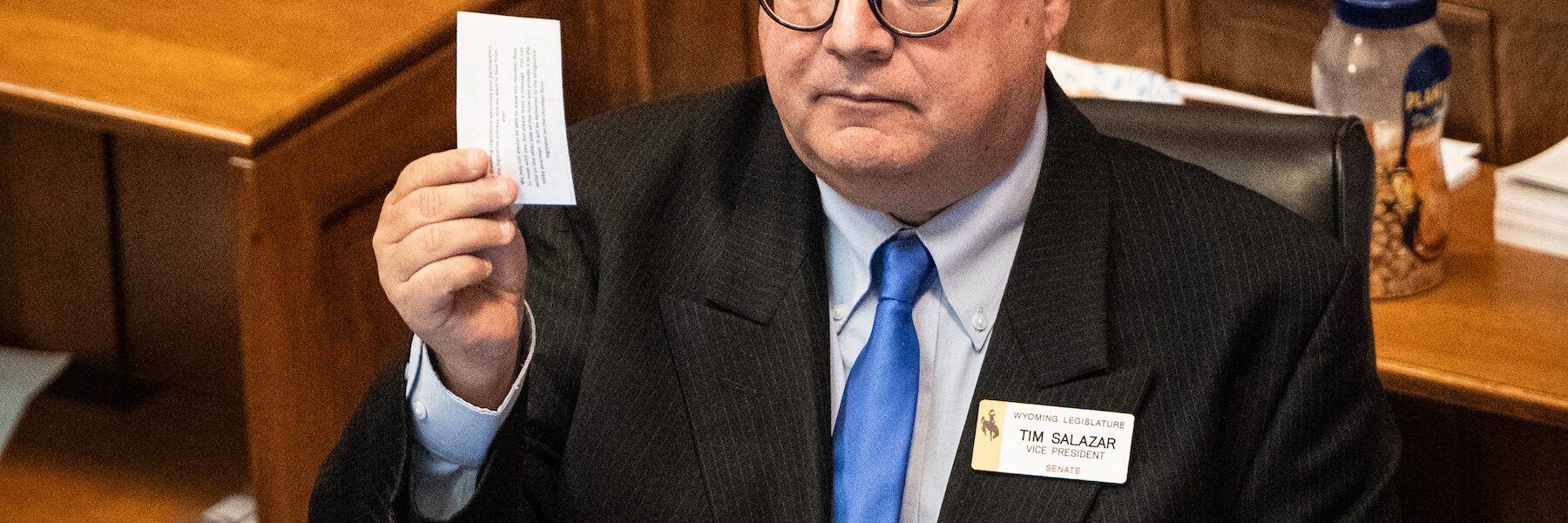
“We want a recalibration bill. It isn’t by luck that we had a unanimous vote today and that we have a bipartisan bill,” Committee Chairman Sen. Tim Salazar, R-Riverton, said.
Sen. Chris Rothfuss, D-Laramie, and Rep. Mike Yin, D-Jackson, are the only Democrats on the 12-member panel.
Different from other periods of recalibration, lawmakers this year must also contend with a 2025 ruling from a Laramie County district court judge that Wyoming has been unconstitutionally underfunding its K-12 public schools.
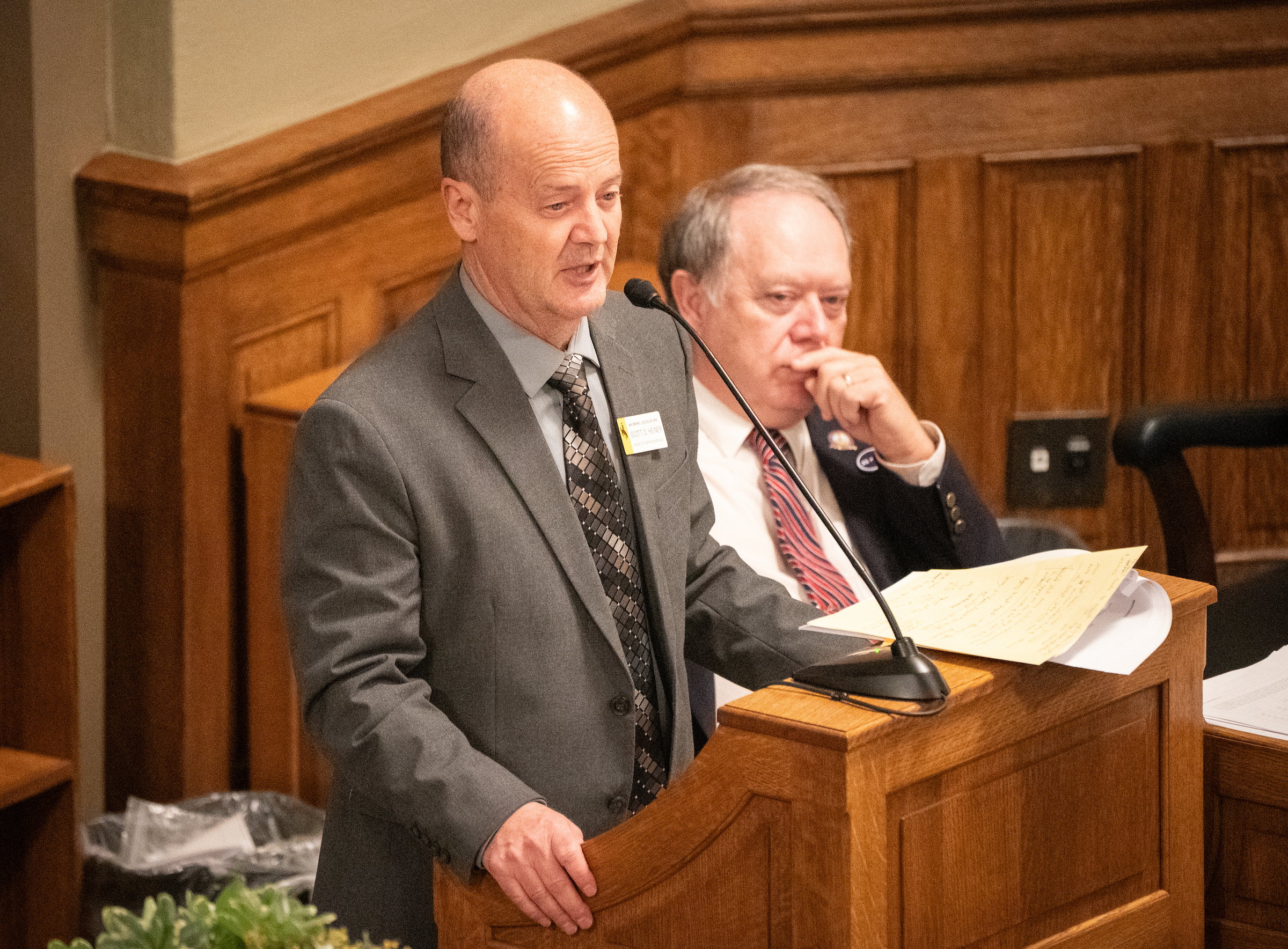
On Thursday, Rep. Scott Heiner, R-Green River, said the committee split its plan for recalibration into two parts: In the upcoming session, lawmakers will focus on “traditional” recalibration topics like average daily membership formulas, teacher salaries and educational block grant funding.
During the next interim, lawmakers will tackle elements mandated for recalibration per the 2025 district court ruling, including funding for school resource officers, school nutrition and mental health counselors.
“We don’t want to put a Band-Aid on (those topics),” Heiner said.
What’s in the draft bill
Current law would generate $1.78 billion in educational costs, according to school finance consultant Larry Picus of Picus Odden & Associates. A 2025 evidence- based model for recalibration would cost $1.897 billion, for an increase of $88 million. The Select Committee’s recommendation at the beginning of the week came to $1.809 billion, or an $11.7 million increase.
Amendments offered Friday could raise that by around $30 million. A fiscal impact statement will be available next week, Legislative Service Office Senior School Finance Analyst Matthew Willmarth said Friday.
The committee’s initial recommendation was to use prior-year enrollment numbers to arrive at a district’s average daily membership, a number used to calculate funding per district. That would have reduced the state’s student count by around 2,000 students.
Consultant Amanda Brown, of Augenblick, Palaich and Associates, suggested a “soft landing” approach, using the greater of either the prior year enrollment or a three-year average for each district. On Friday, Rep. Andrew Ocean, R-Laramie, offered a motion to limit the maximum reduction in ADMs a district could experience to 5% from the previous year. His amendment was adopted.
The state’s funding model currently includes one full-time teacher for every 16 elementary students. On Thursday, the Select Committee’s recommendation was to change that to one FTE for every 15 K-3 students, and one FTE for every 25 fourth- through sixth- grade students.
The current model includes one FTE per 21 middle and high school students. The funding model recommended by the Select Committee would raise that ratio to a single FTE per 25 middle and high school students.
Sen. Wendy Schuler, R-Evanston, offered a motion to modify the numbers for K-3 back to a 16:1 ratio, and a ratio of 22:1 instead of 25:1 for grades four through eight.
“I think it will be an estimated impact statewide of about $10 million, and an increase of 96 teachers,” Schuler said. “If I thought I could get 21 back in fourth through eighth, I would. But we are all about compromise.”
The average teacher salary in the model for 2026-27 is $70,560, and the baseline teacher salary before the district rebased regional cost adjustment was $63,504. The bill draft also includes an amended cap on total compensation for superintendents, stipulating that it cannot exceed 2.33% of average teacher total compensation.
Concerns: class sizes, teacher ratios, state insurance
The committee heard from parents, teachers, district staff and superintendents about the effect the proposed recalibration would have on education.
Alex Petrino, Natrona County school board member and parent, speaking as the president of the Wyoming Counseling Association, told the committee that a quality education includes a full system of support to help students show up, stay healthy and learn.
“The truth is, kids can’t learn if they are not OK,” Petrino said. “I need to say this plainly. Our kids are suffering now, our kids are dying now, and they need support now.
“(Educational teams) want someone to respond when a student is suicidal.
They want someone to respond when a student is escalating, and they want someone to support the kids before they hit their breaking point,” she said. “And yet, this committee is
talking about taking away the very basic support that the students need where they spend their day.
“This is not recalibration. This is destabilization,” Petrino said.
Sen. Bo Biteman, R-Ranchester, offered an amendment to fund counselors and nurses per the evidence-based model by 2027-28, if the committee does not settle on another option. Rep. John Bear, R-Gillette, amended Biteman’s motion to extend mental health grant funding for another year. Both were approved by the committee.
Others pointed out a “hidden trade-off” in the plan: Salaries would rise, but the gain disappears with larger class sizes and cuts to funded teacher positions. Class sizes in the current model are “spot on,” said Scott Stults, superintendent for Sheridan County School District 2.
“If we use the class-size model that is currently presented (in the draft bill), here’s what happens to District 2. We lose 14 elementary teachers. We lose 13 junior high teachers. We lose 10 high school teachers,” he said.
How Schuler’s motion to amend the bill from a ratio of 25:1 to 22:1 in grades fourth through eighth will impact SCSD2’s numbers was unclear Friday afternoon.
Washakie County School District 2 Superintendent Annie Griffin said Thursday that under the committee’s recommendation, staff would go from 16.5 to nine, for a total loss of about $600,000 in Tensleep.
“We’re already barebones in Tensleep. We have one teacher per core subject,” Griffin said.
Her teachers already combine grade levels when numbers are low. The school principal is also the district’s curriculum director, and Griffin herself is the special education director.
Beau Fulton, board member for Park County School District 1 in Powell, urged the committee to keep its block grant model, arguing it gives districts flexibility “to do what is right for our kids.
“Please don’t take away our local control,” he said.
Speakers also expressed concern over moving all districts to the state employees’ group insurance plan.
Amanda Ysen, business manager for Fremont County School District 2 in Dubois, said that adding participants to the state plan would not automatically guarantee savings. She encouraged lawmakers to evaluate potential negative impacts on health-care competition and access, and to complete a comprehensive cost analysis of moving school districts to the state plan.
Department of Administration and Information Director Tricia Bach said that bringing on all the school districts would likely double the number of participants, meaning her department would need to expand from 10 staff members to 20. Cigna Healthcare currently administers the state plan, and only Natrona County School District 1 participates.
She confirmed that the state has not studied bringing all school districts into state insurance since 2005.
“One of the biggest issues is, how do we bring them on in bulk, but we also have to pay their claims on day one?” Bach said. “We would have to be funded right around $50 million.”
Rep. Tom Kelly, R-Sheridan, offered a motion to strike the insurance plan changes in the model, but his motion died for lack of a second. Rothfuss offered another motion, which was adopted, that the state gather additional data on adding districts to the state insurance plan.
The above story may be used ONLY by members of the Wyoming News Exchange or with the express consent of the newspaper of its origin.