SVI Radio Interview: David Giralt, Republican candidate for Congress

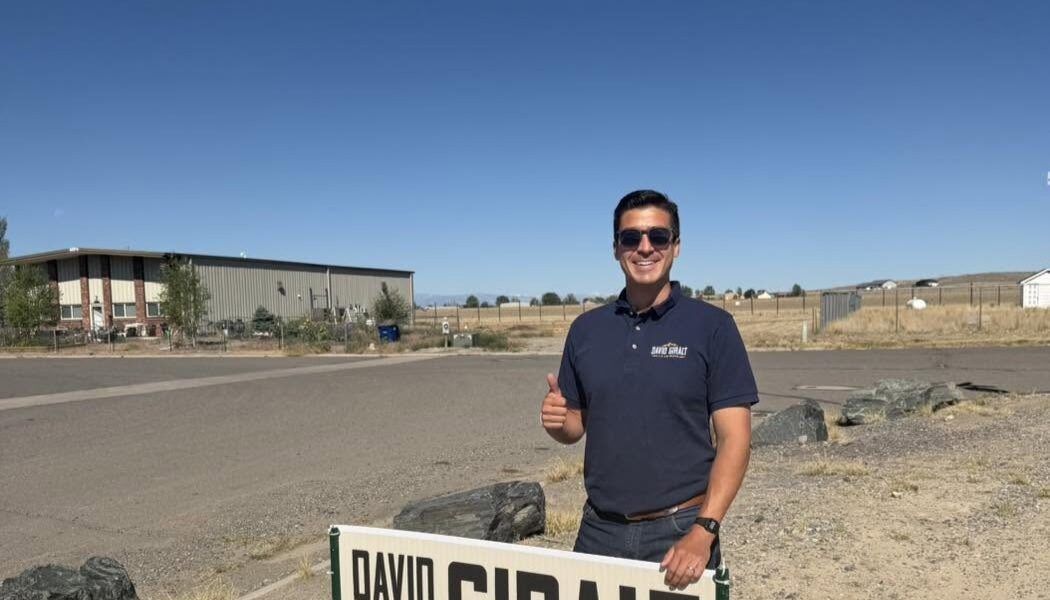
David Giralt, a Republican candidate running for Wyoming’s lone seat in the U.S. House of Representatives, called into the Weekday Wake-Up on Thursday, July 9 to discuss his campaign and why he is running for the federal office.
(0:00) Chance to introduce and get to know another candidate running for U.S. Congress in Wyoming, (0:06) and David Geralt joining me today, and David running for the United States House of Representatives (0:12) Republican ticket from Wyoming. David, good morning. How are you doing today? (0:16) Hey, good morning, and thanks again for having me on.
It’s great to be with you. (0:19) Absolutely appreciate it. I had a chance to meet with you briefly on Friday.
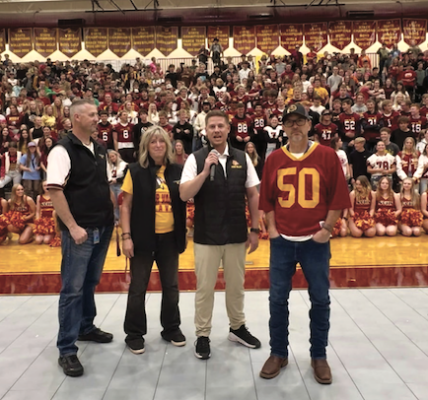
You were in the town (0:24) of Thane and you were there for our big SVI day, so appreciate you stopping by to say hello. So (0:30) tell us about yourself. Who’s David Geralt? Absolutely.
You know, it’s always great to (0:36) be over in Star Valley, and Thane is obviously no exception. Great meeting you and just looking (0:42) forward to this. But just as a bit of an introduction, my name is David Geralt.
I’m (0:47) a Casper kid at heart. This is exactly where I was raised, where I graduated high school at (0:54) Kelly Walsh, which tends to be controversial depending upon where I am in the state. (0:58) But after graduating from Kelly Walsh, I served 12 years as an Army Ranger with the 75th Ranger (1:04) Regiment and then the 82nd Airborne.
There I had combat deployments with both where I served in (1:10) leadership roles as a platoon leader and as a company commander. And then my final deployment (1:16) in Afghanistan actually kind of introduced a turn for me, and I found myself on an assignment to (1:22) Capitol Hill. And while I was there, I was working for a few different members of Congress (1:28) to help draft and pass federal legislation.
So, you know, I’m really trying to make the case to (1:33) folks that I understand the mechanisms of how Congress works and how to be effective there. (1:38) So I finished all that, left the active duty, and then I went on to go take a position as a (1:45) policy advisor on agriculture, homeland security, and trade for US Senator Cynthia Lummis. So not (1:52) only do I have experience in Congress and how to get things passed and actually work on things (1:59) on behalf of the people of Wyoming, but I understand Wyoming’s priorities at the federal (2:04) level far better, I think, than any candidate in this race.
And those are kind of the unique things (2:10) I bring to this field. You know, David, as you’re talking about those and you’re talking about your (2:15) background and what has led you to this point, there had to still have been a decision process (2:19) of, all right, do I enter this race or not? And so why did you ultimately decide to run for Congress? (2:27) Well, my entire professional life has been characterized by service. And I just value (2:33) everything that identifies with this state.
So faith, family, hard work, and personal responsibility. (2:39) It’s safe for me, especially to say that Wyoming introduced all those things to me and brought me (2:46) and gave me that sort of influence that eventually propelled me into service. And I think that also (2:54) having a background of four and a half years of understanding the institution of Congress, (2:59) there’s some part of me that feels a duty to be able to bring back some of that experience, (3:05) some of that wisdom back to the Cowboy State and actually put it to good use on behalf of (3:11) people that I love and that have meant so much to me in my life.
(3:16) Speaking with David Duralt this morning, running as a Republican for U.S. Congress in the state (3:22) of Wyoming. So David, let’s talk about some of the items that impact Wyoming that you would deal (3:27) with on the federal level. And of course, the first one out of the gate that everybody talks (3:30) about, because it is the backbone of our state, and that’s energy and natural resources.
And we (3:35) are seeing things kind of resurface and resurge under the Trump administration. But what do you (3:40) bring to the table and what would you do in D.C. to help solidify the energy industry in the state (3:47) of Wyoming? Thanks for that, Duke. So one of the important things I do want to highlight, (3:54) especially to your audiences, I’m a graduate of the University of Wyoming’s MBA program.
(3:59) And while I was there, I focused my concentration on energy and coupling that with my experience (4:06) on the Hill. I think it’s important to understand that what I want to do is be able to unleash (4:11) American energy. And a lot of people talk about that.
But what that means tangibly is (4:15) reducing the permitting timelines that it takes for projects. So ensuring that we’re using the (4:21) environment responsibly. We all want clean air.
We all want clean water. So responsible energy (4:26) development. And additionally, reducing all the regulatory burden that exists.
The federal (4:33) government is notorious for just slowing things down, even when projects are approved and they’re (4:39) positive. And my role in Congress, I view, is limiting the federal government’s involvement, (4:46) whether that be the permitting, whether that be redundant litigation that’s going on with the (4:54) intent of slowing projects down. We should be able to embrace this.
We’re an energy state. (4:58) We’ve grown up with it our entire lives. And quite frankly, Congress’s real role there is (5:04) getting out of the way and letting us compete not only here in the state of Wyoming, (5:08) but really on the global stage.
David Durrell, running for U.S. Congress from the state of (5:15) Wyoming. David, another question, education. Of course, there’s been the United States Department (5:22) of Education that’s been kind of taken off the table and conversations of education funding (5:29) happening at the state level, of course, here in Wyoming.
But when you go to D.C. and Congress, (5:34) how do you see your role in education funding and that pipeline from the feds to the state? (5:42) I think very limited is the upfront answer. I think that in areas where it makes sense, (5:48) so here with special needs children especially, I think that there’s a role for the federal (5:53) government, especially in an extremely rural state, for us to leverage some of those programs (5:58) still through federal programs. The other thing is kind of leveraging a lot of virtual (6:08) and telephonic sorts of education mechanisms.
Aside from that, though, again, here, I think (6:14) that the move by this administration to move education back down to the states is the proper (6:20) move. So whether it’s higher education, I’d like to see those resources pushed down to the states. (6:28) If it’s K-12 education, I’d like to see that pushed down to the states.
And the reason is (6:33) the federal government contributes about 1% in appropriations to our education system across (6:40) the country. And yet they have a lot of onerous regulations that sometimes require about 12% (6:48) of feedback. So it’s a disproportionate asymmetric sort of return on investment.
(6:56) The states and students aren’t really seeing the benefit from each individual dollar going to a (7:04) student. And there are myriad reasons for that, and obviously happy to talk about it, but probably (7:09) limited on time on this show, I would assume. Yeah, yeah.
We’re coming down to just a few (7:15) minutes left. So just one last question, of course. It’s a big field, 10 candidates running for this.
(7:23) You have some candidates in the field who are saying, yeah, there’s all these people that are (7:27) in it, but it’s really just a two-man race, is what some have said on this show. What’s your (7:33) response to that? And then ultimately, what do you feel at the end of the day sets you apart and (7:39) makes you the candidate of choice? The thing that sets me apart the most is I actually have (7:45) experience. I’m the only one in this field who is not only led in combat, but also led in federal (7:52) legislation.
So I bring to the table a very unique set of skills and a service background (7:58) that’s oriented and rooted here in the state of Wyoming. About half this field never grew up here. (8:04) They spent less than four years in the state of Wyoming.
So I think that’s an asset to the (8:09) people of Wyoming. If we want representation, we have to understand the state. Additionally, (8:14) if we want to represent effectively, we need to understand the institution of Congress.
(8:17) And one of the important things that I like to highlight to people, I’m the only candidate in (8:22) this race who’s earned the support of sitting members of Congress. And those include a few (8:28) different very prominent members of Congress, including the chairman of the House Armed (8:31) Services Committee, the House Natural Resources Committee, and the former Interior Secretary. (8:37) So those relationships aren’t necessarily just for a pat on the back.
That’s an actual value add (8:43) because we only get one seat in the U.S. Congress. And in order for that member to be effective, (8:49) they need to have relationships. And I bring that to the table.
So I have experience in service. (8:54) I have experience in the job that I’m applying for. And I already have a network that can (8:57) multiply and enhance the effectiveness of just one sole member in Congress.
(9:02) That’s what I bring to the table. And I think that that’s how I differentiate myself from the other (9:07) candidates. Unfortunately, I don’t have boatloads of money.
So that can’t be the defining (9:14) characteristic of our campaign. And we’re getting after this just by working really hard. And I think (9:19) the people of Wyoming really do appreciate that.
And we’ll be back in Star Valley and Lincoln (9:24) County during the coming weeks. David Durrell, Republican candidate for the U.S. House of (9:29) Representatives for Wyoming. David, thanks for your time.
If anyone wants to learn more about you, (9:33) what’s the best way to do that? Please reach out. Go to DavidDurrell.com. Again, if you want to (9:40) learn more or just even reach out to me, my email address is on the website at DavidDurrell.com. (9:46) And you can follow us on Facebook. We’re on X. We’re on Instagram.
Anywhere on social media, (9:52) you can find us. But again, the best place and best platform there is DavidDurrell.com. (9:57) Perfect. David Durrell, candidate for the United States House of Representatives.
Appreciate it, (10:02) David. I’m sure we’ll touch base again soon. Absolutely.
I can’t thank you enough, dude. (10:08) Appreciate you. Yep.
We’ll talk again. David Durrell this morning. It’s all part of the (10:11) weekday wake up on SBI Radio.