
By Denny Dart
Uinta County Herald
Via- Wyoming News Exchange
EVANSTON — Much of the world’s helium comes from Qatar, but due to the war in Iran, Qatar cannot currently extract or ship helium. Fortunately, there is abundant helium in the natural gas reserves of southwest Wyoming.
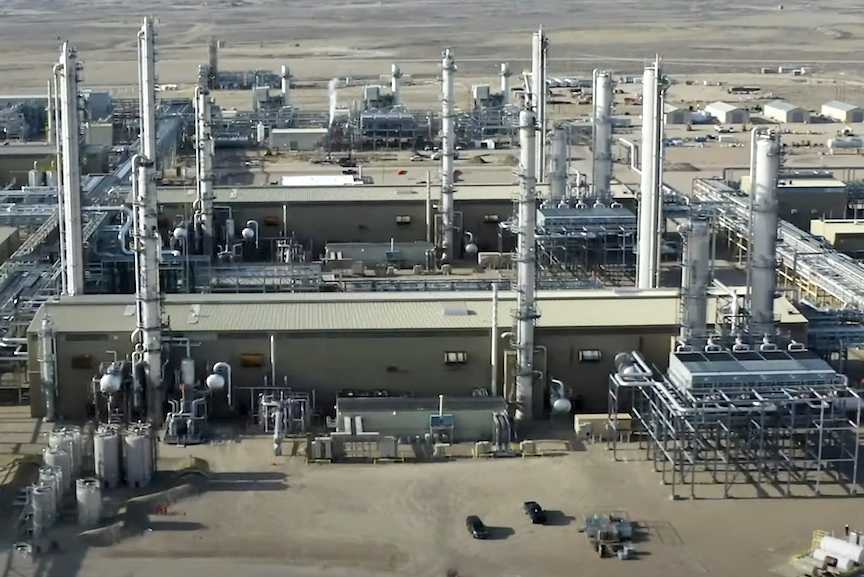
ExxonMobil’s LaBarge gas processing facility near Kemmerer can extract the helium and refine it to Grade- A quality for industrial use. Because of helium’s growing role in medical technology, supercomputers and other industries, demand for helium has increased in the last few years.
Now the price is rising due to constricted supply.
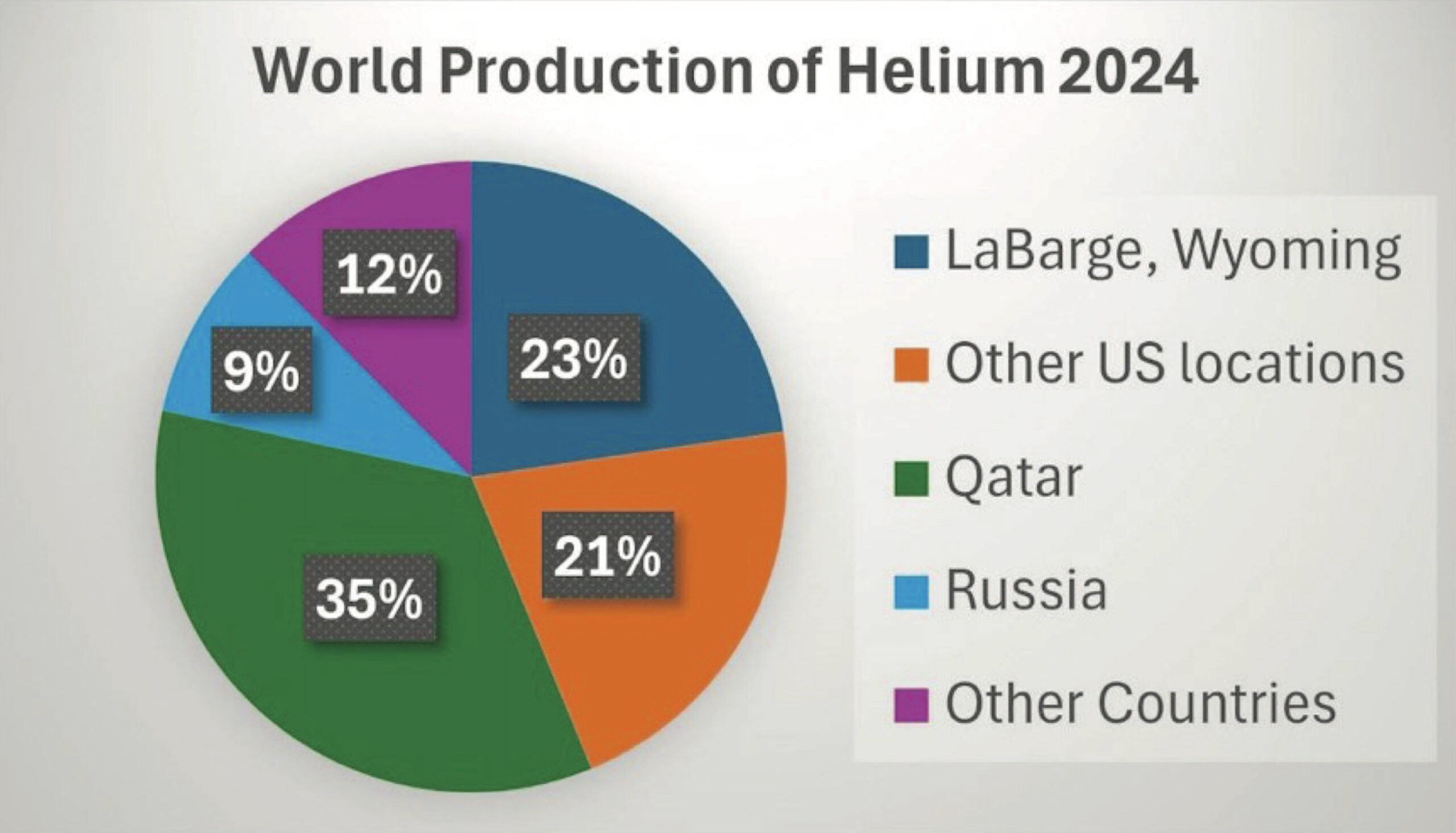
Qatar, in the Middle East, supplies about a third of the world’s helium. Qatar’s natural gas refineries extract helium in the process of liquifying natural gas for shipment. Since the US and
Israel first attacked Iran on Feb. 27, Iran has reacted by closing the Strait of Hormuz, the key shipping channel for Qatari gas and helium.
This has forced Qatar to suspend its operations.
In addition, Iran has bombed Qatari gas infrastructure. After Iranian attacks on March 19 knocked out 17% of Qatar’s production capacity, QatarEnergy’s CEO told Reuters that it could be five years before the plant returns to full production.
Wyoming is a helium hub
The U.S. produces nearly half of the world’s helium, with most of that coming from the Riley Ridge area of southwestern Wyoming, according to the United States Geological Survey. ExxonMobil’s Shute Creek Gas Plant in LaBarge processes natural gas, producing liquefied natural gas, carbon dioxide, Grade-A helium, and other products.
Unique properties
Helium has unique properties that make it valuable for many industrial applications. In liquid form, helium is the coldest substance on earth at -452 degrees Fahrenheit, making it an excellent coolant.
In addition, helium is a noble gas. Because their atoms have a complete set of electrons, noble gases do not react with other elements, so they do not cause corrosion or combustion, and they are very stable. (Oxygen, by contrast, is highly reactive because it has two unpaired electrons that drive it to bond with other atoms to achieve stability.)
A third benefit of helium is its low viscosity, allowing it to flow smoothly and quickly. Because of helium’s cooling, non-reactive and low-viscosity qualities, the gas has many uses.
In the area of medical care, helium has become increasingly critical for diagnosis and treatment. Helium cools the large magnets in MRI machines. It provides constant temperature for neon and argon gas lasers used in eye surgery and wound healing.
Helium’s low viscosity makes it the choice for the pumps in heart-lung machines, which temporarily replace the heart and lungs, circulating oxygenated blood throughout the body during heart surgeries. Helium can even be combined with oxygen to help patients breathe in a medically supervised setting.
The demand for semi-conductors has increased, and helium is critical to the manufacture of these tiny computer chips. Semiconductors not only power artificial intelligence, they show up in products from televisions and cellphones to cars and farm equipment. Helium assures constant temperature during manufacture of semiconductors. It also meets very tight cleanliness standards because of its non-reactive properties.
Helium has many other important applications. It is a shielding gas in metal welding, and a coolant for fiber optic manufacture. Helium purges and pressurizes rocket fuel tanks for space exploration. At research universities, helium is the coolant in particle accelerators. Helium in air tanks for deep sea diving prevents the formation of nitrogen bubbles that cause decompression sickness, or “the bends.”
Helium prices are rising
Based on analysis by the USGS, currently there are no substitutes for helium in most applications.
Phil Kornbluth, President of Kornbluth Helium Consulting, reported on March 20 that helium spot prices had more than doubled since the Middle East war began on Feb. 27, and prices will increase further.
Most helium is currently under long-term price contracts, and there is some helium in storage, blunting the immediate price impacts. Shortages of helium could spell trouble for the semiconductor industry and the artificial intelligence sector, which depends on the semiconductor chips.
It will also strain hospitals. Before the Iran war, a medium-sized hospital typically spent as much as $20,000 per year on helium gas, according to Magnetica Ltd.
The above story may be used ONLY by members of the Wyoming News Exchange or with the express consent of the newspaper of its origin.