What’s in Wyoming’s application for up to $800M in federal health funds?

• WyoFile digs into Wyoming’s 84-page Rural Health Transformation Project application, examining proposals that include nursing grants, EMS incentives and a state-run insurance plan.
By Katie Klingsporn, WyoFile.com
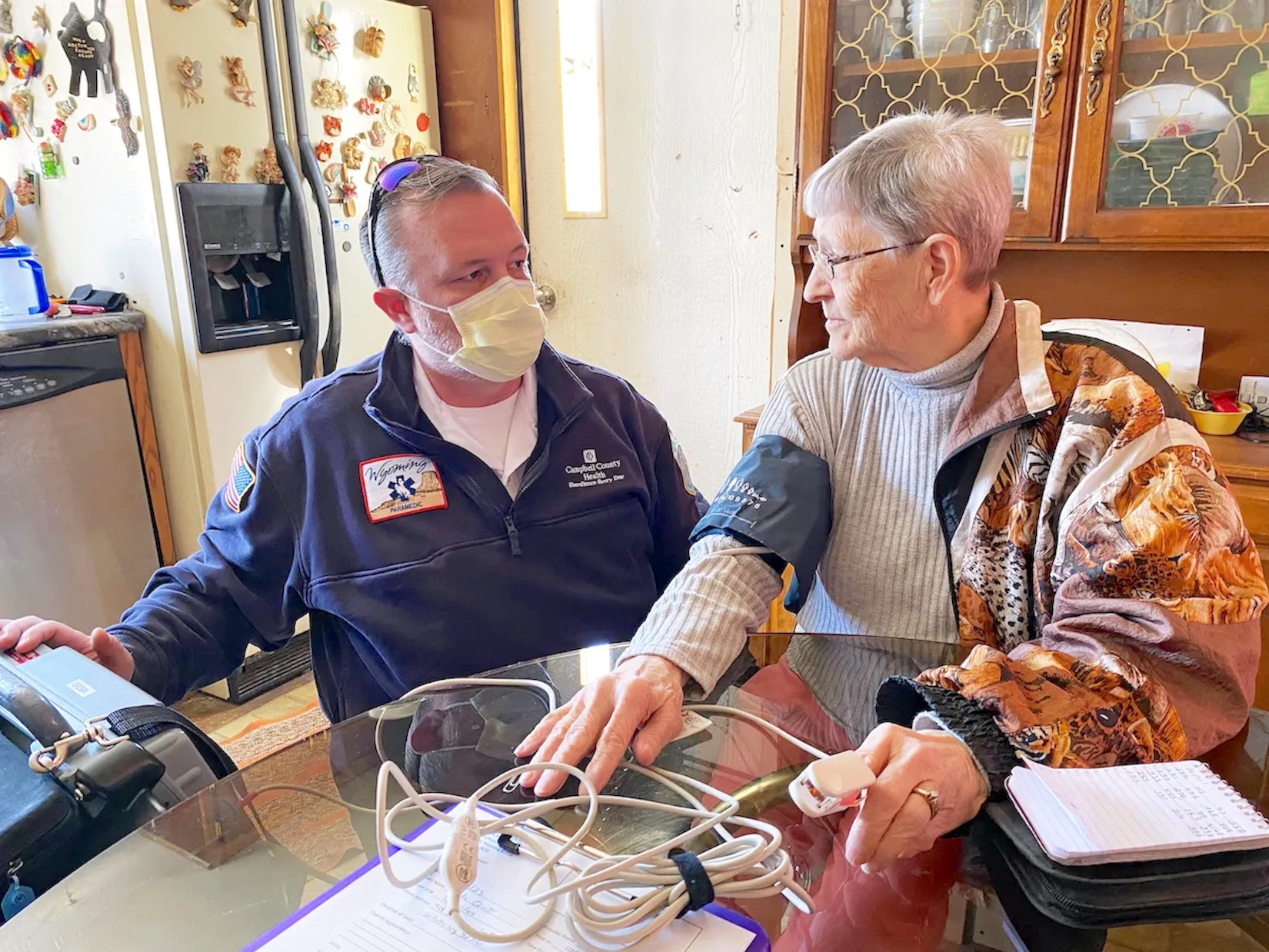
With the smallest population in the country spread over a huge area, Wyoming’s rural health care gaps are acute. Patients drive long distances for care; hospitals struggle to hire medical professionals and health care is expensive — even with insurance.
These realities underscore a huge opportunity looming for the state. Wyoming is vying to receive up to $800 million in federal funds over five years for initiatives designed to innovate and revolutionize its rural health care system.
The Rural Health Transformation Program, a new federal initiative created by President Donald Trump’s One Big Beautiful Bill Act, is designed to funnel $50 billion to states over five years to stabilize and strengthen rural hospitals and providers. The program aims to offset a portion of the federal funds for health care that were cut in the Beautiful Bill. Wyoming submitted its application in November and should learn its fate at the end of the year.
There’s no guarantee Wyoming’s initiatives will be fully funded. But a dive into the 84-page application reveals both compelling data about the state of health care here and an innovative array of proposals aimed to bolster it.
Proposed initiatives take many forms. They include incentives for small rural hospitals to provide basic services and cut extraneous ones that can be performed at regional facilities; grants for clinical workforce training programs and five-year commitments from grads; a state-run insurance plan for catastrophic events; and permanent, investment-generated revenue to prop up the industry.
The community engagement involved and breadth of proposals in the Department of Health’s application are impressive, said Healthy Wyoming Executive Director Jenn Lowe, whose work advocating for health care access often makes her skeptical of state policy.
“The Department of Health did a superb job in pulling this application together in a brief amount of time,” Lowe said. “It is analytically strong. It is data driven, and it is grounded in community input. It comes up with some innovative solutions” and has gone beyond many other states from a transparency standpoint.
However, Lowe said, there are some vulnerabilities, and the implementation window for deploying what could be an enormous tranche of funding is very short — which concerns her.

What’s in it
The application opens by describing the particular characteristics responsible for such steep challenges in Wyoming.
Wyoming’s census-designated “frontier” areas comprise most of the state in terms of both area and population — approximately 253,000 people, or 44% of the population, live in frontier areas. That’s compared to 30% in rural areas and 26% in urban cores, the application states.
Populations in the frontier areas are also disproportionately older — meaning care needs are higher in those areas. In addition, services are more sparse and emergency response times longer in these lightly populated places.
Areas of concern range from Wyoming’s high suicide rate to an anticipated jump in uninsured residents to a notable erosion of maternity care services.
“Our biggest challenge lies in access to basic medical care,” the application states in identifying its top priority.
Other priorities include building up the state’s health care workforce, improving residents’ metabolic, cardiovascular and behavioral health and using technology to improve chronic disease management and bring care closer to home. Here are some of the initiatives proposed to address those priorities:
- Build cooperative agreements for EMS agencies to work together on a regional basis, using regional dispatch to coordinate things like interfacility transfers.
- Create financial incentives to persuade small designated “Critical Access Hospitals” to focus on essential community services of an emergency department, an ambulance service and a delivery facility for babies. Currently, small hospitals sometimes opt to close delivery facilities, which are not profitable, but continue to offer other, more lucrative procedures.
- Establish a state-operated public insurance plan, dubbed “BearCare,” that would cover health care emergencies, such as a car crash or a bear attack, for dues-paying members.
- Bolster the medical workforce by offering grants for Wyoming educational institutions to do things like hire faculty or develop career pipelines.
- Fund, in perpetuity, an annual number of awards to cover educational costs for individuals interested in joining one of four clinical pipelines: nursing, EMS, behavioral health and physician.
- Add more slots to Wyoming’s existing accredited programs for post-graduate medical education, likely in new sites.
- Implement the Presidential Fitness Test in Wyoming’s primary and secondary schools.
- Limit the state’s SNAP benefits to healthy food purchases, not including things like sodas and candy.
- Stand up a grant process for technology that promises to improve care delivery closer to home or build systems that can work across providers.
At the core of Wyoming’s sustainability plan, the application reads, “is the establishment of a dedicated, purpose-driven, and actively-managed Wyoming Health Transformation Perpetuity.”
Similar to Wyoming’s Permanent Mineral Trust Fund, this “perpetuity” would use investments to continually generate revenue for health care programs, the application says.
The application’s vision is sprawling and ambitious. Implementing it will require manpower. With almost 1,400 employees in four divisions, the Wyoming health department is a “superagency” that’s well-equipped for the challenge, the application states.
“We have a lot of infrastructure in the department that does this kind of stuff already,” said Franz Fuchs, WDH deputy director and the application’s lead author. The department would also anticipate hiring around 13 contractors to help with the load, he said.
The public process confirmed what the Health Department has suspected for some time, Fuchs said, which is that a fundamental mismatch between fixed health care costs and Wyoming’s rural volume is at the heart of many of its needs.
“And so we’re really trying to target these really big economic problems,” he said, rather than proposing more gimmicky and short-term fixes.
What now
The process began in September, when Wyoming Department of Health staff kicked off eight in-person and three virtual meetings to gather feedback. The state received 1,300 responses to an online survey it circulated. The application was then drawn up and submitted by the Nov. 5 deadline.
“It was definitely a tight timeline,” Fuchs said. The ultimate product, he said, reflects the community feedback received during the meetings as well as stakeholder meetings with groups like hospital CEOs, long-term care facility managers and representatives of the Northern Arapaho and Eastern Shoshone tribes.
“We definitely let the public process, the public feedback we received, drive everything,” he said.
The Centers for Medicare and Medicaid Services is expected to announce its funding decisions by Dec. 31. The way Fuchs understands it, the feds can ultimately pick and choose which parts of the application to fund — rather than approving or denying the entire thing.
It’s impossible to say how much Wyoming will receive, but health news outlet KFF anticipates the state is looking at $750 million.
A federal announcement, however, won’t spell the end of the process. The Wyoming Legislature, which has shown skepticism of the size and breadth of the health department, will have to appropriate the funds. There are also some statutory requirements, such as the creation of the perpetuity and other state policy changes. More significant initiatives, such as BearCare, would likely require standalone approval, Fuchs said.
Worries and hopes
Even with the initiatives still in the application phase, opinions are emerging about the appropriateness and feasibility of Wyoming’s Rural Health Transformation proposals.
The Legislature’s Joint Appropriations Committee just wrapped up two weeks of budget meetings. As lawmakers reviewed the Health Department’s numbers, lawmakers discussed the application. One proposal that lawmakers frowned upon was the state-run catastrophic health insurance plan.
“I’m struggling with how we should go into the free market,” said Rep. John Bear, R-Gillette, who has no relation to the name BearCare. “I’m not inclined to want to compete in the private sector. I don’t think it’s the proper role of government to do so.”
Bear was also skeptical of the proposed perpetuity’s ability to keep pace with ever-rising health costs and remain effective.
The BearCare proposal is coming at a time when many in Wyoming are bracing for the country’s largest spikes in Affordable Care Act prices. Affordability of insurance in general was the No. 2 concern that came up during the public process, WDE Director Stefan Johansson told the committee.
Freedom Caucus lawmakers on the appropriations panel derisively called BearCare “GordonCare” in a reference to Gov. Mark Gordon, who has supported the state’s application process.
“Families, seniors, and communities are stronger when they are healthy and have reasonable access to healthcare,” Gordon said in a budget message statement last week. “We must maintain access to safety net services for all Wyoming communities, including quality care for children, seniors, people with developmental disabilities, and others who lack physical or financial means.”
Lowe of Healthy Wyoming said that while it’s promising, the implementation piece of the plan worries her. It’s a big ask for an agency that is facing likely cuts.
“I think that there are many moving parts that must align — legislatively, operationally and across different provider types on a pretty short implementation window,” Lowe said. The biggest obstacle, she added, may very well be found in the Wyoming Legislature.
“There’s so much discord in the state Capitol these days that we have this once-in-a-lifetime opportunity, and I’m afraid we’re going to squander it a little bit,” Lowe said.
WyoFile is an independent nonprofit news organization focused on Wyoming people, places and policy.
The above story may be used ONLY by members of the Wyoming News Exchange or with the express consent of the newspaper of its origin.