

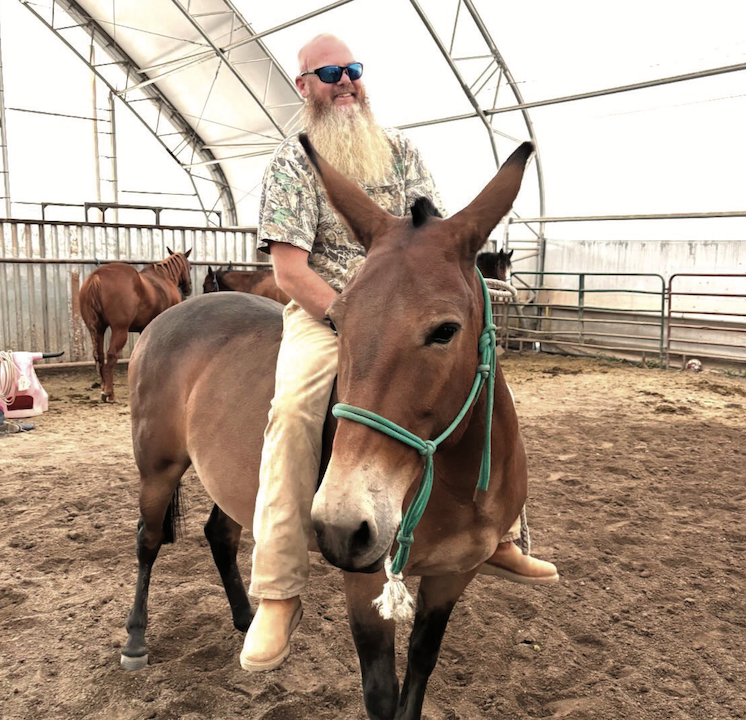
After becoming 100% blind in a small-plane crash in 2018, Tristan Smith has transformed tragedy into purpose, founding the nonprofit Blind Leading the Blind, LLC, opening the outdoors to those with vision loss. He learned that healing does not happen alone—and that purpose can rise from even the darkest moments.
The Crash:
The world went dark in an instant.
On a clear August morning, Tristan Smith was excited to be heading out for a workday in the sky, checking survey markers (“targets”). “Of course, I was excited,” Smith shared. “I enjoy flying and had done it a few times before, always with good experiences.”
After take-off, everything was going smoothly. Being an avid outdoorsman and hunter, Smith enjoyed looking over the land and trying to spot any deer, elk, or other wildlife.
Smith marked the grid-patterned targets one by one on the map resting in his lap. They were flying through a canyon to the final target.
Tristan recalled the moment everything changed. “I was looking out the right window, watching the terrain and wildlife. Everything seemed fine. We looked plenty high off the ground. It was a smooth flight. We saw the last target, and everything looked good. Then we started to turn to head back down.
“That’s when I heard the pilot say, ‘Prepare to crash’.”
Smith didn’t have a chance to cover his face when the plane made impact with a tree. “I didn’t even have time to raise my arms. I heard the crashing and impact. I don’t remember seeing anything after that—only hearing it.
“When we hit the ground, everything was pitch black. I grabbed my phone, unbuckled my seatbelt, and sat there confused. I reached up and felt both sides of my head near my temples. It felt soft. I knew immediately I had serious head injuries. I was bleeding badly from the left side of my head.”
Smith was able to communicate with his coworker Evan, who had just enough signal to radio for help.
“After the call, Evan came back and helped untangle my feet and sit me upright with my back against the pilot’s seat. He shut off the ignition. I asked him to apply pressure to my head wound. He took off his shirt, wrapped it around my head, and showed me where to hold.
He helped the pilot next. Then he gave both of us a priesthood blessing.”
One of the paramedics who was called to the location of the crash was Travis Osmond. He recalled hiking up with Cooper Jensen with supplies in a pack. As soon as Osmond heard the names of the men in need of help, he shared, “I turned to Cooper and said ‘Cooper, we’ve got to jog. We’ve got to run up this mountain’.”
After 40 minutes from the emergency call, the rescue team arrived.
Throughout the rescue, Smith said he witnessed miracles. He did not feel pain, and time seemed to pass quickly — later, he recalled it felt like only 30 seconds before help arrived.
Several search and rescue members checked the men and prepared them for transport off the mountain. Smith was given an IV and loaded onto a helicopter to Idaho Falls.
When Smith woke up in Idaho Falls days later, everything was still black.
Doctors confirmed what the swelling had hidden: both optic nerves were damaged beyond repair. Smith was permanently blind.
He survived severe head trauma, multiple reconstructive surgeries, and a traumatic brain injury that required removal of part of his frontal lobe. Doctors later told him he was a miracle — fewer than 10% of people involved in airplane crashes like this one make it to the hospital alive.
“I remember thinking, ‘OK … now what?’” Smith said.
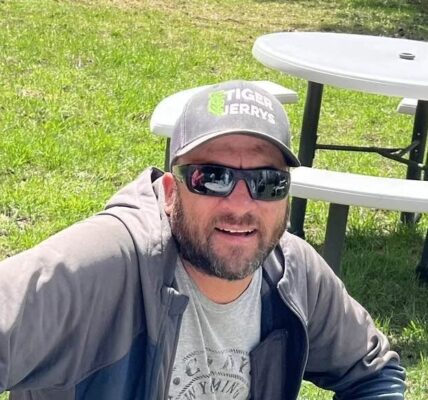
COURTESY PHOTOS
What came next:
Those who have heard from Tristan Smith understand the impact that those around him had in his recovery. They are the friends, family, and community members who flooded him, his wife, and his six children with love and support.
“This community has been wonderful to me and my family already.”
Tristan speaks highly of his friend Scott Schwab. “Luckily, I’ve got friends like Scott and lots of others, but Scott is a perfect example we’ll go for drives and we’ll just get out of the house and run to town and we’ll stop and we’ll get a coke or a drink, you know.”
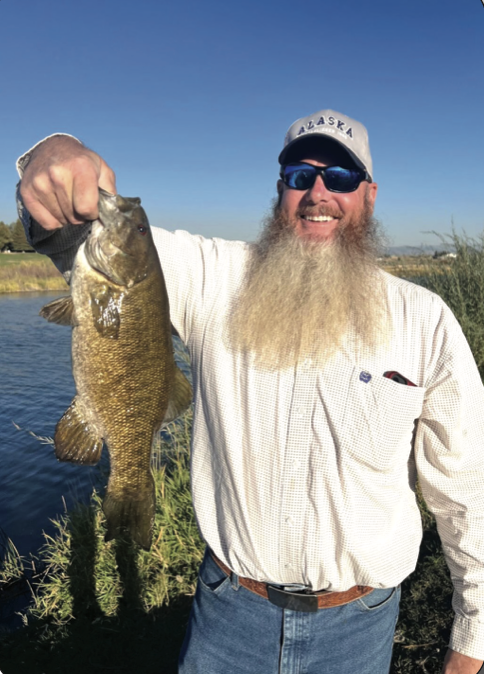
Tristan Smith wouldn’t let the loss of his sight keep him from enjoying what he has always been passionate about. His family and the outdoors. He would eventually hunt again. He would fish. He would work. It would just look differently than before.
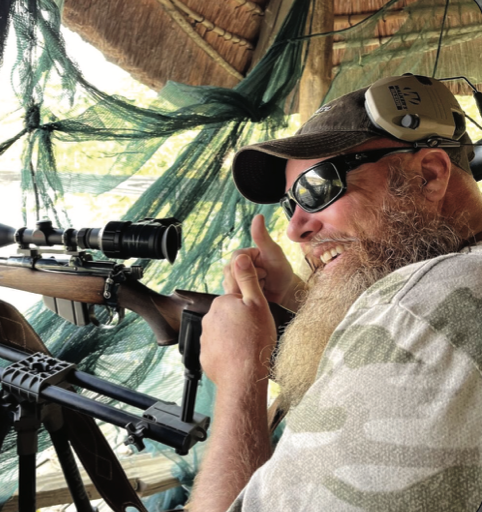
When Smith hunts, he utilizes a GoPro and sends the feed via Bluetooth to his phone, allowing someone to look at the livestream and guide his shot to let him know when he is aligned for a successful shot.
Smith attended a rehabilitation school in Boise, Idaho. He was most surprised to find they had a full workshop with all the usual power tools and saws you would find.
“It did shock me that I was completely blind and we’re running this type of stuff. It was amazing what they taught me to do. And then not only that, how to get around with [being blind].” Tristan was taught how to listen for traffic and get around while cars would be coming and going. “It’s pretty intimidating.”
Smith said he wants others who lose their sight to know their lives do not end there — and that the passions they love can still give them purpose.
This past December, Tristan and his lifelong friend Scott Schwab partnered to start a 501(c)(3) non-profit organization called The Blind Leading the Blind. Their vision states: “To empower the visually impaired to overcome barriers, discover their potential, and achieve their dreams through mentorship and community support.”
Tristan said many visually impaired individuals can feel isolated or like they no longer know where their place is. He remembers listening to a woman on a call who shared her feelings of being a burden to her adult children as she asked for simple favors like a ride somewhere. “That is terrible. But I get it because I feel that same way a lot of the times,” Tristan said. The loss of independence can slowly turn into stepping back from the world.
Tristan wants to create opportunities that replace that isolation with experience. Whether it is fishing, hunting or simply being outside, the goal is participation. “It’s not that you can’t do it. We just do it a little differently,” he said. That’s what The Blind Leading the Blind will help others do.
A blind man from Idaho Falls reached out to Tristan for help filling a late-season elk tag. Tristan secured access to private property and spent two snowy weekends helping the man navigate the terrain and set up for a shot. The man brought his brother and another friend. The first weekend trip didn’t lead to getting an elk. The second carried higher stakes. An elk was found just 200 yards away, but the shot missed. Another opportunity came at 450 yards. His brother would lay on top of him to look through the scope and line up the shot. Three shots were fired. Another miss. They continued hiking and found more elk 700 yards away. “We found ourselves in knee-deep snow,” Smith said. He had stayed back, thinking there was “no way” after two missed chances that the man would have success at that distance. Then, he heard the shot – and the distinct sound of a hit. “I knew he had hit this elk and they started hootin’ and hollerin’.” Following their celebratory shouts, Smith made his way to join them, sharing their excitement.
The man brought home meat for his family — something he wasn’t sure he would ever do again.
The experience reinforced what Smith already believed: vision loss does not eliminate ability.
Smith and Schwab want to make opportunities like this more accessible and consistent. They are pursuing grants and donations to purchase a boat designed with safety and adaptability in mind, allowing participants to fish or simply enjoy time on the water. Smith and Schwab said they are excited to see participants out on the water. Schwab highlights the purpose of being outdoors is not just to have fun with the activities, but to go and enjoy nature. You don’t have to see it. You can listen, feel, smell, and enjoy the company of others. This is not just for individuals who are struggling with their vision, but also for their families.
When one visually impaired woman expressed to Tristan her interest in going ice fishing, her father quickly asked if families could come along. Tristan’s answer was immediate: “Absolutely.” While Blind Leading the Blind is focused on creating opportunities for blind and visually impaired individuals to get back outdoors, Tristan believes those experiences are often most meaningful when shared. “Some of my best memories of being outdoors were with my family,” he said. By welcoming spouses, parents, children and friends on outings, the organization aims to strengthen relationships and help participants rediscover confidence and joy.
The goal is not a single event. “Our vision isn’t just to do a one-time thing.” Smith wants to create something lasting — shared experiences that rebuild confidence and remind people they are still capable, still needed, still part of something.
For Smith, the outdoors has always been more than recreation. It is where he feels grounded. It is where he feels capable. Whether he is fishing, hunting or even helping change a starter on a truck, he said, “It was awesome just to feel useful.” That feeling — usefulness — is what he hopes others rediscover.
He knows how easy it is after vision loss to feel sidelined or “pushed into a corner.” Getting outside interrupts that. It replaces isolation with shared experience. It shifts the focus from what is gone to what remains.
“You can sit there and not do anything and just be out enjoying that day out on the lake,” he said. “You don’t have to fish.”
For a man who once heard the words, “Prepare to crash,” and woke to a world that was permanently black, the outdoors remains a place of purpose. Now, through Blind Leading the Blind, he is helping others rediscover that same sense of capability — to participate, to feel useful again, and to remember their lives are not defined by what they have lost.
Those interested in learning more, follow The Blind Leading the Blind Inc. on Facebook and Instagram. Interacting with their posts is encouraged. A website is currently being created.
Donations are being accepted via Venmo by searching @BLBWyo or via PayPal
1 COMMENTS
Comments are closed.
Their website is now live. The web address is blbwyo.org