SVI Radio Interview: Ken Roberts – Wyoming Game & Fish Commissioner

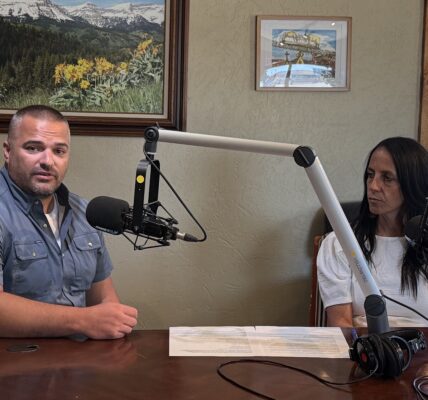
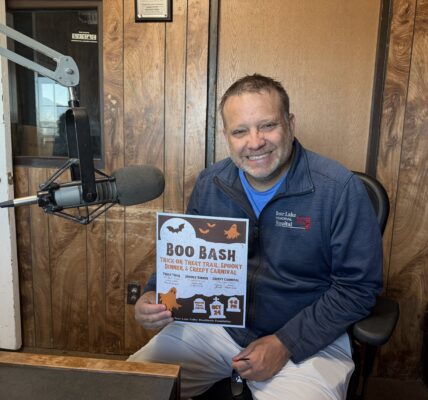
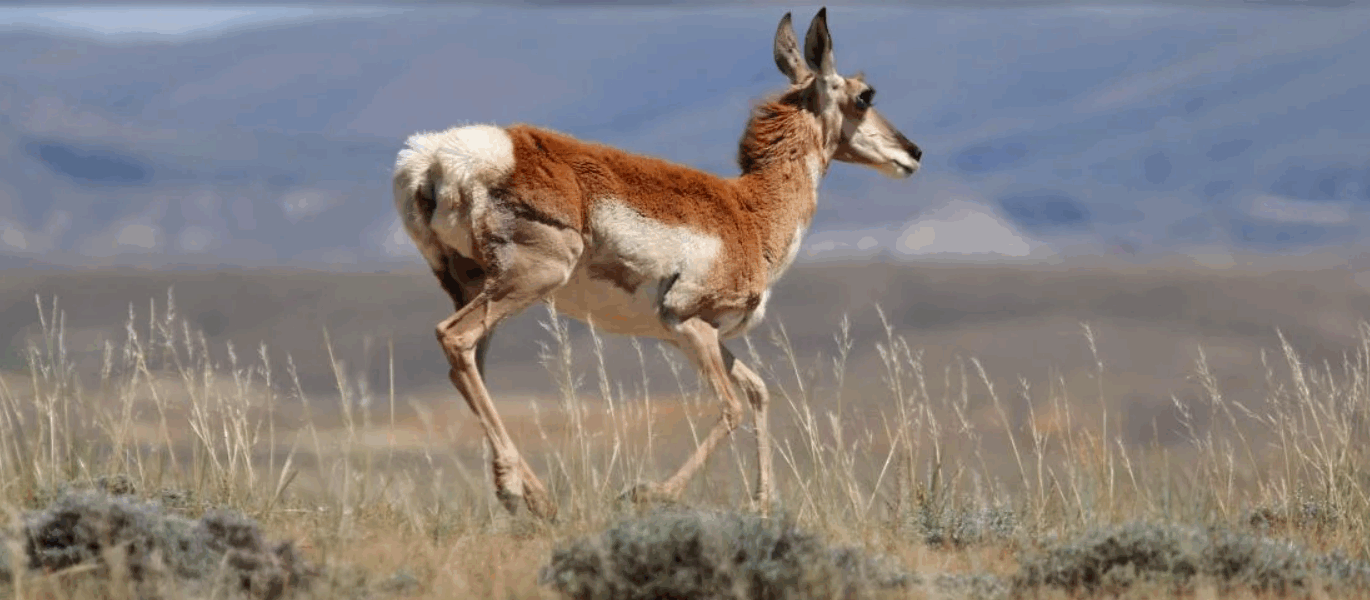
Ken Roberts, the Commissioner from Lincoln County with the Wyoming Game & Fish Department, spoke with SVI Media’s Dan Dockstader regarding the antelope migration corridor in western Wyoming.
(0:00) SBI and the offices of Ken Roberts, he’s a Wyoming Game and Fish Commissioner, just finishing (0:05) up an extensive meeting in Rock Springs regarding the sublet Pronghorn. (0:11) Ken, why did you hold this meeting and why are the Pronghorn important? (0:15) Give us the background. (0:16) Well, thanks, Dan.
(0:17) And anytime we can talk about Wyoming wildlife, it’s a great thing in the betterment of them. (0:22) The meeting that was held in Sublet County was held by the working group. (0:27) We attended it, I attended it as a commissioner and the director, Angie Bruce, attended it (0:33) for Wyoming Game and Fish.
(0:35) Plus we had on staff of all of our biologists and those to help the working group. (0:41) The commission had already heard this prior, where we’d heard it a couple years past, to (0:49) identify this corridor and to designate the corridor. (0:52) And that came from the executive order from our governor, who, thank heavens, had the (0:59) foresight to think, well, we’ve got to do something to protect this Sublet County, this (1:05) sublet migration herd of antelope to come through, because we’ve got a herd of antelope (1:11) that actually goes from some clear up into the Grand Tetons all the way down into the (1:16) Red Desert.
(1:17) Near Rock Springs. (1:18) That’s an extensive route. (1:19) It’s amazing.
(1:21) And these antelope are very site-specific, so we’ve got to actually make sure their routes (1:28) are protected. (1:29) And that’s part of what your meeting was, right? (1:30) Absolutely. (1:31) And we’ve taken 20 years of collared scientific risk analysis.
(1:39) We’ve done everything that we possibly could do with the game and fish, as far as our biologists, (1:44) thousands and thousands of hours, trying to perfect what this corridor would look like (1:48) if we could get it done. (1:51) And then when the governor came out with the executive order, said, I want something done (1:55) on this, it was truly a blessing for everybody in the game and fish, plus YDOT, plus everybody (2:00) that was involved for this. (2:02) So what we’re dealing with is we’re dealing with the principle of it is you’re being able (2:07) to connectivity with the antelope.
(2:10) They’ll be able to make that route then safely. (2:14) Would you say that we have a solution based on that Rock Springs meeting with, what, yourself, (2:20) other commissioners, county commissioners, other local officials, wildlife biologists? (2:25) Did we come out with a solution, a good route? (2:28) And they’re still working on their aspect of it, and we’re contributing in all we can. (2:34) We’re, you know, the Game and Fish Commission, absolutely, we’re 100% for everything about (2:40) it.
(2:40) That’s our job, is this wildlife. (2:42) Now, this, the working group, they’re taking, they’re represented by different industries (2:47) and by different sportsmen, different county commissioners, different things, and they’re (2:52) looking at it saying, okay, how can we, first we’ll vote whether we can designate it, we’d (2:57) like that to see it designated, and then we’ll give it a little finer points where we can (3:02) send it up to the governor, and then the governor will take that, and if there’s any questions (3:06) he has, he’ll kick it back to the Game and Fish Commission and said, okay, you guys need (3:11) to tidy up this or tidy up that, and then it’ll go back to him, and then he’ll decide (3:16) what and how to designate this corridor for future generations. (3:21) Okay.
(3:22) The governor, it’s in his hands right now, as far as this corridor goes, is there more (3:26) work with the Game and Fish Commission? (3:27) The Game and Fish Commission, we’re out of it now, right now it’s into the working group, (3:33) and when they finish up, and I figure they’ll finish up here within the next month or so, (3:36) they’ll submit their report to the governor, and then the governor will review it, and (3:42) then he’ll designate what he sees fit with taking all the information that he can to make (3:49) this corridor happen, but, you know, and I’d like to say that, I mean, this is the largest (3:56) corridor in the whole United States, in the lower 48, this is a corridor for Antelope that (4:03) we’re trying to present that is unthinkable for any other state besides Wyoming, because (4:10) we’re fortunate for it, and we’re the envy of everyone in the wildlife, because wildlife, (4:18) if you’ve got connectivity, and you can let them, if you’ve got the habitat and connectivity, (4:24) they’re going to do survive, and they’ll do a good job, but when you start breaking it (4:28) up and fracturing their environment and stuff, they have a hard time from them thousands and (4:33) thousands of years of doing what they’ve done, so, Wyoming’s, I mean, we’re at the spear (4:39) point of migration corridors, and also, we had, you know, we spoke a little bit about (4:45) the 189 crossing. (4:47) Right, and before we close out, we’re with Ken Roberts, Wyoming Game and Fish Commissioner, (4:50) how does this all tie in with the 189 project, one overpass, seven underpasses, and 30 miles (4:58) of fence, all to protect wildlife? (4:59) Absolutely, and it’s, very blessed to get it, and it’s, we’re going to go, the overpass (5:07) will be with the old, where the old place, what they called Bonrico was, and it’ll be (5:12) a big overpass, because antelope, they don’t like to go under things, they want to see (5:19) where they go over, if they can, if they have any sight, because they’re such a sight-oriented (5:25) animal, they’ll go over overpasses, but underpasses, they don’t like underpasses, but we’re also (5:32) going to install one new type of underpass, that’s more of a, more of a barn type of looking (5:37) thing, where they can visualize, where they, so we can monitor to see if they’ll actually (5:44) use that a little bit more. (5:46) We’ve got ones in the Big Piney area that they’ve had some success with, so we’re just (5:50) going to take what we’ve learned from them, and make it a little bit better for the Kimmer (5:54) one, but it’s going to be a beautiful thing, at 30 miles of fence, on the Wyoming corridor, (6:00) it’s going to save so many mule deer, that it’s really going to help with the migration (6:06) on the mule deer, it’s going to be really a component with the antelope, because the (6:10) antelope, even though they’re, you know, that we call it the sublet herd, there’s components (6:17) here that go to the sublet herd to migrate down there.
(6:20) A lot happening to protect wildlife in Wyoming, correct? (6:23) We’re blessed, we’re, this is such a great state, and everybody’s involved, and everybody’s (6:28) doing it, doesn’t matter, I mean, everybody’s, everybody loves to see their wildlife in Wyoming, (6:33) that’s why we live here, and that’s why we’re doing it for future generations. (6:37) Wyoming Game and Fish Commissioner Ken Roberts, Dan Dockstader, SVI Media, in Kimmer.