
SVI Radio Interview: Bear Prairie – Lower Valley Energy CEO

Bear Prairie, CEO of Lower Valley Energy, stepped into the SVI Radio studio on Tuesday, July 21 to provide an update on planned repairs in Swift Creek Canyon after a gate failure at the upper reservoir. Prairie also discussed a change in rate structure that will go into effect this fall.
The following transcript of the above interview is AI generated. Minor spelling errors are likely to occur.
(0:00) Joining me live in studio now is Bear Prairie, CEO of Lower Valley Energy. Bear, good morning. (0:05) How are you doing today? Hey, good morning, dude.
Doing great. I appreciate your time. Always a (0:08) pleasure to have you in studio.
And let’s talk about what happened up Swift Creek Canyon last (0:12) week. Had a gate failure on the upper reservoir. What took place there? Yeah, it was a, you know, (0:17) exciting week last week for sure.
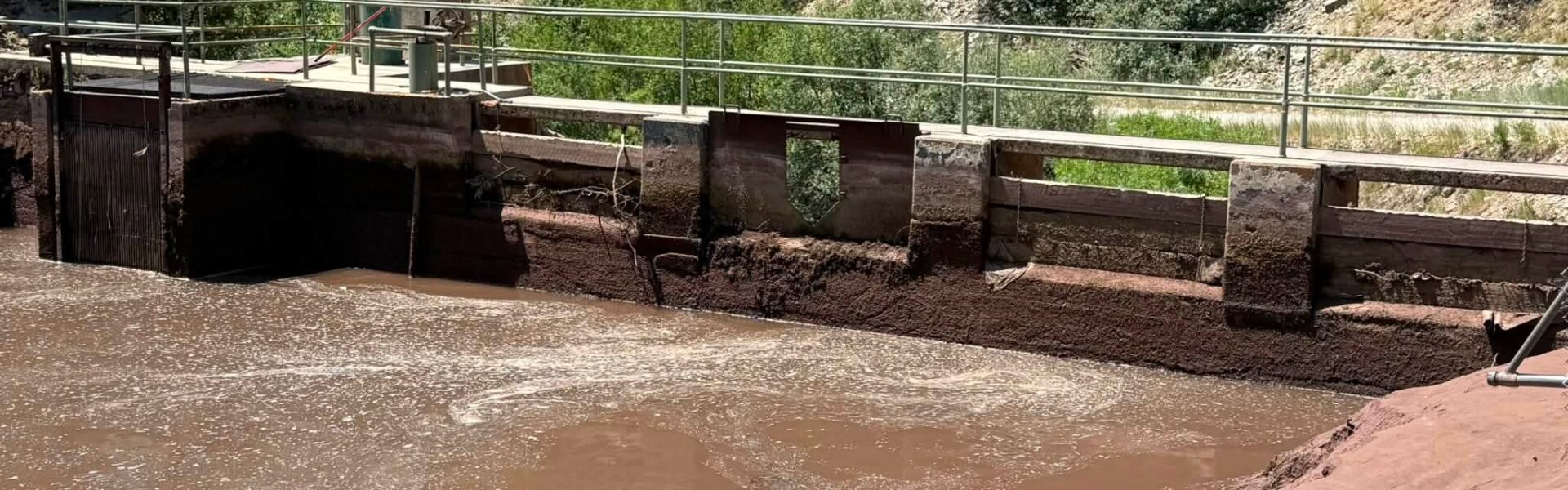
We actually had some crews up there early in the morning (0:24) and even the Friday before and everything looked good and was operating fine. And then we had some (0:30) phone calls that the creek was running exceptionally muddy and really high flows and the (0:34) reservoir is going down. So we hurried up and went up there in the, the sluice gate, which is that, (0:40) you know, similar to what they have on irrigation canals here that can, you know, you can let the (0:43) water, you know, drain from the bottom of the reservoir.
It had actually failed. And we got a (0:48) camera down there later, a few days later after the water cleared up and found that the gate has (0:54) failed catastrophically. So we can’t operate it.
And then also the panels within the original (1:00) steel have been destroyed and pushed out. So it, it has, you know, caused the reservoir to drain. (1:08) And then what caused the reservoir to then fill back up was the gate, the holes in it were getting (1:15) filled with logs and debris.
So it slowed down the flow of water. Since then, everything has stabilized (1:21) until mother nature gave us the rainstorm and then washed a bunch of debris back in the reservoir, (1:28) you know, the sediment from upstream from that landslide a few years ago. So.
Gotcha. So as it (1:34) currently sits now, is it, I guess, for lack of better term, plugged back up because of the debris? (1:40) Yeah. So what’s happened is it’s, it’s stabilized the flows to where the reservoir is down just a (1:45) little bit, but it seems to be holding at that level.
But I guess concurrent with this about six (1:51) months ago, the bearing on the generator catastrophically failed. So the generator for (1:57) the upper Swift Creek has been offline for about five months. And we’ve been waiting to mobilize (2:03) in a contractor to pull that generator and replace that bearing.
And then this happens. So the (2:10) contractor is up there now actually pulling that generator and that’ll allow us to bypass the river (2:16) channel to get down and then start working now on the gate. So we got, you know, kind of two (2:22) projects going on up there.
So I guess if it’s going to happen now, this is good time as ever. (2:26) So, but it does sound like it’s something you’ve got to completely drain the reservoir to get to (2:31) and fix then. Right? Yeah, we’re going to have to drain the reservoir because it is, you know, (2:37) nonoperable and in the lower position.
So we need to, you know, bypass we’ll end up building a (2:42) coffer dam or of some sort. And we’re working with, you know, engineers and contractors to (2:46) figure out the best way to do that, to route the river through the, you know, where the generator (2:51) normally sits. So we’ll use that, you know, bypass flume essentially, and then we can rebuild that (2:57) whole gate.
So it’s going to be a, you know, a process and a project. So we’re kind of working (3:01) through it step-by-step. Yeah.
So this isn’t going to be a quick fix then is what you’re saying. (3:06) It’s going to be a little bit. Yeah, it’s going to be a little bit.
We’re probably talking a couple (3:10) months before that thing’s fully back put together. Because, you know, the biggest thing we want to do (3:14) is make sure it gets rebuilt right. You know, it is, you know, 1940s vintage.
You want to, you know, (3:19) the channels in the Seuss gate. So we want to, you know, go through this and do it once properly. (3:24) Perfect.
So as far as safety to the public, I mean, everything seems like it’s (3:30) pretty good and stable now. Yeah, it is. But, you know, definitely want our biggest concern, (3:35) we did put some tape off up there and definitely doing the safety releases keep people away.
(3:40) One of the things we noticed is everybody quickly ran up there when the reservoir level is down and (3:44) they were jumping on the sandbars and all that. We don’t want somebody to, you know, slip and fall (3:49) in the reservoir and all that area. So it is, you know, certainly is dangerous up there right at (3:54) those intakes.
So please stay clear and, you know, honor the caution tape. Yeah, absolutely. Okay, (4:00) so anything else on that topic with the upper reservoir and just kind of working through that? (4:04) No, I just want to, you know, express certainly we have frustration how to, you know, irrigators (4:08) calling frustrated with the sediment coming down.
I think that’s one of the concerns is all the (4:12) sediment up there. Unfortunately, we don’t have an easy answer to that one. That’s that 2023 (4:19) landslide and talking to the geologists and the Forest Service.
They’re pretty strong feeling (4:24) that that’s going to continue when we get wet weather continue to slough off that whole hillside. (4:29) Mother Nature is way more powerful than we are. So, you know, we’re dealing with what we can to (4:34) try and, you know, manage the sediment, but we can’t, you know, we can’t magically make the (4:39) Just put a filter on it, bear.
Just put a filter on it. Exactly. How hard can it be? So, you know, (4:44) I appreciate the patience of all the irrigators in the valley.
We know it’s frustrating. You know, (4:48) we’re doing the best we can try to keep information out there. And we’re supposed to (4:51) get some, I guess, thunderstorms flash flood warnings.
It’s going to wash that sediment (4:55) downstream. Again, we can’t the filter filter solutions hard. Yeah, absolutely.
Bear Prairie (5:01) in studio this morning, CEO of Lower Valley Energy. Bear, what other topics did you want (5:06) to touch on today? Yeah, I want to hit, let everybody know, put out some press releases, (5:10) a lot of information, our website, but we did change rates. We, the board did approve a rate (5:16) change that will go effective October 1st.
Not only are we, you know, increasing rates a little (5:22) bit, it’s about 6% or 6% on average for residential, but how that affects everybody (5:29) is going to be very different because we also changed the rate design. We’re putting in place (5:34) a demand charge. So whatever your monthly peak KW demand is, you’re going to be charged also $1 (5:40) per KW.
Average residential home, that’s going to maybe be, you know, $6, $7 in the summer, (5:47) maybe $12, $15 in the winter on average, you know, $8 to $12 increase. But at the same time, (5:54) that base charge we lowered. So most people are going to see most kind of average residential (6:00) is going to see about an $8 increase, decrease per month.
So how this, you know, impacts everybody (6:06) is going to be different. And the reason we’re putting that demand charge in place is we found (6:10) is it’s more accurate for how we charge for the service that we do. So those of us that, you know, (6:16) that have a, you know, or those of you that have a large service, we have a lot of diversity in our (6:22) membership of some very large homes, very large services.
We want to make sure that, you know, (6:27) the stress and the pressure and the, you know, the utilization of our electric system that they’re (6:32) paying for those facilities. And the way to measure that is with that demand charge. So it is a more (6:37) accurate rate design to make sure that we don’t have any cross subsidies.
And when we, you know, (6:44) looked at our cost of providing that service, we did see that, you know, shift from those that were (6:49) more common kind of average residential users versus those ones that have very large services. (6:56) There was a, you know, a cross subsidy going on there. So we want to make sure that everybody’s (7:00) paying for the service that they’re receiving.
So this new rate structure goes into effect (7:04) already or will be in the future? It will go into effect October 1st. So we’ll start seeing it, (7:10) everybody will start seeing it on their November bills. And then we have a ton of information on (7:14) our website.
We’re really trying to get out in front of everybody, explain how this works. (7:18) We want to be fully, you know, transparent and hope, you know, then when everybody gets their (7:22) bills, they understand it. It’s like, okay, they understand what we’re doing.
And I know, you know, (7:26) nobody likes to see, you know, here that it’s like, hey, you know, our rates are going up a (7:29) little bit. And depending on how you use energy, your rate, actually, you know, your bill might go (7:33) down with this, you know, change. Nobody likes to see costs go up.
But at the same time, you know, (7:39) we’re dealing with the same pressures. And we need to make sure that we’re continuing to put, (7:42) you know, money into, you know, our members system so that, you know, we have that reliable (7:47) electric system people. Now it’s just about to increase the output of my transmitters.
(7:51) Yeah, crank it up. We’re here for you. (7:55) Bear Prairie Institute this morning, CEO of Lower Valley Energy.
And again, (7:59) details at lvenergy.com. Anything else we missed you wanted to touch on today? (8:03) Actually, I was gonna ask the expansion project seems to be going well for the natural gas (8:07) pipelines. Yeah, they’re doing great. Ton of work over in Fairview, expanding the main backbone, (8:13) we will be expanding service lines and bringing natural gas to that Fairview area here this fall.
(8:21) Craig, my gas managers probably going to keep it a little bit under wraps, because my phone’s (8:26) gonna be ringing before we’re fully ready. But you know, we’re excited about expanding gas and (8:30) bringing it through the valley. A lot of great, a lot of great service and opportunities there.
(8:34) So when people see all those pipes, all that work going on, that’s that’s what it is. It’s (8:38) the Lower Valley project. Yep, that’s the Lower Valley project.
So appreciate everybody’s patience (8:42) on that. As we are working around roadways and all that appreciate you slowing down for the guys and (8:46) letting them let them get the work done safely. Perfect.
Bear Prairie CEO of Lower Valley Energy. (8:50) Bear, it’s always a pleasure. Thank you very much.
Thanks, Duke. Always. It’s all part of (8:53) the weekday wake up this morning on the SBI radio network.


2 COMMENTS
Comments are closed.