From 102 Cans to 48,000 Lives: Afton Food Pantry marks 10 years of service

This feature appeared in the September 30, 2026 edition of the Star Valley Independent –

When the Afton Food Pantry opened in September 2016, it had a borrowed building, a $1,000 donation, and just 102 cans of green beans.
Ten years later, the pantry has become a vital community resource, helping 48,114 individuals in 16,843 households access food.
“It really started with a dream to do something,” said founder Sierra Mitchell. “I had no clue what we were doing, but I had an idea and a dream, and we just started small.”
Before the pantry opened, the Town of Afton maintained a small food closet where residents could pick up food once a month. Mitchell, then a stay-at-home mother involved in local fundraisers, saw a need for something more accessible: a pantry open weekly.
Town leaders agreed to turn over the food closet and provide $1,000 in seed money. But after volunteers cleared expired items, only 102 cans of green beans remained.
At the same time, the Friday Food Bag Program was losing its location because the old elementary school was being demolished. A former Search and Rescue building became available, and Mitchell asked county commissioners to let both programs use it.
“I said, I have no clue what I’m doing, but I believe there’s a need for a food bank in Afton to be open weekly, as well as the Friday Food Bag Program,’” she said. “They said yes.”
The food bag program used the main floor, while the pantry began in the basement. Mitchell recruited friends, formed a board and worked to establish the pantry as a 501(c)(3) nonprofit, receiving its designation about six months later with help from Devry Taylor.

Early fundraising helped get the work underway. SVI Media hosted a Navajo taco sale that raised the pantry’s first $700, and Star Valley High School shop students built wraparound basement shelving for $1,000. Those shelves, built during the final days of the 2016 school year, still hold food today.
The pantry opened to the public Sept. 1, 2016.
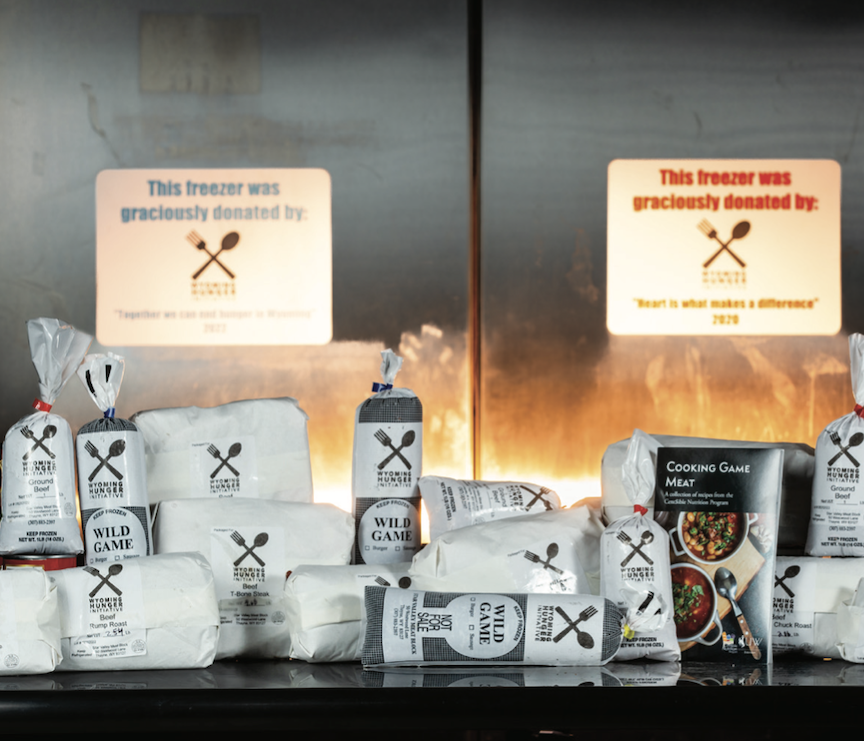
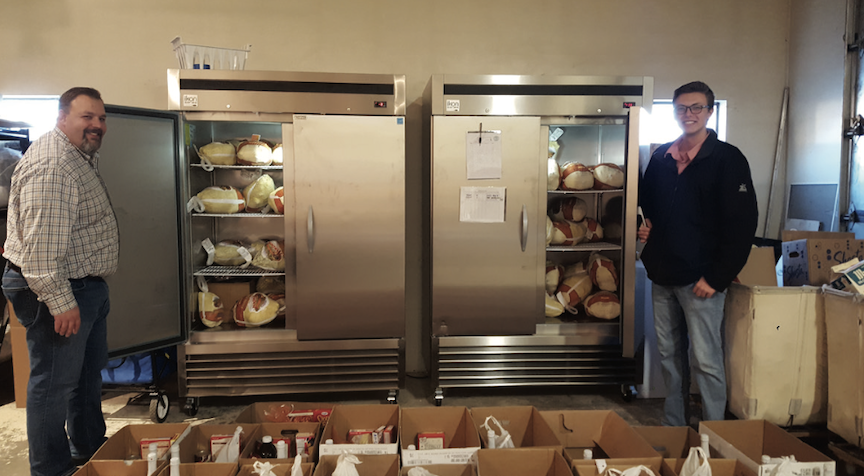
It began with nonperishable food but quickly expanded. A donated refrigerator made milk, eggs and other perishable items possible. Board member Violet Sanderson helped secure grants for commercial freezers, allowing the pantry to offer frozen food and meat.
Partnerships have continued to broaden the pantry’s reach. Donations from the 4-H livestock sale help supply meat, while a grant secured through the local CentsibleNutrition program allowed the pantry to begin offering fresh produce.
“Fresh items are sometimes what our families facing food insecurity go without because it also is the most expensive,” Mitchell said. “We wanted to give families the highest quality of food we could offer.”
Today, the pantry provides shelf-stable, frozen, and fresh food, including community-garden surplus when available.
Its work now centers on three programs: weekly pantry distribution, the Emergency Food Assistance Program, or TEFAP, and food rescue. Through food rescue, the pantry recovers safe, usable items from Broulim’s that might otherwise be discarded because of cosmetic imperfections or store-date standards.
The pantry also partners with Food Bank of Wyoming for TEFAP food, lower-cost purchasing, and twice-monthly produce pallets. Those deliveries sometimes allow families to take unlimited produce, and extra food is shared with the wider community when supplies are abundant.
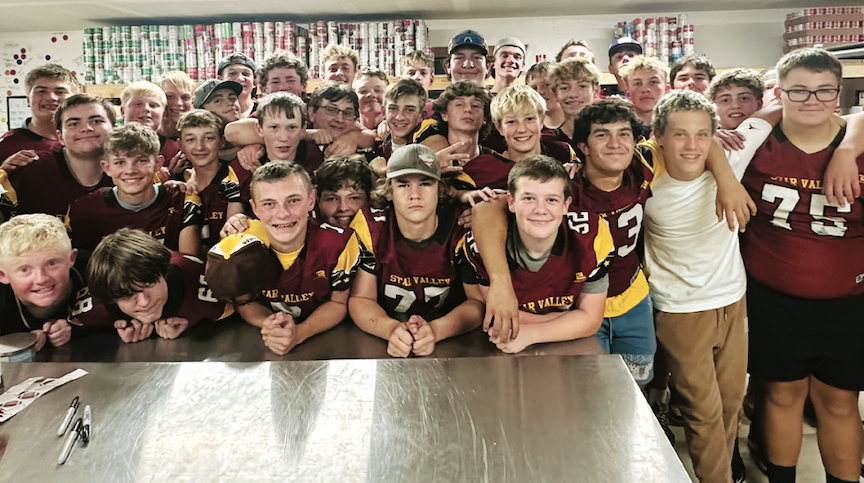
The partnership also supports the pantry’s annual mobile pantry at Star Valley High School, where volunteers—including football players—unload a semi-trailer of food in just a few hours.
Mitchell credits volunteers with making the pantry possible, especially students from Star Valley High School.
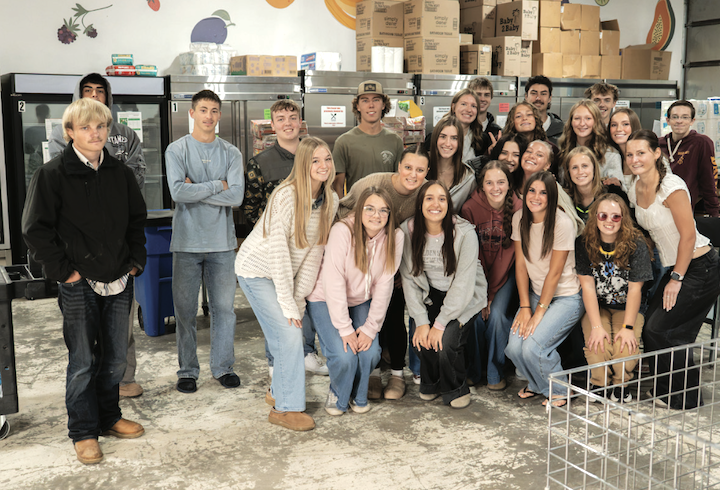
Since 2016, students have helped rotate food, organize donations, prepare for drives and shop for produce. Under teacher Aaron Lancaster, the school now buses students to the pantry on Tuesdays. Students also fill Thursday-night volunteer shifts.
This year, about 138 seniors signed up for the school-year volunteer schedule in less than 10 minutes, Mitchell said.
“They undoubtedly are the reason we’re able to be open,” she said. “Watching these youth step up and serve is my favorite part of the pantry.”
Sports teams, church groups and youth organizations also contribute. Mitchell said the Star Valley High School football team is among the pantry’s most consistent volunteer groups.
The pantry’s most difficult test arrived in March 2020.
As COVID-19 shut down businesses and schools, pantry demand surged from about 20 families on a Thursday night to a record 87 households. At the same time, the pantry had intentionally reduced inventory to make food rotation easier, and grocery stores were rationing purchases.
Money alone could not solve the problem. The pantry needed actual food.
SVI Media and Kim Dockstader organized a food drive, and the community responded in the middle of a pandemic. Residents looked through their own cupboards and donated what they could spare.
“That was the biggest food drive we have ever had, right smack in the middle of a pandemic,” Mitchell said. “It shows you the graciousness of Star Valley.”
The pantry also faced a challenge shared by many volunteer organizations: the health risk to older volunteers. A group of 2020 seniors stepped forward, telling Mitchell they were among the healthiest demographic and would accept the risk of continuing to work.
For nearly three months, those students helped run the pantry, allowing it to remain open while protecting older volunteers.
“They kept the pantry open so that people could continue to come receive food,” Mitchell said. “Those 2020 seniors have my heart.”
In recent years, the pantry has shifted from a drive-through model to a patron-choice format. Families now walk through the pantry and select food they will use, with category limits designed to share supplies fairly.
The approach reduces waste, accommodates dietary needs, and gives families more control, Mitchell said.
One memory stands out: during the Christmas season, a young boy asked his mother what they owed for the food. When she told him they owed nothing, he became emotional.
The pantry also works to challenge assumptions about food insecurity. While it initially served mostly senior citizens, families with children became its largest group beginning last November, a change Mitchell attributes to rising costs and the pressures facing working parents.
“We have a rule of no judgment here,” Mitchell said. “We cannot judge someone’s predicament based on what we may see. Our job is just to give it because it’s been given.”
The pantry’s ultimate goal, Mitchell said, is to someday no longer be necessary.
“The true goal is that we get put out of business, that no one is facing food insecurity,” she said.
Until then, the pantry plans to remain open weekly while working toward a larger, one-level building near Star Valley High School. Such a location would eliminate the need to carry thousands of cans up and down 13 stairs and keep the pantry close to the student volunteers who play such a central role.
For now, Mitchell said the message remains the same: every contribution matters.
A can of food, a dollar, or an hour of service can make a difference. In the pantry basement, thousands of volunteer signatures cover a wall, a reminder of the small acts that built an organization from 102 cans of green beans into a decade of service.
“The pantry has been built on the backs of one,” Mitchell said. “Somebody gave one can or one hour, and all of the ones add up to be many.”

SVI PHOTO/AUBREY HALE