UW president highlights enrollment growth, AI research and student success initiatives during update to trustees

SVI PHOTO/DAN DOCKSTADER
By Carolina Boelter
Laramie Boomerang
Via- Wyoming News Exchange
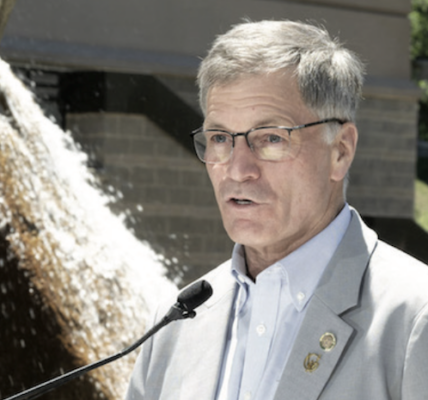
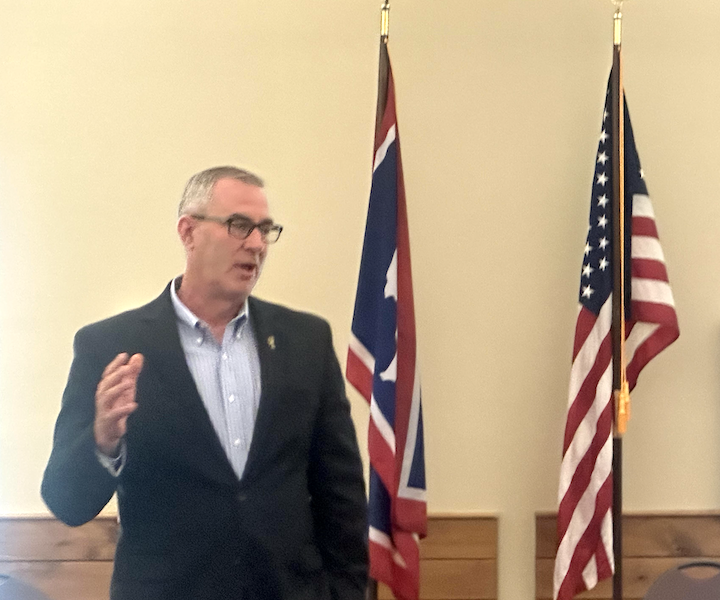
LARAMIE — University of Wyoming President Shane Reeves told the UW Board of Trustees on Thursday that the university is experiencing strong momentum across student engagement, athletics, research and enrollment planning, while also identifying areas where resources and administrative processes may need adjustment to support future growth.
During a lengthy president’s report during the board’s public meeting in the Marian H. Rochelle Gateway Center, Reeves described what he called “a real palpable excitement” surrounding the university and pointed to a series of accomplishments that have helped form the fall semester.
Reeves directed attention to student- life initiatives led by UW’s student affairs staff, including a fall festival, a readiness rally encouraging students to register for spring classes before winter break and a series of monthly social events aimed at connecting students from organizations such as fraternity and sorority life and resident assistant programs. He said those events have helped create a stronger sense of community among students.
“It’s really humbling to be around our students,” he said. “They’re fantastic. They’re as good as you think they are.”
Reeves also praised UW athletics, noting the success of several programs throughout the semester. He referenced the Cowgirls’ appearance in the Mountain West championship soccer match, recent basketball performances and the football team’s opportunity to compete for a Mountain West title, adding that the athletics program continues to be a unifying force for the university and the state.
Reeves also pointed to university fundraising efforts as another indicator of engagement, saying that UW’s recent Giving Day campaign generated approximately $3.3 million from 8,087 donors. While the financial support is important, he said that the broader significance is actually in the connections between alumni, supporters and the university, which have been made stronger by this effort.
“What you’re doing is you’re connecting people to the University of Wyoming,” Reeves said.
He also discussed UW’s continued evolution as an R1 research institution, a distinction the university earned in February 2025.
He spoke about the ongoing research projects that show the growing role of the university on the national stage. For example, chemistry professor Laura DeSouza and a partnership with Idaho National Laboratory secured more than $900,000 in federal funding to study artificial intelligence applications related to nuclear energy research. The project will use AI to improve predictions about how heat moves through nuclear fuel systems.
The research, Reeves said, demonstrates the opportunities and challenges that come with artificial intelligence and illustrates how UW is working to position itself as a leader in AI education and research.
While acknowledging concerns about overreliance on AI technology, Reeves said he believes UW can become one of the nation’s leading land-grant institutions in preparing students to use AI responsibly and effectively in both their professional and personal lives. He tied those efforts to larger areas of institutional strength, including energy development and critical minerals research.
Campus listening tour
During his listening tour across campus that is nearing completion, Reeves said he has become increasingly convinced that UW is positioned to become a national leader in areas connected to energy production, critical minerals and applied research. He specifically described work being conducted through the School of Energy Resources, petroleum engineering programs and other research units.
“I think the university is on the cusp of being one of the great intellectual centers in this nation for how to produce the energy needed to satisfy the demands of our nation,” Reeves said.
His listening tour also revealed several challenges on campus.
Among the concerns faculty and staff raised are workload pressures, resource constraints and a perception that funding reductions in past years were spread broadly across departments rather than strategically targeted.
Reeves referenced former U.S. Defense Secretary Robert Gates’ book “Passion for Leadership,” noting that across-the-board reductions often fail to improve institutional effectiveness.
As UW evaluates future budgets and resource allocations, Reeves said administrators will need to think carefully about how funding is distributed and whether some programs should receive greater support while others may need restructuring. He also stressed the importance of retaining talented faculty and staff in a competitive higher-education environment.
According to Reeves, employees repeatedly expressed a desire to move faster and pursue innovative ideas but often felt constrained by existing systems.
“If I had to tell you a line I’ve heard from many, it’s they want to run, but they feel held back,” he said.
One of his goals is to create an environment that empowers employees to pursue innovation while accepting that mistakes are a natural part of experimentation and growth.
Outside of campus, Reeves has continued to meet with industry leaders, state officials and employers across Wyoming. He described visits to drilling operations near Casper, mining facilities near Gillette and research laboratories connected to the university’s energy initiatives. Those conversations reinforced his belief that UW’s future growth must remain tied to the economic needs of the state.
While discussing future priorities, Reeves repeatedly returned to one issue — student housing. The university’s recently constructed North Hall and South Hall residence facilities are already at capacity and currently have waiting lists. He said that growth in enrollment will require additional housing space and identified construction of a third residence hall as his top priority.
Students who cannot secure rooms in the newest facilities are increasingly being assigned to McIntyre Hall, which Reeves said is not the preferred outcome.
“My number one priority, bar none, is to get the new dorm built as soon as possible,” he said.
Reeves also expressed optimism about the support included in Gov. Mark Gordon’s supplemental budget proposal released earlier this week, which could help advance site preparation and other foundational work tied to the project.
The combination of student engagement, athletic success, growing research opportunities and statewide partnerships, he said, has created a strong foundation for future growth.
“We have a great team, great opportunities, incredible work already taking place,” Reeves said. “There’s some things we need to think about to create efficiencies and unleash some of this talent.”
Other items for trustees
- Trustees unanimously approved modifications to a regulation governing academic notice, probation and suspension. The change establishes a new “academic notice” stage for first-time, full-time freshmen before probation.
University administrators said about 15% of freshmen are placed on academic probation after their first semester, and the additional step will provide more opportunities for intervention, advising and academic support before students face suspension. The policy is scheduled to take effect in fall 2027.
- Trustees spent significant time reviewing proposed changes to university regulations governing administrative authority over contracts, construction projects, personnel decisions and financial transactions. Final action was not taken.
Board members debated where authority should remain with trustees and where it should be delegated to university administrators, with some members emphasizing flexibility and efficiency, while others stressed oversight and fiduciary responsibility. A smaller trustees committee will review feedback and return recommendations in January.
- The board also approved a final report from the 2026 Budget Footnote Working Group for submission to the Wyoming Legislature and the governor’s office.
The report identifies potential operational efficiencies, resource-allocation opportunities and administrative improvements across the university. Trustees said the effort was intended to identify ways the university can operate more effectively, while maintaining academic quality and student services.
The above story may be used ONLY by members of the Wyoming News Exchange or with the express consent of the newspaper of its origin.