
Any construction or infrastructure project that requires digging below the surface necessitates safety precautions, like subsurface utility engineering (SUE). But there are different intensities of SUE, which begs managers the question of what quality level they need for their project. In this guide, we’ll explain what SUE is, why it matters, the different quality levels, and how to decide what your project needs.
What is SUE and Why Does It Matter?
Before we delve into the levels of SUE, let’s review what it means and why it’s important for construction projects. SUE is a process that uses advanced technologies to accurately locate and assess underground utilities during engineering and construction projects.
By providing reliable data, SUE helps project managers and designers make informed decisions, reducing redesign costs, minimizing change orders, and keeping projects on schedule. It also serves as a critical defense against utility conflicts, preventing costly delays, regulatory issues, legal liabilities, and community disruptions caused by incidents like hitting unmarked gas lines or water mains.
Understanding the SUE Quality Levels
SUE quality levels range from D, the least intensive, to A, the most comprehensive. Project managers and supervisors must understand SUE quality levels for safer projects.
Quality Level D
Quality Level D involves gathering utility records from sources like utility companies, municipal agencies, and construction drawings. This desktop research offers a cost-effective starting point but may include outdated or incomplete data that creates inaccuracies.
Quality Level C
Quality Level C combines record research with field surveys of visible utility features like manholes and meters. It improves spatial accuracy by identifying discrepancies in records but stops at observable features, leaving buried utilities between surface points unverified.
Quality Level B
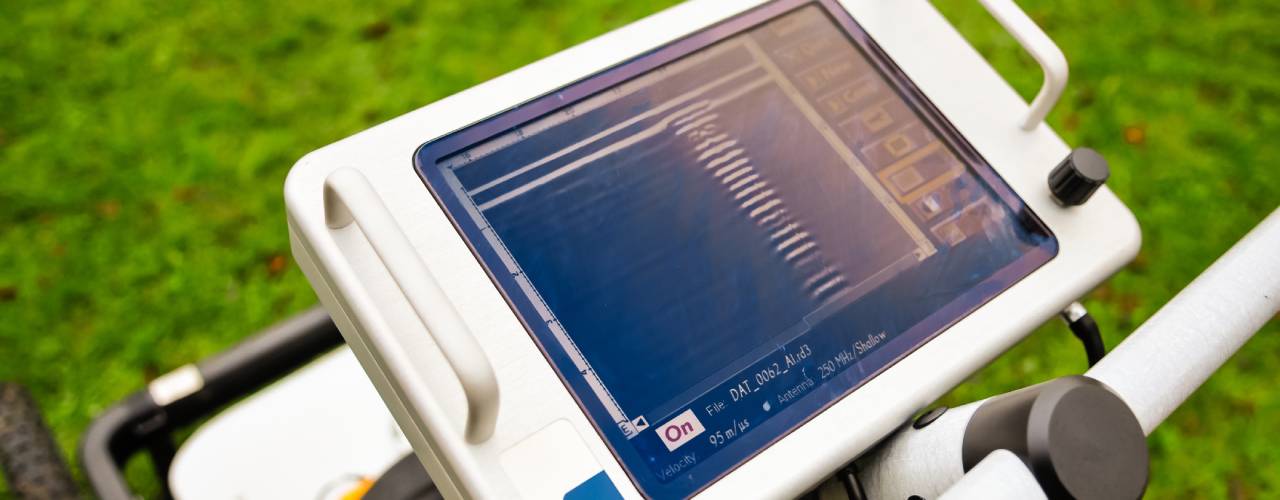
Quality Level B uses geophysical methods like ground-penetrating radar and electromagnetic locating to detect underground utilities. This approach provides better horizontal accuracy than previous levels and balances reliability with cost-efficiency for most projects.
Quality Level A
Quality Level A achieves the highest accuracy by exposing utilities through test excavations or vacuum techniques. It verifies exact positions, sizes, and conditions, but is also the most time-intensive and costly, so it’s most common in high-risk or critical areas.
Selecting the Right Quality Level for Your Project
Now that we understand SUE quality levels, what do you need for your project? Selecting the optimal SUE quality level for a project depends on factors like project complexity, risk tolerance, budget, regulatory requirements, and project phase. Simple projects with minimal excavation may suffice with Quality Level C or B data, while complex infrastructure projects with deep excavations or sensitive installations benefit from higher quality levels in critical areas.
While cost limitations may restrict investigation scope, strategically applying quality levels is more cost-effective than uniform application. Early planning phases often rely on Quality Level D or C for feasibility studies, while final design phases require Quality Level B or A for precise conflict resolution. Balancing costs with the benefits of risk reduction ensures smoother project execution.
Making Informed Decisions for Project Success
Successful SUE implementation requires aligning investigation intensity with project risks and stakeholder priorities. Rather than applying uniform standards, combining quality levels strategically to ensure better outcomes. Consulting qualified SUE professionals can help optimize scope, budget, and risk management, ensuring successful project completion.