
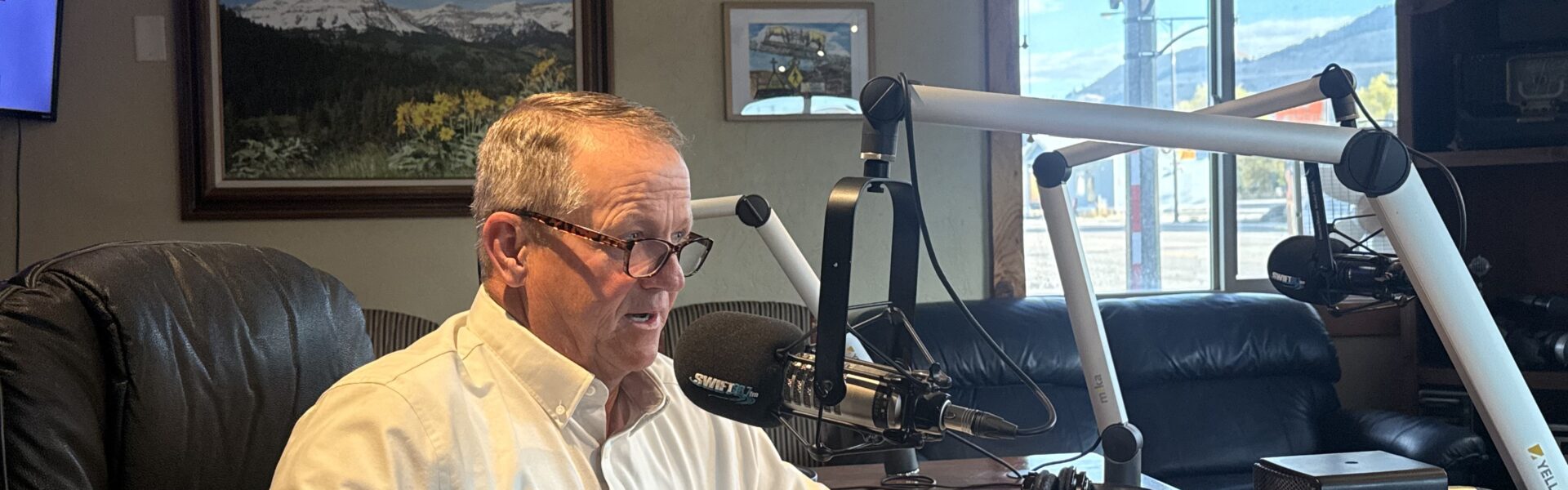
SVI Radio Interview: Rep. McKay Erickson (R-Afton) Legislative Report

Representative McKay Erickson (R-Afton) of House District 21 stepped into the SVI Radio studio on Monday, September 19 to report on the legislative work he has been involved with over the course of the summer and into the fall. Rep. Erickson discussed issues such as education funding, public lands and property taxes.
(0:00) Heading into this morning’s guest interview segment, and with a legislative report this (0:05) morning, Representative McKay Erickson from House District 21 is in studio today. (0:10) Representative, good morning. How are you today? (0:12) Hey, good morning, Duke.
Doing very well and appreciative to be here. (0:16) Absolutely appreciate your time. Now heading into your, (0:19) what will be your second session as a lawmaker, maybe compare what this summer was like to last (0:23) summer.
Now that you have a year under your belt, you kind of know what to expect heading into this (0:28) thing. Yeah, well, it’s been a very busy summer. I’m not saying that I didn’t anticipate it being (0:34) very busy, but when you actually get into the day-to-day activities and plan out your weeks (0:40) and see how many times that you’re traveling across the state, it’s a little bit, it becomes (0:48) real.
But I’ve enjoyed every minute of it. I had a great opportunity to really get involved in some (0:54) things that we’ve been working on and either get them started, see them with some possible (1:01) ways to solve the problems, and then actually have been able to see some final outcomes of (1:06) some things that we’ve been working on. So the summer has really been rewarding in seeing how (1:11) that goes.
Well, let’s dive right into some of those things. Of course, with your education (1:16) background, you’re on the House Education Committee. What are some of the topics of (1:19) discussion in that committee so far? Yeah, well, the major focuses are contingent on court cases, (1:26) and that’s kind of been, I won’t say that we, in the two different sessions that I’ve been in (1:34) in this summer committee, interim committee, I won’t say that we don’t get a lot done.
However, (1:42) a lot of our decisions are based on how these court cases are going to turn out. But as most (1:48) people know, the Steamboat Scholarship was viewed as unconstitutional, which I agree. And that’s why (1:55) I didn’t end up voting for it in the final version of it.
And that is against the Constitution in (2:01) giving money to private entities for education. And that was a $7,000 stipend if you chose to (2:10) do something besides the typical education, public education. And so it was viewed as (2:17) unconstitutional, and so it stopped all those payments.
And I don’t know whether that will be (2:23) a repeal when we get back in February, but something definitely has to be done because (2:31) it’s unconstitutional, the way the Constitution is written. It’s going to have to change (2:35) the Constitution if they want something like that to go through. And so that’s kind of held up some (2:41) things.
We all know, and I’ve heard quite a bit about the recalibration. The recalibration is (2:46) where they take a look every five years at exactly where do we want to be spending money on education (2:52) and how do we want to spend it. And that is, of course, up in the air because there’s a major (2:59) group that is in the Wyoming Now and in leadership positions in the Freedom Caucus.
And they do not (3:09) see that what we are spending on education is as valid as the rest of us do. And so (3:16) that will be interesting to see how that all works. But a lot of people are holding up saying, (3:21) well, let’s recalibrate first, and then we can go forward with, you know, where exactly we want (3:26) to spend our money in and the programs that we want to put more time and effort into.
(3:31) And then kind of addition to that on the another side case with that is a handful of school (3:36) districts have actually filed a lawsuit against the state on the on the funding model, correct? (3:39) They have. And that is, you know, we were found. And when I say we, the legislature, (3:46) the state of Wyoming was found to be pretty severely under underfunding education.
And (3:54) we were seeing the repercussions of that right now. We’ve got to meet those demands and, (3:58) you know, declining enrollment, declining revenues and revenues being shifted around. (4:06) We we’ve got to find ways to be able to do that because that is our constitutional (4:11) responsibility is to fund and we were clearly found in violation of that, especially in some (4:16) areas of of, you know, one that pops out as mental health and and and other other places were (4:25) pretty severe as far as just not being consistent with the way that we look to find money for those (4:34) places.
We value education, obviously, in the state of Wyoming and should. And we’ve got to (4:40) kind of step up to the plate, in my opinion, and and and find some ways to do that, because Wyoming (4:46) is very fortunate. We have a lot of resources.
It’s just a matter of where we go and prioritize (4:51) those and put them into place. And one area in need is is education. So Representative (4:58) McKay Erickson in studio this morning with the legislative report, another big committee that (5:02) you’re part of representative is the Federal Natural Resource Management Committee.
What (5:07) does this committee do? And maybe what is its role in the big picture? Yeah, this has been one that (5:12) has I’ve learned a ton. It focuses on policies and agencies of the state and federal government (5:19) as far as our natural resources go. So obviously, it would be spending a lot of time we are spending (5:25) a lot of time on the Forest Service on the BLM, you know, the Rock Springs (5:33) Management Resource Management Plan was obviously a big one of that.
Obviously, (5:37) the Forest Service constantly has areas that as it shifts towards more of a multiple use, hopefully, (5:46) we we keep an eye on that have testimony, we we draft legislation, possibly to be able to affect (5:55) that in in the actual session to be introduced into the session and, and we have just been knee (6:00) deep. It’s a it’s a it obviously has a lot of things going on all the time. And and that’s (6:08) something that I’ve found is very rewarding, because the people of Star Valley are very, (6:15) very involved and very interested in providing multiple use on our federal and state lands.
(6:22) And and the principle of that to to get more people involved and not just an elitist (6:29) area of use and not just one agency controlling everything, but it is people people want to (6:36) recreate and use the forest and use it to the to the fullest extent as they should. And so that’s (6:43) always been a push of mine. And it’s great to find so many of my constituents, very interested (6:49) in doing that and moving forward with it.
So as so as that committee has has met over the over the (6:55) summer and into this fall, are there any specific items that are being discussed? Maybe any potential (6:59) legislation coming up? Yeah, you bet. There’s, there’s a lot of what’s called good neighbor (7:05) authority talk. And that is the ability of the federal government where they have, you know, (7:10) severe underfunding in some areas, they can actually work with state agencies.
And in this (7:17) particular case that I’m talking about is the the forestry division of the state of Wyoming, (7:23) Wyoming Forester, and work together and they can actually put sales up on federal land so that (7:29) Wyoming can do the work. And then the federal government obviously provides the resource and (7:34) the land. And those are those are working out very successfully.
And we’re seeing some action happen, (7:40) not just talk about timber sales, or, you know, new improved grazing opportunities or (7:47) recreation opportunities, but we’re actually seeing where the state agencies are, are more (7:53) than willing to pick up the burden of that putting those sales up and different things like that, (7:58) and they’re getting it done. And, and it’s exciting. We have we have hopefully we’re (8:05) working on some funding for some more state foresters, especially to work this way (8:09) towards western Wyoming, because the closest one is Pinedale, and he’s very busy over there.
(8:15) And we’re seeing some of that success and reprioritizing a little bit with, (8:20) with where the the resources go in order to get those things up. So (8:24) Representative McKay Erickson, House District 21. This morning on the weekday wake up anything else (8:29) in regards to your committee work that you’d like to touch on representative? (8:32) Well, I’ve I’ve had an opportunity to go and be invited a couple of times to the travel, (8:37) recreation and wildlife TRW.
And that’s been very rewarding. I’ve kind of become the (8:46) person of reference, as far as trying to get some things going along the lines. There’s a lot of (8:51) my folks, voters, my people here in in Star Valley and throughout the west, (8:58) and throughout the state of Wyoming that are that are concerned about some things such as (9:03) fair chase hunting, and, you know, ethical, but what’s ethical and with the introduction of so (9:10) much of this technology that we’re seeing, we need to take a look at it in talking to Commissioner (9:18) Roberts, Game and Fish Commissioner Roberts.
He’s our representative on the Game and Fish Commission (9:24) from camera. And he, he said, as they go throughout the, the commissioner (9:32) group, throughout the United States, that’s one of the biggest concerns nationwide, (9:37) as to just the technology and how it’s taking over hunting, and it’s we’re moving farther and (9:42) farther away from, from fair chase, in my opinion, and in many opinions, and I’ve, (9:48) I’ve really even though there’s some people that are very, very adamantly opposed to (9:53) regulating any of this, I have received an overwhelming swelling support of, of, hey, (9:59) we need to, we need to do something about this. You know, the long range shooting is getting just (10:03) out of control and, and where it’s under fair chase, and fair chase is basically (10:09) that we’re hunting under the guise that, that animal has some ability of, of escape.
(10:18) And I think when you’re shooting, you know, a thousand yards, (10:23) we could lower that number considerably, but I think that takes away all of the, (10:28) the fair chase principles there. And, and with us, especially in the big game area of mule deer, (10:35) we have fewer and fewer of those. And with, with the ability of this technology to reach out and, (10:43) and do that, I, I just don’t know that we want to head down that line and get any worse than we, (10:50) we are.
So do you see, do you see a piece of legislation coming from this that may be (10:55) discussed this year? Yeah. You know, the game and fish commission asked me specifically, (10:58) and I ask others that are making this push that they wanted to handle it through the commission (11:04) and maybe, you know, have some areas that are, that, that do not allow long range rifles to be (11:11) used. And so, so I would like to see them do that before legislation, just because I think that (11:19) that’s their job and they may be more effective than a piece of legislation, but it definitely, (11:25) you have to knock them off center, you know, and, and not that it’s a threat of legislation, (11:32) but I think just getting people with like minds together and talking about this and, (11:37) and recognizing just how much support there is for more traditional hunting techniques.
(11:44) I think you’re going to see it move considerably in the next year. Now with 2025 or 26 being a (11:52) budget session, you’re, you’re probably not going to see any legislation proposed in that (11:57) particular thing, but I think you’re going to see some rules and procedures that are going to be (12:03) looked at very hard and, uh, and, and hopefully make some, some, uh, headway in getting that (12:12) taken care of and, and moving towards what people feel more comfortable with, you know, because we (12:18) got so much criticism throughout the, the country, you know, with hunting in general that we want to (12:26) keep it in the ethical area and keep it where, where it’s more reasonable and, and, uh, can, (12:33) can honestly say, this is a, this is a sport and this is, you know, something that provides for a (12:38) lot of people and, and, and keep it on the up and up, I think is mainly what I’m talking about. (12:45) Well, representative, you mentioned being a budget year, of course.
And so the last (12:48) couple of years, property taxes have been such a huge topic of conversation. There was the 25% (12:53) cut last year. Now that that’s been in place for a year, are you starting to see some numbers come (12:58) in and how do you see this moving forward in this year’s budget session? Yeah, that’s a good (13:04) question.
That’s, uh, you know, I, I was, that was one of my campaign focuses was we, we had to, (13:10) with the increase, uh, the drastic increase that especially we’ve seen here locally, uh, with the (13:18) property tax, we, we had to see something change and something really take places that was (13:23) substantive. And I think from the 20, uh, 24 session with, uh, some of the breaks that they (13:31) were able to give and some of the, the policies that they were able to put in, in that legislative (13:36) session, it’s kind of come to fruition now. And you’re seeing more of that take place, uh, with, (13:42) you know, the elderly and, and their homes and their property tax.
Those are really coming into (13:48) effect as well as last year, we passed the 25%, uh, decrease in, in our cut in property taxes. And, (13:57) and that’s really starting to hit as well as the towns, counties, schools are starting to adjust to (14:04) what that new income level is. And, and I think even though there are some in, (14:10) in stark need, and it’s, it’s going to cut them to the bare bones.
I think a lot are doing a great (14:16) job of making those cuts and seeing where exactly is the priorities for spending. And, and I think (14:24) it’s going to level out. I really do.
I, I, I think that was, that was something that we can (14:29) deal with. We can make happen. We can work through, but I do definitely, I do not want to see (14:37) these, um, districts and towns and communities dry up and go away by any means, because I, I’m, (14:46) I think we, especially in Western Wyoming run things pretty efficiently as far as government (14:53) spending and, and we know what areas are important and what areas are a priority.
And we, (14:59) we tend to flow that way. And so I want to see them supported and especially, you know, (15:05) our emergency services and things like that. I don’t, I don’t anticipate that they are able to (15:14) cut much more.
So, so we’ve got to find, we’ve got to find ways to be able to adjust to that and, (15:19) and, and be there when it comes to providing these services for our communities. (15:25) And you mentioned the potential of cutting more a year from now, there’s going to be that 50% (15:31) reduction on the ballot as, as a measure. Uh, and so do you see the legislature doing anything (15:38) maybe to prepare for that possibility in this session, or are you just going to wait and see (15:43) how the vote goes? Yeah.
And that’s, uh, again, that’s, that’s a valid issue. Um, you know, (15:49) I think more and more of the, the feeling that I get and in, in the meetings that I’m in and the, (15:54) uh, just the, the general feedback that I get, I think people are recognizing how valuable these (16:01) services are. And I would be really, I would be surprised to see the, uh, 50% cut actually gain (16:12) traction and, and a big foothold, because I think most reasonable people think, uh, (16:17) we can’t do that.
We can’t cut at that, at that rate. And, you know, a lot of times what happens, (16:24) we know when, when they send down cuts in any government agency, it seems like if it’s that (16:31) drastic, a lot of times the services get cut, but some of the fluff doesn’t get cut. And so, (16:38) you know, we, we got to strike that balance, but, but I, I think that we’re going to be able to (16:43) work forward and, and go forward in the idea that, uh, we can work with what we’ve got in place now (16:50) and make it a lot more reasonable for the taxpayers and homeowners to be able to make (16:56) that work.
Representative McKay Erickson, this morning house district 21, uh, appreciate the (17:01) update, the insights, anything we missed that you’d like to touch on while we have you. (17:04) No, like you said, the, the budget session is coming up in February, (17:09) 2026. And so we’re starting to see some of the numbers, especially come in what we have to be (17:14) able to, uh, to work with, you know, areas that we need to, uh, address prior to that going in.
(17:22) And I’m trying to become as prepared as possible and look at all those agencies and, and, uh, see (17:27) exactly where we do need to spend money and where we can, where we can trim that back because (17:32) obviously we can’t spend on everything. And, uh, the, the taxpayers, uh, me being one of them (17:39) would not appreciate continued tax increases. So, so we’re, we’re, we’re focused on that, (17:48) headed into it, and, uh, still a lot of work to be done between now and, and the end of, uh, (17:54) of the year and into February when the session starts.
And I have two more committee meetings, (17:58) uh, one in October 13th, I believe it is, or no, October 10th, excuse me. And then, uh, one in, (18:07) in November. And so we still have a lot of, of things to do and, uh, had a lot of information (18:13) to seek and, and we’re actively working on that and working hard.
And so hopefully that, uh, (18:20) pays off. It’s representative McKay Erickson this morning, legislative update. It’s all (18:24) part of the weekday wake up on SBI radio.



1 COMMENTS
Comments are closed.