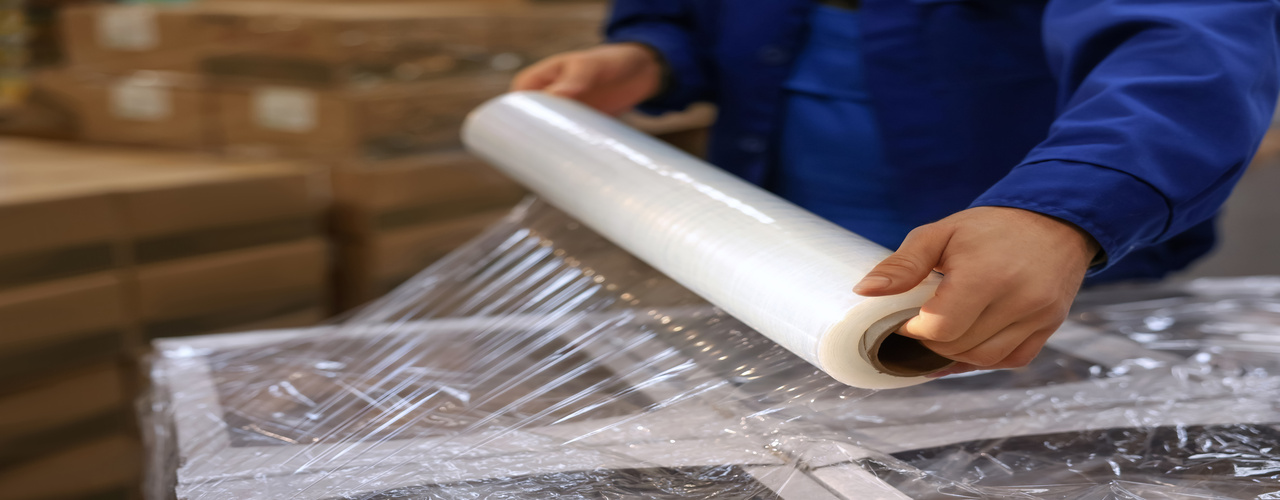

The sudden halt of a pallet wrapper is a common frustration for warehouse managers, frequently causing production delays and shipping bottlenecks. Inefficient stretch wrapping creates material waste, damages goods, and creates safety risks. In this guide, we’ll show you how to avoid the number one problem in stretch wrapping: film breaks.
An Introduction to Stretch Wrapping
Before we delve into the problems of the process, let’s review stretch wrapping. Stretch wrapping serves a vital function in the logistics chain. The process involves wrapping a stretchable plastic film around a pallet load of products. This film creates a containment force that holds the load together, preventing it from shifting, toppling, or sustaining damage during transit.
Proper containment protects the products as they arrive at their destination in the same condition they left the warehouse. It protects goods from dust, moisture, and tampering. Most operations use either manual labor or special machinery to apply this film. While the concept appears simple, the physics of maintaining the correct tension without damaging the product requires precision.
The No. 1 Problem of Stretch Wrapping
Film breaks represent the single most common and costly problem in stretch wrapping operations. When the film snaps during the application process, the consequences ripple through the entire warehouse. The operator must stop what they are doing, climb off the forklift, reattach the film to the pallet, and typically restart the entire wrap cycle. This interruption kills productivity.
Film breaks occur for several reasons, but they usually stem from a lack of consistency. If loaders do not stack the load squarely, a protruding corner will puncture the film as the pallet rotates. Another major culprit involves poor technique. In manual wrapping, the operator creates tension by pulling the film tight. As the operator fatigues, the tension becomes inconsistent.
How To Avoid Breaking Film While Stretch Wrapping
Now that we understand the number one problem in stretch wrapping, how do we avoid it? Eliminating film breaks requires removing the variables that cause them through consistent automation. One of the benefits of automatic stretch wrappers is that their consistent quality standards mean a secure and reliable wrap every time. Unlike human operators, these machines do tire, lose focus, or become careless during the process.
Modern automatic wrappers apply the exact amount of containment force necessary for each specific load without variation. These machines feature advanced sensing technology that actively monitors film tension. The stretch wrapper instantly adjusts feed speeds if it detects sharp corners or sudden tension spikes. Pre-stretched carriages also maximize film elasticity in a controlled environment before application.
Secure Your Shipments
Film breaks steal time and money from your operation, but they are not an inevitable part of shipping. By upgrading to automated stretch wrapping solutions, you eliminate the inconsistencies that cause failure. You gain a reliable, efficient process that keeps your products safe and your warehouse moving. Assess your current wrapping strategy today and consider how automation can eliminate your biggest packaging headache.