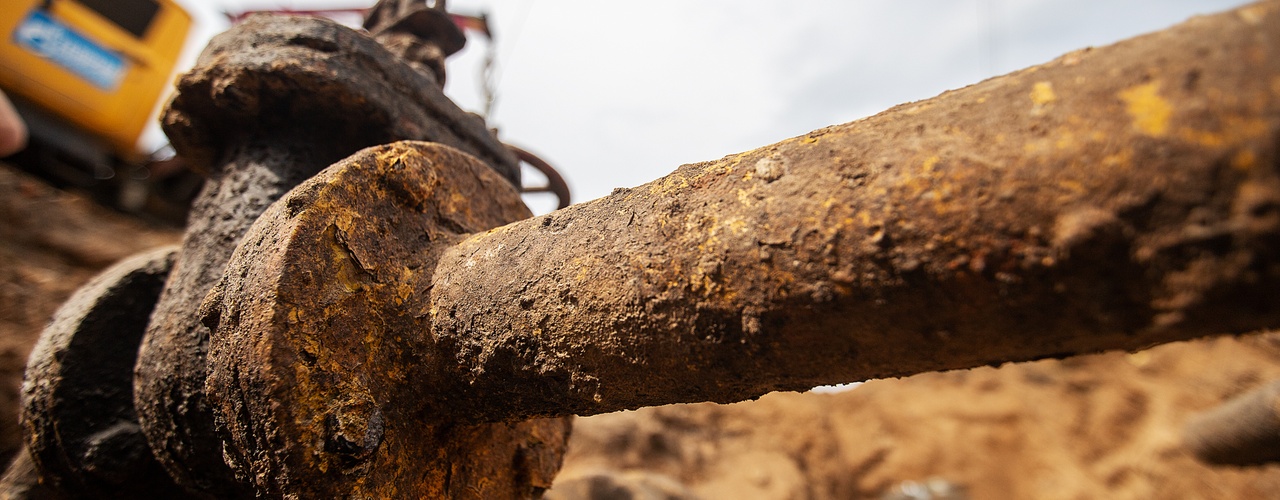

If you’ve spent any time in the natural gas field, you know corrosion is one of the most persistent threats to pipeline integrity. The good news is that most of it is preventable. These tips for avoiding corrosion in natural gas piping cover the practical, field-tested measures that keep your systems running safely and your maintenance costs under control.
1. Choose Your Materials Wisely From the Start
Material selection affects your entire system’s longevity. Steel pipe remains the industry standard, but the environment it lives in should dictate what grade and coating you specify. In wet or acidic soil conditions, coated and cathodically protected steel is your best bet (more on this later).
And don’t overlook fittings. There’s a well-established track record supporting the safety of using brass fittings for natural gas, and they’re naturally corrosion-resistant.
2. Apply Quality External Coatings
Fusion-bonded epoxy, polyethylene tape wraps, and coal tar enamel each have their place depending on your installation environment. The key is consistency, as holidays (coating defects) in the field defeat their whole purpose. Require holiday testing on every buried section before backfill, and document it.
3. Install and Maintain Cathodic Protection
Cathodic protection (CP) is essential for buried steel pipelines. Whether you go with a sacrificial anode system or an impressed current system depends on your pipeline length, soil resistivity, and budget.
Either way, you need a regular testing program. AMPP guidelines require annual close-interval surveys and rectifier checks at minimum. Letting a CP system go dark is one of the fastest ways to accelerate external corrosion.
4. Control Internal Corrosion Through Gas Quality
Internal corrosion gets less attention than external, but it’s just as destructive when moisture, hydrogen sulfide, or CO₂ are present in the gas stream. Work closely with your gas supplier on quality specs, and install drips and separators at low points in the system to pull liquids out before they sit in the pipe. Corrosion inhibitor injection is also worth considering.
5. Isolate Dissimilar Metals
Galvanic corrosion happens when two dissimilar metals make direct contact in the presence of an electrolyte, and soil moisture counts. Dielectric unions and insulating fittings break that electrical connection and stop the reaction before it starts. Pay special attention to transitions between steel mains and service lines made of different materials, and at meter set assemblies where a mix of metals is typical.
These tips for avoiding corrosion in natural gas piping aren’t revolutionary, but the systems that hold up are the ones where operators take each of these steps seriously and consistently. Corrosion is slow, quiet, and expensive. Staying ahead of it is always cheaper than responding to it.