
SVI Radio Interview: Rep. Scott Heiner (R-Green River) – New Coal Powerplant in Southwest Wyoming

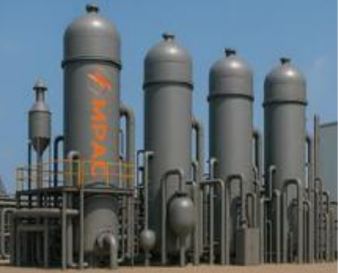
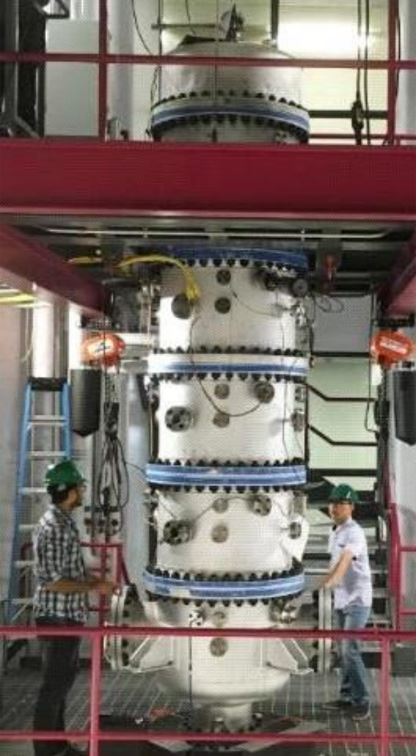
Representative Scott Heiner (R-Green River) called into the Weekday Wake-Up on Monday, June 22 to discuss the potential of building a demonstration coal fired powerplant in southwest Wyoming. The plant will be based on the new Staged Pressurized Oxy-Combustion (SPOC) design currently being pilot-tested at Washington University in St. Louis and will use Wyoming coal, natural gas, and biomass for fuel.
(0:00) At 834 this morning it is the weekday wake up on SVI radio heading into our guest interview segment (0:07) Representative Scott Heiner is on the air with me today over the phone and the potential and discussion taking place to build a new coal-powered (0:16) Coal-powered power plant in southwest Wyoming representative Heiner. Good morning. How are you today? (0:23) Good morning, Duke.
I’m doing wonderful. Thank you for letting me take some time to explain this to your listening audience (0:29) Absolutely, I appreciate your time, and we’ve seen a social media post from you on this you sent out a press release on it (0:35) So walk us through what this process is and what’s being discussed here (0:41) So Duke I’ve been working for a number of years to try and bring a new power plant to Wyoming (0:47) We are blessed with natural resources beyond any other state here in Wyoming (0:52) But we’ve seen a reduction in employment in our mineral sector by 17% over the last few years (0:58) Where there’s a war on coal, we’re not seeing oil and gas being drilled for very much in Wyoming (1:04) So I’ve been working to revitalize this industry. Coal is the fuel of choice with it’s being politically depressed (1:12) Because of politics but not because of science (1:16) Science and technology have improved over the past 50 years that we can we can burn coal (1:22) In a very clean environment and as (1:26) President Trump says it’s clean beautiful coal because it’s it is the fuel of choice (1:31) It’s it’s got higher BTU factor and a stable price environment if prices don’t go up and down (1:37) So a number of years.
I’ve been working on this I’ve been (1:41) Working with the unit of the Washington University in st. Louis there (1:45) They built a pilot plant of a staged pressurized combustion (1:51) Process that is current technology new technology to utilize to burn coal in pure oxygen (1:59) Environment rather than air and at a pressure of about 250 pounds. So the actual plant is much more compact and (2:08) Less expensive to build and operate.
So they’ve got this pilot plant been running in st. Louis for a number of years (2:17) Now to there at the point they need they want to build a demonstration plant. So the pilot plant is pretty small (2:23) It’s about the size of what it’s enough to run one house (2:26) so pretty small that they’ve been experimenting with a (2:30) Demonstration plant then would be a big enough to probably run all of Cameron Diamondville combined (2:37) So that’s that’s the size of it.
It’s just a to (2:40) Do a proof of concept before you go to actual commercialization (2:45) Once we build this demo demonstration plant and prove that it works (2:49) Then the next step is a full-blown plant about the size of not in plant there in camera (2:56) Okay, so I’m very very excited about this for the potential to unleash coal and (3:03) Move the needle so that we can revitalize our mineral industry here in Wyoming (3:07) Yeah, it sounds like a fantastic possibility in an option (3:11) And of course, we’re very all very familiar with with not and you mentioned that being converted already over to natural gas (3:18) So this this demonstration plant (3:20) Is this the one that you’re thinking could be built in Southwest, Wyoming? (3:24) Are you hoping it could be the demonstration and the actual full-size plant down the road? (3:30) So the demonstration Duke the demonstration plant will be built in Southwest, Wyoming preferably now (3:36) What I did is I? (3:39) Come to get this thing moving quickly. I teamed up with Utah (3:43) Utah another big coal-producing state (3:45) so I took this the research people from Washington University up to Canada with me and (3:52) Had them present to all these (3:54) At these called the end council. It’s a coalition of 14 energy producing states and two Canadian Providences and (4:02) They they presented what they would we’re doing with this pilot plant and I was I have some good friends (4:09) They’re legislators in Utah, and I said hey (4:11) You know this this is similar to what you guys are trying to do down there to revitalize the coal industry in Utah (4:17) Why don’t we work together? (4:19) let’s join forces and (4:21) Bring this demonstration plant to Wyoming and Utah and let’s build it right here in Southwest, Wyoming where we can both work on it (4:30) They’ve got the University of Utah and BYU working on similar efforts in fact (4:35) BYU is the only other place that use pressurized (4:39) oxygen (4:40) Besides Washington University in st.. Louis so by having these three four universities (4:47) University of Wyoming (4:49) University of Utah BYU and Washington University they’re going to all work together collaboratively on this demonstration plant (4:57) so it’s just just bringing people together and (5:01) Utah is going to pay half of it and (5:04) Wyoming will pay the other half to move this forward as quickly as possible (5:07) So they’re they’re talking with the Department of Energy this afternoon (5:12) and they the federal government is very interested in this concept and (5:17) Hopefully they’ll jump in and help us as well, but this this is moving quickly at this point and (5:23) I (5:24) One of my you know I’m deleting (5:25) I’m leading the charge in this and one of my requirements is that it gets built gets built in Southwest, Wyoming (5:31) So it’s in in this area that coal is really struggling in Southwest, Wyoming and this will (5:39) revitalize the industry (5:40) Representative Scott Heiner on the weekday wake up this morning so representative (5:45) What’s your kind of expected timeline? I’m sure there’s still some things to be worked out, but as far as (5:51) When the when the project actually really starts to come to fruition (5:54) How long could that take and what needs to happen between now and then so Utah is committing? (6:01) 1.25 million dollars in Wyoming 1.25 million dollars to do the the engineering design and that will probably take six months (6:11) So by the end of the year we should have the engineering design, and we will then seek funding for the full (6:19) Demonstration plant the full plant will cost 80 million dollars, and so hopefully we’ll be constructing next year (6:27) It’s modular in design (6:28) So it’s fast to build you actually bring the modules in on semis and stand them up and so it’s compact (6:35) It’s about a third the size of a regular power plant (6:39) And so maybe within a year and a half we can have it up and running (6:45) Run it for a couple of years to to do a proof of concept and then go for a full-sized (6:51) Beaver not or not in size power plant within three to five years yeah now (6:57) You’ve said it’s it’s going to move very quickly because it (7:00) the Trump administration has been asking and working with us to to develop new technology and (7:07) Revitalize coal and this aligns with him.
I’ve been talking with (7:11) Secretary of Commerce and and some of the department secretaries (7:15) And they are very much in favor of this the Trump administration wants to move forward with clean beautiful coal (7:21) So you mentioned Southwest Wyoming have any potential sites kind of risen to the top? (7:28) That’s that’s part of this design is trying to find the best location with the resources available (7:35) because you you know you it’s (7:39) A (7:39) Lot of the research happens up in the Powder River Basin, and that’s one of my (7:43) Criteria is we need some research going on down here in Southwest Wyoming as well (7:48) So we’ve got two mines here. We’ve got the camera mine, and we’ve got the Black Butte mine east of Rock Springs (7:55) there and we there those are the places I want to source the coal from and (8:01) The other advantage of this process is it captures co2 in the process and (8:07) You utilize that for enhanced oil recovery Duke. There is a huge opportunity to (8:13) revitalize aging oil fields with co2 (8:17) it’s (8:19) We’ve got two billion barrels of oil that are still stranded in (8:23) Wyoming that we we need to unlock and co2 by injecting that in the ground in these aging oil fields we can unlock that (8:33) Unlock that stranded oil (8:36) We’ve only got about seven oil fields that we’ve started the enhanced oil recovery with co2 and in those seven fields (8:43) We’ve increased tax revenue by 1.1 billion dollars just by injecting co2 (8:50) so the co2 off of this power plant will be utilized to inject into these old oil fields and (8:57) Back to life, and so there’s there’s another benefit to this not only the electricity that we need so desperately (9:03) But the oil that we can realize our oil industry as well (9:08) Representative Scott Heiner this morning on the weekday wake up.
I appreciate the update (9:12) Thank you for the information anything else on this project. You would like to mention today (9:17) There’s a lot of moving parts here and with my background in engineering and minerals and energy (9:23) I think this is coming together that it’s gonna really move the needle for Wyoming. It’s it’s got a future (9:31) Possibility of retrofitting these old (9:34) these oil old power plants to the newer technology and (9:38) I think you’re gonna see that Wyoming is going to be in the forefront of energy for for the United States and (9:45) The Trump administration recognizes that Wyoming can be a leader in this so I’m just excited (9:51) I’m glad to be a part of this and hope that I can stay in the game (9:55) Representative Scott Heiner this morning on the weekday wake up.
It’s all part of the SVI radio network




1 COMMENTS
Comments are closed.