SVI Radio Interview: Commissioner Kent Connelly

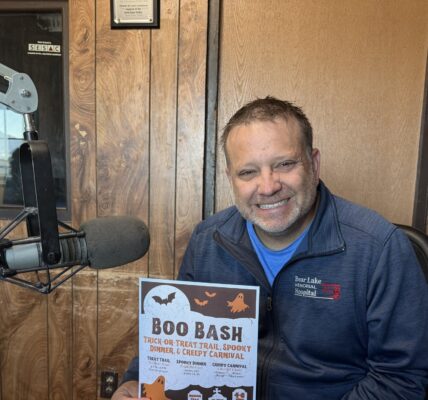
Lincoln County Commissioner Kent Connelly stepped into the SVI Radio studio for the monthly report from the commissioners. Chairman Connelly discussed the budget that was passed by commissioners last week for the 2026-27 fiscal year, the opening of the new District Courthouse and updates no industrial siting.
The following transcript of the above interview is AI generated. Minor spelling errors are likely to occur.
(0:00) Weekday Wake up on the SBI Radio Network and Lincoln County Commissioner Kent Conley joining (0:05) me in studio today, Chairman of the Lincoln County Commission for the monthly report to (0:09) Commissioner Conley. Thanks for your time today. Welcome into Star Valley once again.
(0:12) Looks like you’re getting a little bit of rain, but good to be here. (0:15) Yeah, absolutely. Appreciate your time.
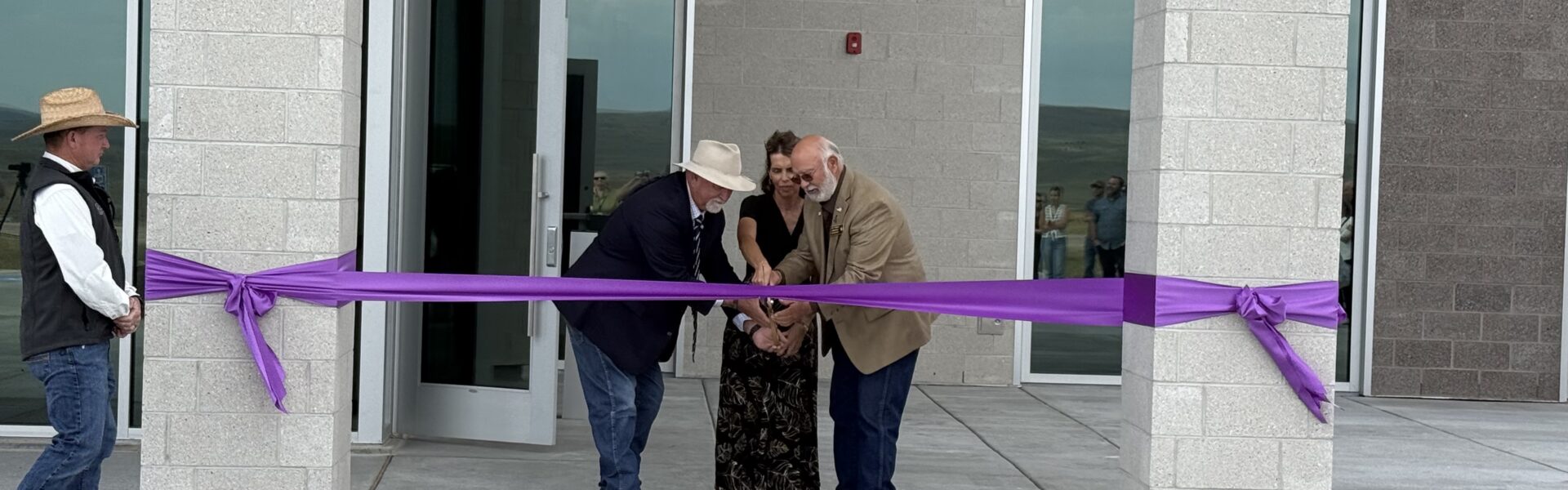
Well, a big thing happened last week or recently with the (0:20) ribbon cutting of the new district court in Kemmer and that’s a project that seemed to go fairly (0:26) smoothly, right? Yes, it did. Well, it’s been a 14-year process when we first started the whole (0:31) process and we had to save the money to be able to pay for it. When we had the ribbon cutting, (0:36) and it’s paid for, the entire addition is paid for.
And the need, unfortunately, (0:40) as part of us growing up as a county, when the judge finally gets fully transferred over into (0:45) there and the system gets transferred over, we’ll have three major trials in the first month of (0:49) September alone. When I first took office, we only had three or four of those a year. (0:53) Now, we have a full-time judge and full-time staffs and stuff in that and we have a lot of (0:58) things going on, unfortunately, in there.
But it is ADA compliant and finally applies to the rules. (1:04) If you have to sit on a jury now, you actually have a regular jury bathroom and some things in (1:09) it that are kind of unique. And so those of you that have experienced that should be able to (1:13) recognize that.
And if you’re in a wheelchair, we can make accommodations for you finally in the (1:18) first time in this county for a long time. And the convenience of being right next to the jail (1:22) is nice too, right? Well, and that’s a manpower thing. When we’ve handled some major murder (1:27) trials, the sheriff’s had to have as many as six deputies on staff to be able to transfer somebody (1:31) that’s being on trial for their life.
And this facility is set in the jail, part of the jail. (1:38) We have a tunnel that comes out of the jail and we call it the green mile. We can literally have (1:42) them escorted one deputy to be able to deliver him back and forth to court, no exposure to the (1:48) outside for the risk of what goes on with, unfortunately we do get some major crime in (1:52) Lincoln County now.
Yeah, absolutely. So you mentioned the projects paid for, remind us (1:56) where the funding came from and how that all happened. It took about a, this was a 14 year (2:01) project.
We did the jail first, which we had to for when the old jail was sinking and the ADA and (2:06) everything else that goes with it. And we did the circuit court at that time. And then we took the (2:11) 10, 11 years to pay for it.
Most of that money come in savings money by the people themselves (2:18) and what you would call capital expenditure savings or reaching out to the legislature. (2:23) There’s a combination of about 10 things. We were able to use the pandemic money, (2:27) what they called ARPA to be able to backfill into some of our budgets and transfer in there (2:32) to do the building.
And that’s where we built the money up from. And it’s a combined effort. (2:36) I’ve served with 12 different County commissioners and eight of those commissions, (2:41) all eight of the commissions voted.
We all voted. We needed the project absolutely need. (2:47) It’s one of the state requirements that we have.
And so we took the time and built the money up (2:51) through there. And this took, I’d like to thank the eight groups of commissioners that I served (2:55) with be able to be able to stand there and cut that ribbon. Ken Conley, commissioner with Lincoln (3:00) County in the weekday wake up today.
Well, the big budget discussion happened over the last couple (3:04) of weeks and the budget has been finalized and approved. What highlights would you like to (3:08) discuss there? Basically we had to cut another 1.5 million out of it this year. Actually assessed (3:14) valuation of Lincoln County came up just a little bit.
It was 905 million last year. And you take (3:19) that number in times at times, the mill levy, which is 12. And that gives you one of the biggest line (3:24) items in our budget.
And that actually did come up even with the 25% cut by the legislature. (3:30) And then you have the 50% cut for people like me that own a home more than 25 years (3:35) and what they call the 4% cap. And so those in there, those total cuts into the budget, by the (3:41) way, are right at 1.8 to 2.3 million, depending on how that comes out in the state.
So, but the (3:47) property values are still on the rise in Lincoln County, mostly Northern Lincoln County. And I (3:51) don’t think that’s a surprise to anybody, but the budget itself, very tight. We were actually (3:57) sitting on the, when we did the night before, when we did the, when you have the open house for (4:03) it, not open house, excuse me, hearing, so you can do it in there.
We had to cover some requests. (4:09) And so we had to dip back into reserves again and put more money back in the budget so we (4:13) could make it flush. We’ve got a little bit of money in there now.
The county is the emergency (4:19) stop gap in your county for stuff that happens. We, if something goes wrong in this county and (4:27) you get a flood, a fire or whatever, we have to pay for it up front and wait for the money to come (4:32) back. Or if I’ve had, like we’ve had here lately, we’ve had issues with senior centers and different (4:37) things like that.
They’re running out of money in that 8% inflation is killing all of us. I’m (4:43) preaching to the choir, I think to the public, when I tell you that everything’s going up. (4:47) And so we’re having to have enough money around to try to be able to cover the cost (4:51) than what I would list.
And these are groups that aren’t mill levied. They don’t have districts and (4:57) stuff like that. Plus, even the districts are coming back to us now on to buy different big (5:02) items.
The 25% in what cities, towns and counties and we compete for the same amount of money. (5:10) What you basically, which I’ve seen out of them is, did we get through the cuts? Absolutely. We’ll (5:14) figure out what to do no matter what the taxpayers vote for.
But when you start cutting down in (5:18) through there, the first thing you cut out is capital. And you don’t see it tomorrow. You see (5:22) it five years from now when you don’t have enough to either buy a new fire truck or new engine in (5:26) here.
Senior Center, freezers, that’s what we just got hit with. And refrigerators, stuff like that. (5:32) It sounds simple, but there’s got to be enough in there to be able to cover what we do in (5:39) emergencies because we are the emergency stopgap.
Do we get some money back from the state when we (5:43) get in an emergency? Yes, we do. But it might take nine to 10 months to do that. And so that budget, (5:48) when we set it up, it’s a major process of trying to guess what the state’s going to give us.
(5:53) And the present budget we passed the other day, we had a 26 million in Fund 10 last year. We’ll (5:59) have a 24 million in there this year. So that was 1.5 to be exact because of the numbers in between.
(6:05) And when you take all that into consideration, our libraries got hit hard. We made a lot of cuts. (6:14) And we’ll live with it.
We’ll figure out what to do with those cuts. And everybody needs to be (6:21) understanding of when I’ve talked before about that loss of revenue that we had. We’ll get through (6:26) it.
Lincoln County will recover from this. Three, four years from now, when we get these other big (6:30) industries back up in southern Lincoln County, and even some stuff that’s going on here in the (6:35) north, we’ll recover from it. But we’ve got to get through this in between.
I have a lot of (6:40) faith in the people and the staff that we have being able to multi-use people and do stuff. (6:44) But the budget basically is, like I said, 26 million last year in Fund 10, (6:50) 24 million this year. And that’s very reflective of the current revenue stream that’s coming in.
(6:56) So you did dip into the savings a little bit to make everything line up in the green. So two (7:01) questions. How much does the county have left in savings at this point? And what departments (7:09) took a cut in the budget this year? (7:11) Biggest cut this year, last year, it was the fair and the libraries in major cuts.
But we asked (7:18) our departments, every regular department, for 10 percent. But 10 percent even was taken even (7:23) deeper. The biggest cut this year was 571,000 out of road and bridge.
And the residents won’t see (7:29) that for a couple years because we’re diminishing down. The long-term planning gets cut when I cut (7:34) that department. And so we can’t sustain that kind of cut every year.
And so that’s the biggest (7:40) department we had. But that was our departments. Like I said, we asked them for 10 percent.
(7:45) The extension service, they come into the hearing, we’re in there. Those affected those things in (7:48) there. And we actually had to put some stuff back to make sure and take care of the kids in 4-H.
(7:53) And we had the issue of the search and rescue people fundraising for their trucks and stuff. (7:59) We took care of that. We took care of that in industrial siting money, which right now, (8:04) the money that the county itself gets from it is about $800,000 a year.
And that money is (8:10) specifically targeted for things like that. And so we dipped into that. And I’ll be getting with (8:15) the search and rescue on that so that they can get the equipment they need to be able to (8:19) appear chase the Snake River and down there to chase all the people in the National Forest.
(8:24) And so, but industrial siting is key to this county to get us through this low time in there. (8:29) We’ve got, I’m the lead on it down there because I’m in at the courthouse when we do it. It’s a (8:35) process.
We have all the towns down there and the umbrella of what an industrial siting can come (8:40) even touch Afton. Afton’s been able to pick up some of it. And these come in as monthly payments.
(8:46) And we have to remind everybody, you can’t spend it till you get it. So when we get the (8:51) industrial siting things approved, it may take well, you, Duke asked me about the one in Cokeville. (8:57) We never received a dime and that started probably five years ago.
And so that’s some of these can (9:01) come quick. Some of these can come late. And that was the search and rescue issue got into (9:06) that when we get it is as I remind people, we can’t spend it till we get it.
And so, (9:11) but industrial siting is key, but we need to stay engaged with that process. (9:15) The Terra Power Plant is on schedule right now. They’re, they’re saying a little farther down the (9:20) line, but we’ll probably have another round with them.
We have four of them in the process (9:24) right at the moment. And they, like I said, in this particular budget, you remove that one from (9:29) it’s a whole different look. And so we’ve got to stay engaged and be right on top of it.
It takes (9:35) a lot of time and a lot of manpower to do it. And it’s a very legal process. Each of the towns that (9:40) have participated in it or what they’ve done have found out.
I don’t even, I can testify to the (9:46) hearing for it and do as a resource, but our attorney does it and a city attorney does it for (9:52) the cities. And so I know in Kemmerer, it’s been helping down there on the streets for the people (9:57) that live down there. And I haven’t talked to Afton here.
We know where they did. There’s much (10:02) smaller portion because they’re farther outreach of it, but it’s like oil and gas across the (10:06) mountain in there. There’s people in Star Valley work over there.
There’s people from Star Valley (10:10) commute into Kemmerer down there. I see a lot of them right now. We’ve got about 1600 workers (10:15) working on the three projects down there right now.
And so we’re seeing, we’re seeing a boom (10:20) effect down there on that, but our revenue’s down. We’ve got to get through it in between (10:25) when they build the Terra Power Plant, we don’t get the first property taxes off the (10:29) Terra Power Plant till 2030. Lincoln County Commissioner Ken Conley in studio this morning.
(10:34) Well, Ken, appreciate your insights on the budget. One last question. I asked this question (10:37) because I know a lot of people out there are thinking it right now.
You’re talking budget (10:41) cuts and I promise you there’s people, and I’m sure you’ve heard it, that are thinking, okay, (10:46) so you’re asking departments to take a cut at the exact same time that the commissioners approved (10:50) pay raises for the electeds in the county. So speak to that a little. The elected officials, (10:56) well, just like the state when they approved their state budget and pay raises.
In this rising (11:01) economy, the challenge Lincoln County has, even with my salary, I only make $39,700. The resolution (11:07) that was passed on the new one went to $50,000 in there. I’ve got to get reelected to get to $50,000.
(11:12) Okay. And so there’s misconception on that. And I don’t give any benefits.
So I’m one of the cheaper (11:17) employees in the county because I don’t have medical benefits. And so $50,000, well, I’ll be (11:23) right up front on the part of it. I spend 60 hours a week at this job.
That’s all there is to it. If (11:28) you’re engaged in doing it, that’s what it takes. And so, but the law is this on salaries for all (11:34) the elected officials.
The elected official’s salaries are set by resolution before you run (11:39) for office so that you know what your office is getting for those four years. So every person (11:43) that signed up this time, no matter what it was, if you’re in the five electeds and the three (11:48) county commissioners position, which two are up, you know what your salary is, and it’s set for (11:52) four years. New commissioners coming in can’t change it.
That’s the state law because we do (11:57) the state law. It’s like districts and everything else in some of this discussion, even on five (12:02) county commissioners. A district is a district under state law.
It’s not a school district (12:07) that you can move in and out of. The district is where you have to vote in, and it’s who you vote (12:13) for. And so the salaries themselves, like I said, and the rest of the staff, but one of our major (12:19) hurdles, Duke, and I think some of the people know this because I encounter the same people (12:22) talking about different salaries, but I also get hammered completely on by people.
It’s like you (12:27) have to pay these positions more because Jackson’s stealing them. And believe it or not, we have in (12:33) southern Lincoln County, we have Summit County, Utah that out business for people for these (12:37) positions. And right now, the competition down in southern Lincoln County, we have the major (12:44) industries come to us and say, look, we’re going to post about 200 jobs here in the next month and (12:48) a half.
And that’s what’s going to happen down there when they start supplying these things. (12:51) And they’re going to pay 25, 30% more than we have. So we’re in more than just a competitive (12:56) market.
Unfortunately, we’re next door to two filthy rich counties in Sublet and Teton, (13:02) and they outpay us in all sorts of things. And that’s why people like from this valley, (13:07) where we’re at right now, that’s why we call the Jackson 500 what it is. They live here (13:12) because they can’t afford to live in Jackson, and they make more money in Jackson.
And so that’s (13:16) the competing market we have to take care of our employees in. And like I said, the benefit package (13:21) and stuff in there. But the commissioner salaries themselves, like I say, is set to be new at 50.
(13:27) Mel already makes that much. And but that is already set in stone for the next group that (13:33) comes along in there. Because there’s discussion by people, you know, they come into office and (13:38) cut the cost here and cut the cost there.
You don’t get to cut a legislator salary. (13:43) We’re an arm of state government. That is by law how that’s how the system functions, Duke.
(13:48) Commissioner Kent Colley this morning with the Lincoln County Commission. Appreciate your time. (13:52) Anything else we missed that you’d like to touch on today? (13:54) Just thank you to the people.
I always try to sell it and I forget it at times is (13:59) we’ve been through these ups and downs. And like I said, we should be in a boom when we’re not. (14:04) And the impacts up here in Star Valley is the same way.
It’s an up and down market. (14:09) Absolute faith in our people and the people. We are considered to be a good county.
We are used (14:15) as a marker. Industrial siting. We have an A plus there.
We were told we had the best applications (14:20) in the state. Our audit is one of the best in the state. And so it is the people that work under us, (14:26) the county commission and elected officials that accomplish those things and do it.
(14:31) We are resilient people in Lincoln County. We’ll we’ll get through whatever goes on. (14:36) And I absolutely believe that we’ll absolutely figure out what we’re going to do.
Everybody’s (14:39) talking about a lot of change right now in Lincoln County itself is changing. We don’t (14:44) need to worry about change. It’s coming to us.
And so we’ve just got to deal with it. But thank (14:48) you to the employees and not only that, but thank you to the people, the input that comes back to (14:52) us on different subjects. And we love it when we have people come to us and talk to us.
We’re on (14:58) the website. If you’ve got a question, don’t hesitate to email us, text us. We’ll answer (15:02) sooner or later.
We’re in a lot of meetings like I am even today. I got four meetings up here in (15:07) Star Valley today. But thank you very much for what you do as the people.
Chairman Ken Conley (15:11) this morning. It’s all part of the weekday wake up on SBI radio.