SVI Radio Interview: Tanner Belknap – Star Valley Trout Unlimited Clark’s Barn Project

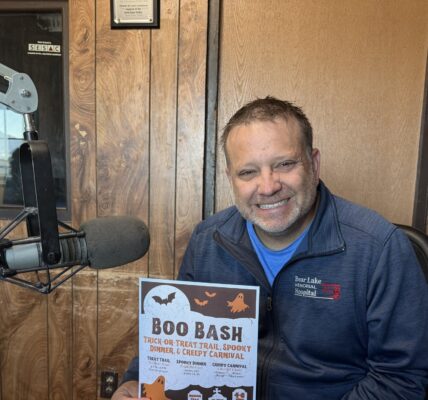
SVI Media’s Dan Dockstader spoke with Tanner Belknap from Star Valley Trout Unlimited regarding the Clark’s Barn Project along the Salt River.
Many locals know that Clark’s Barn. What are (0:12) we calling this project as we rebuild the Salt River there? It’s called the Salt (0:17) River Clark’s Barn Fish Passage and Restoration Project. What are you doing (0:21) there? I saw trucks, I saw logs, I saw just an extensive rebuilding of (0:27) the river for fisheries.
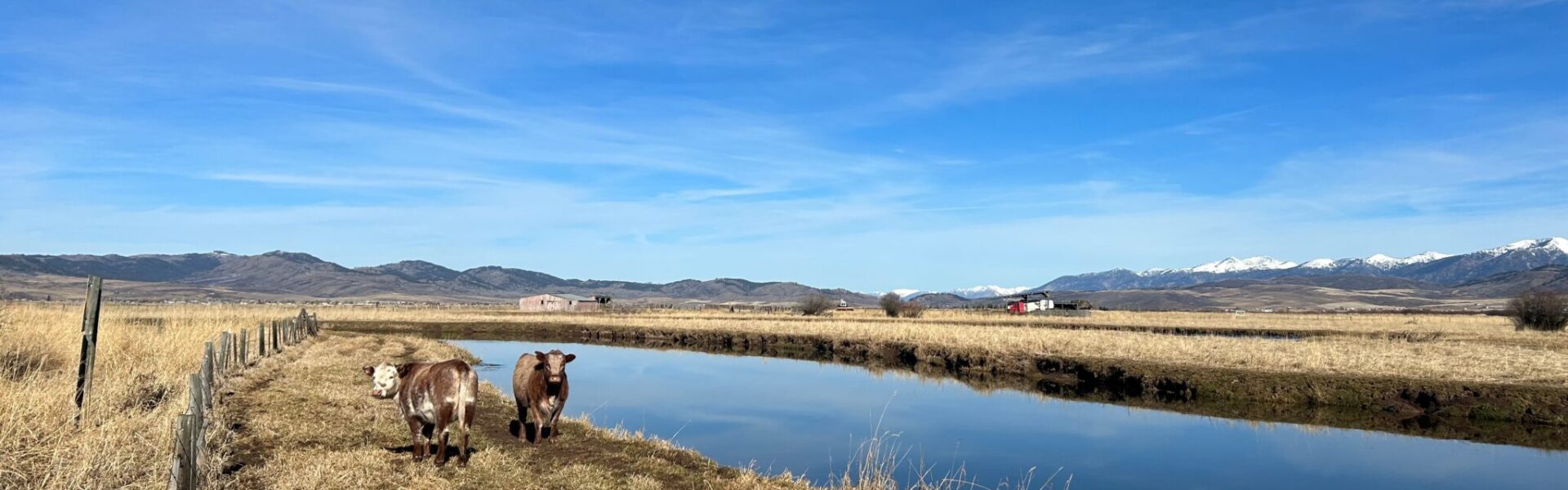
Tell us about that. Yeah, we’re restoring about one mile (0:32) of the Salt River there at the first mile of the access easement there. So we have (0:37) the Clark’s Barn fishing access connected to the upper burdens and lower (0:41) burdens for about three miles total.
Essentially what we’re doing is (0:46) addressing some of the issues that started a very long time ago when (0:51) extensive willow removal happened along the majority of the Salt River. So on (0:57) this mile stretch there’s not a single willow touching the river anymore and (1:02) the river is eroded and gotten wider and wider so it’s very shallow, wide, and (1:08) sediment laden. There’s very little cover for trout.
It’s also allowing a lot more (1:13) sunlight and heat exchange with the air so warming up the water. And we’re coming (1:18) in and narrowing the river back up by importing a lot of fill material. We’re (1:22) also stabilizing outside banks using large logs with root wads and then (1:28) planting a lot of willows and other riparian vegetation to restore that bank (1:33) stability and improve trout habitat and cover and shade throughout the reach.
(1:38) This is all well researched when you rebuild something like this. You get help (1:42) along the way with contributions. For example, you mentioned Simplot providing (1:46) the logs and so forth for reconstruction of the river, building up the banks, and (1:50) making the waterways more conducive to the fishery.
Yeah, we have a lot of (1:55) partners in these projects. So the initial seed funding to get the designs (2:00) done came through the Wyoming Game and Fish Department and then once we had (2:03) those designs we applied for a lot of grant funding to fund the actual (2:09) construction of the project. So our partners there include Wyoming Wildlife (2:13) Natural Resource Trust, Jackson Hole OneFly, Wyoming Department of (2:20) Environmental Quality, Trout and Salmon Foundation, the Star Valley Chapter of (2:25) Trout Unlimited, the Jackson Hole Chapter of Trout Unlimited.
I’m sure I’m (2:29) forgetting somebody but hopefully not. But it takes a lot is what you’re saying (2:34) to put something like this together. Oh yeah, it takes a lot.
And then Simplot (2:38) donated all the trees and root wads that we’re using on the banks. Yeah, we’ve got (2:45) two different local contractors working on the project providing materials and (2:50) building fence and then we have another nearby contractor from Idaho doing a lot (2:56) of the construction on the bank work and rebuilding the diversion. That was another (3:00) part of the project I forgot to mention.
So you know we have two extremely just (3:08) thoughtful landowners who really care about improving the river and the (3:12) resource and also reducing land loss and getting some of that land back here. (3:17) But we also have some irrigators there on the diversion who are excited to get (3:23) that diversion replaced and currently they have to go in the river and put in (3:27) logs and planks and tarps to get enough water into the ditch just because the (3:34) diversion isn’t constructed in a way where they can just turn the head gate (3:39) to get enough flow. So we’ll be rebuilding that diversion so that they (3:43) can just go out there and not have to get in the river and get as much water (3:47) as they need into the ditch.
And also what that will allow for is better fish (3:50) passage. So in the summer months Clark’s Barn is one of the coldest if not (3:55) probably the coldest stretch of the Salt River. So fish really try to move upstream (3:59) into there to seek out that thermal refuge when the water temps get warm.
(4:04) And when we have those planks across the river it prevents the fish from getting (4:07) up there. So it’s a win for the fish and should be a win for the irrigators as (4:11) well. And when will all of this be done? It should all be done by September 15th.
(4:16) So that’s the start of our brown trout spawning closure in the Salt River. They (4:21) might continue some work outside of the water after that date. And in a brief (4:25) summary statement you’ll accomplish what with this project? Improving about one (4:30) mile of trout habitat on the Salt River, reducing bank erosion, and improving fish (4:36) passage to the upstream tributaries in Salt River.
And it’s all called what? The (4:40) project is called what? The Salt River Clark’s Barn Fish Passage and Restoration (4:44) Project. Hopefully that’s the same thing I said a few minutes ago. Alrighty, Dan or (4:48) Belknap.
Star Valley Trout Unlimited, Dan Dockstead, reporting from the banks of (4:52) the Salt River in Star Valley.