By Sarah Elmquist Squires
The Ranger
Via- Wyoming News Exchange
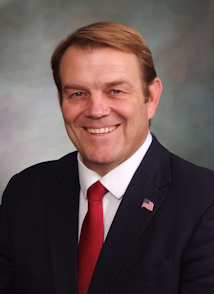
RIVERTON — By a vote of 46-43, Darin Smith was confirmed as U.S. Attorney for the District of Wyoming, with Wyoming’s Senators Cynthia Lummis and John Barrasso casting their votes as part of a package of several dozen confirmations.
Last-minute opposition and a flurry of legal filings last week put Smith in the hot seat.
Wyoming’s three federal judges on Friday dismissed nine felony indictments – including a first-degree murder case from the Wind River Reservation – citing Smith’s misconduct before a grand jury that convened in March.
As Smith embarks on a four-year appointment to Wyoming’s top federal prosecutor position, the challenges in court may still linger. Just after Chief U.S. District Judge Kelly H. Rankin and U.S. District Judges Alan B. Johnson and Scott W. Skavdahl dismissed the nine felony cases on Friday, defense attorneys fired back, arguing the move wasn’t enough.
Instead, they wrote, assistant U.S. attorneys in the office were also involved in an “institutional cover-up,” adding “… subordinate attorneys cannot reasonably be expected to impartially police the constitutional violations of their own chief executive, rendering the local office structurally ill-equipped to conduct a fair presentation before a new grand jury.”
They asked the court to send Smith to the U.S. Department of Justice for disciplinary proceedings.
Misconduct
Smith presented evidence before a March grand jury that indicted at least 10 felony defendants, including accused murderer Jose Benito Ocon. Smith’s alleged misconduct occurred as the jurors were convened and reportedly throughout the proceedings.
Smith handed out his business cards to members of the jury and encouraged them to reach out to him; he told grand jurors that the defendants were “murderers” and that every case involved “bad people” who “did what you are going to hear about.”
He told jury members that their deliberations in the cases wouldn’t take long and that his last grand jury “was able to come back [from deliberations] in three minutes based on the evidence provided to them.”
As part of the response of Smith’s office to the allegations of misconduct, his assistant attorneys wrote that they had to make several disclosures due to laws governing lawyer ethics; they described a moment before the grand jury when Smith called the cases “slam dunks,” and an assistant U.S. attorney responded by assuring jurors they would still be hearing “hard cases.” That attorney then walked out of the courtroom.
Slam dunks
One of the cases indicted by the grand jury may well have been a slam dunk: Ocon’s first-degree murder case, which alleged he shot Shaw Whiteman in the head in front of two eye witnesses.
Ocon was joined by nine other felony defendants accused of crimes ranging from selling drugs to possessing child porn to being a felon in possession of a firearm.
While all those charges were dismissed in federal court on Friday, the judges ordered them dismissed “without prejudice,” which means the federal government could start over and reconvene a new grand jury to indict them again. The judges suggested that would present a “clean slate” for federal prosecutors led by Smith.
But the federal defense attorneys – who normally might be delighted in a dismissal – objected after the ruling on Friday.
Just giving Smith’s office a clean slate to start over and convene a new grand jury, they said, would inadvertently reward the misconduct.
“The government’s own filing reveals that the misconduct was known to multiple attorneys and deliberately withheld,” the attorneys wrote. “The U.S. Attorney’s Office suppressed its chief executive’s constitutional violations for nearly two months … The taint in this case is therefore widespread and continuous. It encompasses both U.S. Attorney Smith’s original subversion of the grand jury’s independence and the subsequent failure of the government’s attorneys to timely disclose that subversion to defense counsel and to this court. Allowing the government to quietly ‘cure’ this pervasive, top-down misconduct by simply re-presenting the case offers zero deterrence to future constitutional violations,” the attorneys wrote.
“The disqualification of an entire office is a drastic measure, but it is required here due to an unresolvable conflict of interest,” they continued. “While the customary remedy for a conflict of interest is to recuse the individual attorney, that measure is wholly inadequate when the conflicted individual is the head of the entire prosecuting office.”
The defense attorneys noted that the “slam dunk” comments, which weren’t disclosed to them until after the judges ordered the transcripts to be opened to the court and appeared to show an assistant attorney attempt to correct Smith’s statement, showed a structural conflict of interest. The subordinate attorneys in Smith’s office, they wrote, can’t be expected to police their boss.
“Consequently, the District of Wyoming [U.S. Attorney’s Office] is now simultaneously trying to prosecute Mr. Ocon [the alleged murderer] while actively minimizing and managing the fallout of its own leadership’s ethical failures,” defense attorneys wrote.
The defense motions asked for two things: First, the judges should consider granting double-jeopardy-style dismissals, meaning the government couldn’t charge the defendant again for the same crime. Secondly, the attorneys argued, the cases should be removed from Wyoming’s U.S. District Court due to the chaos in Smith’s agency, and Smith himself should be sent to the DOJ to be disciplined.
Smith’s misconduct, attorneys argued, “has infected the entire office … To protect the integrity of the grand jury process and restore public confidence in these proceedings, the District of Wyoming must be disqualified from any further involvement with this matter.”
‘Not remotely qualified’
Smith is a Wyoming attorney who briefly served in the state legislature before being tapped for Wyoming’s top federal prosecutor seat last August. But his official confirmation vote was delayed several times before being approved in Monday’s package vote before the U.S. Senate.
Smith’s legal career had been focused on real estate planning, and he’d never tried a criminal case before being appointed to his interim position to lead Wyoming’s U.S. Attorney’s Office.
His confirmation advanced along party-line votes before the Judiciary Committee last December, but it didn’t come without objection.
U.S. Sen. Dick Durbin, D-Ill, blasted Smith as being “not remotely qualified” to serve as a U.S. attorney.
“There’s got to be some kind of standard of qualification to give this kind of power to an individual who has no background, none whatsoever, when it comes to criminal or federal court experience,” he said.
Back in Wyoming, as Smith’s confirmation vote finally started appearing on the U.S. Senate’s calendar 10 months after his appointment, and as the misconduct allegations began to mount, locals rallied in opposition.
“ … Call [Wyoming U.S. Sen. Cynthia] Lummis, call [Sen. John] Barrasso to make that difference: That Darin Smith is not qualified for the position,” local and national Native advocate Nicole Wagon said during a protest over his confirmation earlier this month.
Wyoming’s U.S. Attorney’s Office handles major crimes on the Wind River Reservation, and questions over Smith’s leadership in prosecuting reservation cases have run rampant in recent weeks.
“We need to make it safe again for all our people,” Wagon added.
The Northern Arapaho Business Council also issued a statement on Thursday just ahead of the federal judges’ dismissals in the cases attributed to Smith’s actions and ahead of Monday’s confirmation vote.
“As Wyoming’s highest-ranking federal prosecutor, Mr. Smith carries one of the most important responsibilities in Indian Country: Ensuring that justice is fairly administered on the Wind River reservation,” the NABC wrote. “The U.S. Attorney’s Office already faces longstanding criticism regarding the failure to adequately prosecute crimes arising on Indian reservations … For Native victims and families, this means violent crimes often go unanswered, justice is delayed or denied, and faith in the federal system continues to erode.”
The Eastern Shoshone Tribe also weighed in with a statement, saying the business council was “appalled and alarmed” by Smith’s reported misconduct before the March grand jury.
“Mr. Smith’s arrogant and unprofessional conduct speaks directly to the concerns the Eastern Shoshone Business Council has with the adequacy of the prosecution of crimes arising in Indian country,” they wrote. “Most criminal prosecutions are not ‘slam dunks,’ and perhaps this is why the rates at which U.S. attorneys decline to prosecute cases in Indian country are alarmingly high, with many cases never advancing to a grand jury … Although Mr. Smith likely has secured Wyoming’s federal delegate support for his confirmation as Wyoming’s U.S. attorney, the Eastern Shoshone Business Council vehemently opposes Mr. Smith’s nomination or confirmation as Wyoming’s next U.S. attorney.”
Missing and Murdered Indigenous Relatives 307 founder and advocate Nicole Wagon led a protest in Riverton earlier this month, urging community members to reach out to Lummis and Barrasso and ask them to vote no on Smith’s appointment.
When she didn’t hear back from Lummis’ office, she took to social media noting that the senator’s staff weren’t answering or returning calls. A Lummis staffer saw the post and reached out less than two hours before the confirmation vote, noting that Wagon’s opposition had been logged.
As for Barrasso, Wagon shared an email response signed by him, sent Monday morning just ahead of the confirmation vote.
“It is good to hear from you,” the message read, adding that Smith’s nomination had passed through the Senate Judiciary Committee last December. “Please know I will keep your thoughts in mind if this nomination comes before the Senate for a vote.”
Barrasso’s staffer Laura Mengelkamp said that though the email was sent just hours ahead of the confirmation vote, Barrasso “was well aware of the timing of the vote.”
She said the email had been sent “prior to being updated to account for yesterday’s vote on the nominations package which included 49 nominees. Senator Barrasso takes correspondence with constituents very seriously and the letter has been properly updated.”
When asked whether Smith’s office plans to reconvene a new grand jury to consider the nine cases thrown out by the judges, a spokesperson for the U.S. Attorney’s Office for the District of Wyoming declined to comment.
“We are not commenting on anything related to the grand jury while it is being litigated,” the spokesperson said.