
U.S. Representative Harriet Hageman (R-WY) has introduced legislation that would nullify the 2001 Clinton administration Roadless Rule and permanently restore active forest management on National Forest System lands, saying the restriction has blocked access and increased the risk of catastrophic wildfires across the West.
RELATED: REP. HARRIET HAGEMAN ON SVI RADIO –
Hageman introduced the bill in Washington with original cosponsors including Representatives Troy Downing (R-MT), Celeste Maloy (R-UT), Pete Stauber (R-MN), and Tom Tiffany (R-WI). Her measure would codify the Department of Agriculture’s recent rescission of the Roadless Rule and direct future road construction to support missions such as timber harvesting, watershed management, and wildfire prevention.
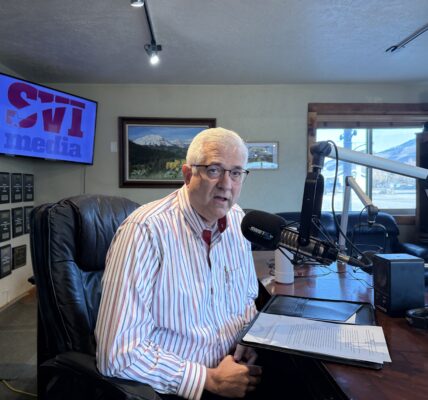
In an interview on the Weekday Wake-up, Hageman described the Roadless Rule as one of the last acts of the Clinton administration, and said it has had disastrous effects. “One of the very last things that Bill Clinton did on his way out of office in January 2001 was put in place what’s called the Roadless Rule,” she shared. “What it was designed to do and what it has done is it has blocked access, management, and use to 58.5 million acres of National Forest Service lands.”
Congresswoman Hageman framed the legislation as an effort to return National Forests to their original multiple‑use mandate. “Our National Forest Service was created by the Organic Act of 1897… and our Forest Service lands were always to be managed and providing commodities, a continuous supply of timber, a continuous supply of water to be used for grazing, multiple use, etc.,” she said. “So the roadless rule really basically put off limits well over one‑third of all of our National Forests, and it’s been absolutely catastrophic in the intervening 25 years.”
She pointed to recent wildfire and pest impacts as evidence. “Nine of the ten most catastrophic forest fires that we have suffered in our National Forests have occurred since the roadless rule was adopted,” Hageman said. Citing a 2024 blaze in Wyoming’s Bighorn Mountains, she added: “That fire burned 25,000 acres in three hours, and that’ll give you an idea of the fuel load that we have in that particular National Forest.”
Congresswoman Hageman said the bill is intended to prevent future administrations from re‑imposing similar restrictions. “The Forest Service under Brooke Rollins is actually repealing the roadless rule, but I don’t want another administration to come in and do what the Clinton administration did,” she explained. “So I have introduced a bill to also repeal the roadless rule so that it cannot go into effect with the future administration.”
Supporters of Hageman’s initiative include industry and advocacy groups that argue the Roadless Rule prevented needed management and economic activity. Pacific Legal Foundation’s Frank Garrison called the rule a “disaster for public lands and forest management,” noting it restricts road construction and maintenance across some 85 million acres of federal forestland. The American Forest Resource Council, BlueRibbon Coalition, and other groups issued similar endorsements, arguing that the rule’s passive‑management approach failed landscapes and communities.
The Roadless Rule, first adopted in 2001, set prohibitions on road construction and timber harvesting on large swaths of national forest. Agriculture Secretary Brooke Rollins announced in June 2025 that USDA would rescind the rule, a move the agency said advanced President Trump’s executive order to reduce regulatory burdens. Hageman’s bill would lock that rescission into law and explicitly permit road construction for specified forest management purposes.
Hageman emphasized local effects for her home state. “Nullifying the 2001 Roadless Rule will enhance forest management and economic opportunities for Wyoming,” the congresswoman’s press release said, promising reduced wildfire risk, fewer insect infestations, and jobs in logging, construction, and maintenance.
The bill’s prospects in a closely divided Congress are uncertain, but its introduction makes clear that roadless lands and how federal forests are managed for both ecological and economic ends will remain a contentious policy issue. Hageman said she intends the legislation to be permanent: “I don’t want another administration to come in and do what the Clinton administration did,” she said, underscoring her desire to prevent future reinstatement of the restriction.