
By Shiloh Martin
Cody Enterprise
Via- Wyoming News Exchange
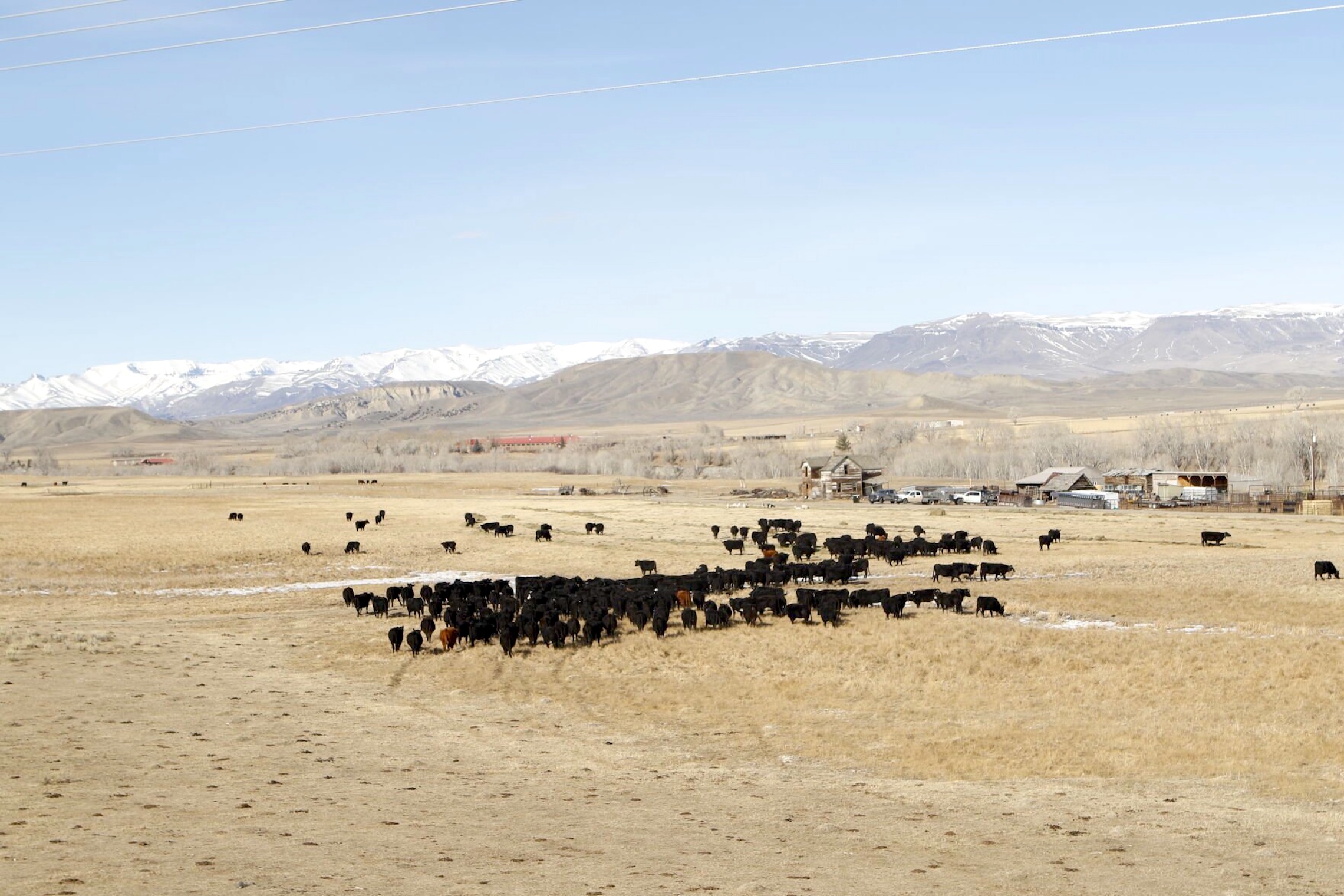
CODY — “This drought is probably as bad as I’ve seen in my life operating as a rancher,” said Dustin Taylor, the owner of Meeteetse’s E Spear Ranch.
Taylor normally irrigates from April to August or September. As of the middle of June, he thinks he has only 25 more days of water before he can no longer irrigate for the year.
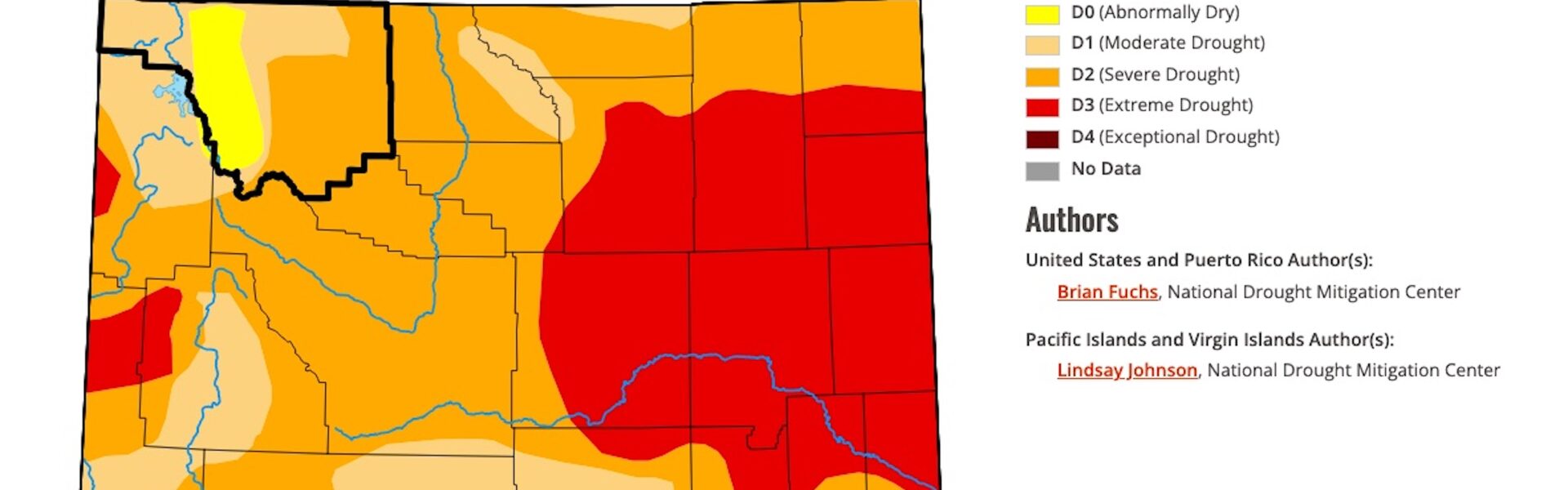
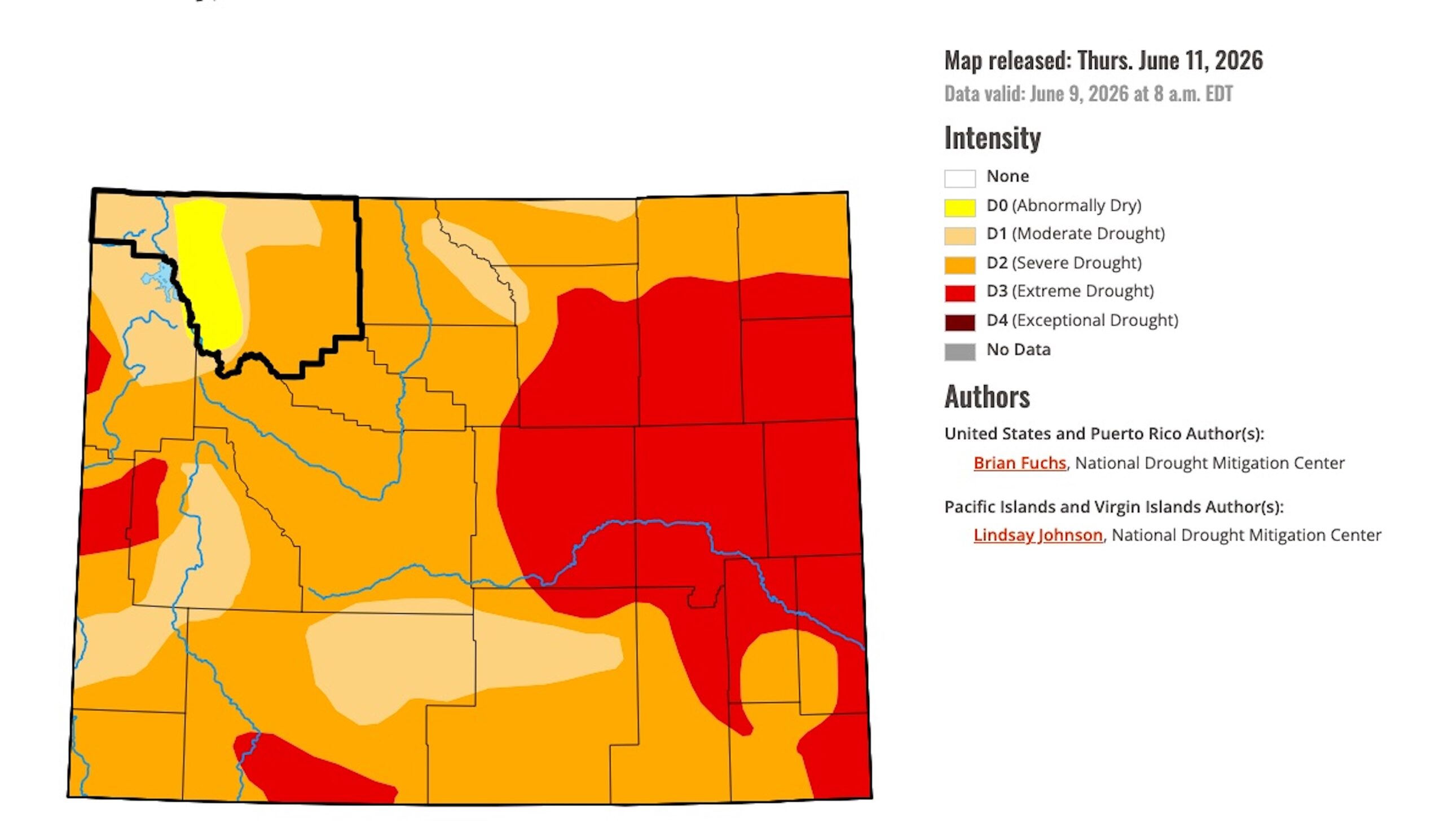
Sixteen Wyoming counties are experiencing extreme drought while areas of Park County including Cody, Meeteetse and Powell are experiencing a severe drought, according to a chart released by the U.S. Drought Monitor last week.
As drought conditions worsen, ranchers are beginning to sell cattle.
“We’ve sold down probably 25% to 30% of our cows, just trying to stay where we’ll have enough grass for our cows for the whole summer,” Taylor said.
Worland’s Big Horn Basin Livestock Auction owner Danny Vigil confirmed that the auction has seen a rise in cattle numbers coming through the sale barn.
“A lot of producers that normally keep their later bred cows have sold them, and we’ve seen more pairs than we have in the past,” he said.
The cattle market is at an all time high across the United States, which Vigil said he believes “helps the producer think about selling part of his cattle herd.”
But Taylor said that even with the high prices, it is still hard for producers to sell cattle because they don’t know if prices will be the same when they want to expand their herds again.
“With the cow shortage nationwide and the prices just keep going up … even though we got a good price this year, we’re not going to be able to buy back in for what we had to sell out for,” said Taylor. “If we want to buy cows back in a year or two years, we’re not going to be able to afford them for the money we got out of the cows this year.”
Vigil said that his “old timers” have remarked about the severity of the drought. Despite the conditions, he said he wants customers to know, “The cattle coming through the barn…they wintered well with that nice mild winter, so that was a break for the cattle and the producers.”
Jeremiah Vardiman, a University of Wyoming Extension educator, has been working directly with farmers and ranchers during the drought.
“Meeting with our agriculture producers, we’re providing resources and information to help them make informed decisions about where their situations are at,” he said.
The UW Extension offices are offering webinars, reports and education to assist farmers and ranchers on an individualized basis.
“The drought is having widespread impacts on all aspects of agriculture,” said Vardiman.
Native range pastures are another concern for livestock producers.
“We are just not seeing as much plant growth, so the plant production is pretty low,” Vardiman said. “Grazing potential might be significantly impacted to where producers might not be able to use pastures for as long as they normally (do). They might have to supplement feed.”
E Spear Ranch’s range has also suffered from the drought.
“Right now, most of our pastures are looking like they normally do in August and September,” said Taylor.
Shoshone Irrigation District general manager Trent Reed said he still has hope for his district.
“Things have definitely improved over the last month compared to probably a month and a half ago,” he said. “We are operating as close to normal as we probably should be.”
Reed said he will know better by the end of June what the future looks like for the Shoshone Irrigation District.
Federal help
The United States Department of Agriculture is offering technical and financial assistance to farmers and livestock producers to recover from the drought.
Livestock producers could be eligible for the 2026 Livestock Forage Disaster Program. This program, administered by the Farm Service Agency, provides financial support to producers experiencing grazing losses due to drought or fire. Producers who have experienced D2 Severe Drought for at least eight consecutive weeks are eligible for one monthly payment. Applications and supporting documentation for LFP must be submitted no later than March 1, 2027 for losses occurring in 2026.
In addition to LFP, livestock producers are also eligible for Emergency Assistance for Livestock, Honeybees and Farm-Raised Fish Program. According to a news release from the USDA Farm Production and Conservation office, “ELAP provides eligible producers with compensation for above normal costs of hauling water and feed to livestock as well as transporting livestock to forage or other grazing acres.”
Notice of loss must be submitted to the producer’s local FSA office no later than March 1, 2027 for losses occurring during the 2026 calendar year.
The FSA offers an Emergency Conservation Program to help farmers and ranchers implement conservation measures to help protect their operations from the dangers of future drought. According to a news release from the USDA Farm Production and Conservation office, “Through conservation planning and practices that will improve soil health and water conservation, farmers can reduce future crop loss due to drought and enhance resiliency.”
The above story may be used ONLY by members of the Wyoming News Exchange or with the express consent of the newspaper of its origin.