By Noah Zahn
Wyoming Tribune Eagle
Via- Wyoming News Exchange
CHEYENNE — The Wyoming Legislature’s Joint Appropriations Committee met with officials from the Wyoming Department of Health, the state’s largest agency, on Monday to discuss its proposed more than $3 billion budget for the 2027-28 biennium.
WDH Director Stefan Johansson walked lawmakers through the budget requests, noting that roughly 95% of the department’s budget flows directly to service providers or facilities across Wyoming.
Johansson thanked the committee for its scrutiny, noting the legislative deep dive into the budget details during the interim was beneficial, as a state subcommittee had been working with WDH on crafting the budget in the months leading up to the JAC meetings.
The most discussed topic was the arrival of potential federal funding from the “One Big Beautiful Bill” Act, which could offer Wyoming between $500 million and $800 million over five years for “rural health transformation.” WDH submitted a placeholder request for $344 million in federal spending authority for the next biennium as it awaits more details on when OBBBA funds will become available.
BearCare
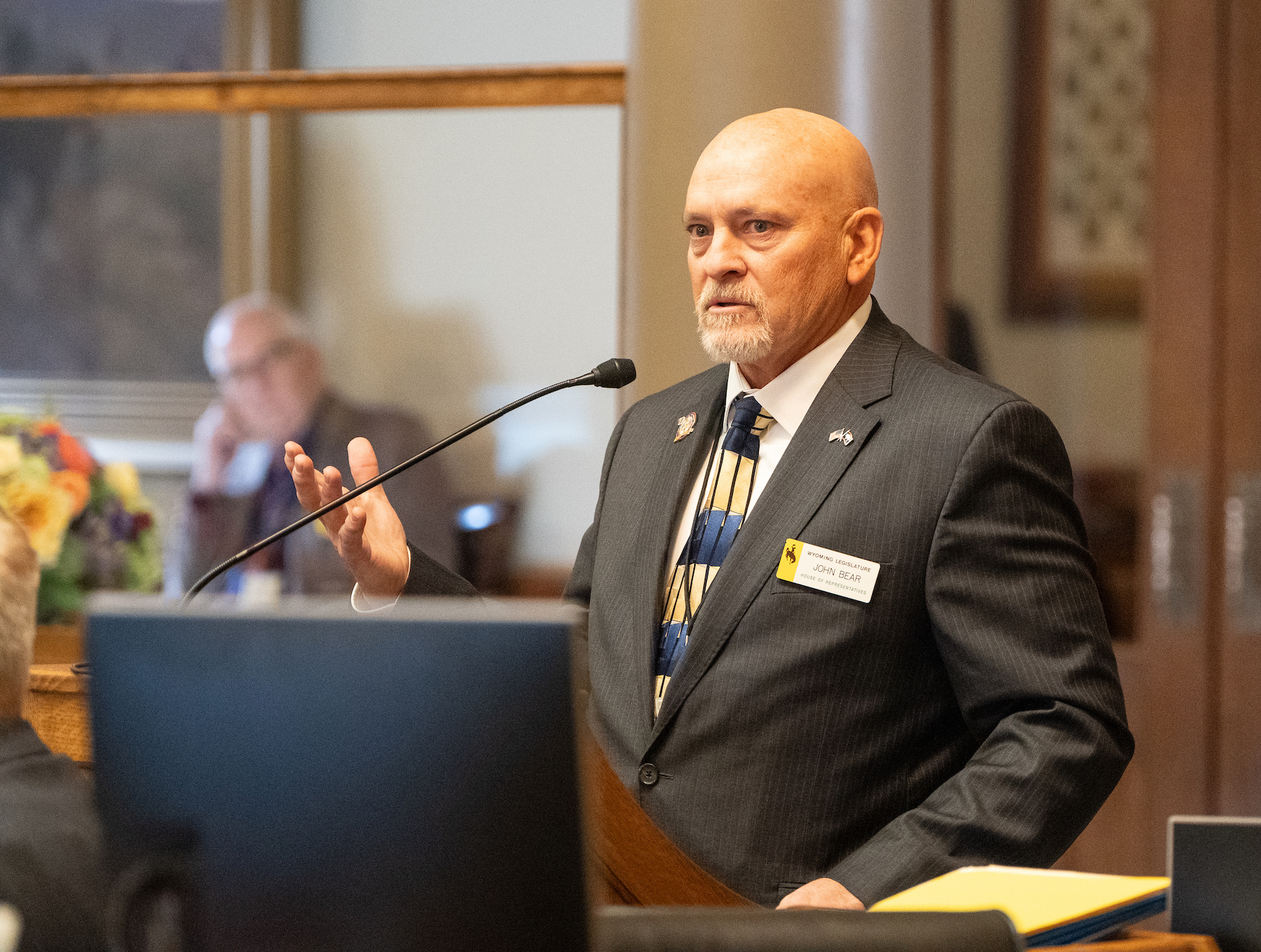
Co-Chairman Rep. John Bear, R-Gillette, challenged WDH’s proposal to use some of the OBBBA funds to establish a new insurance product, dubbed the “BearCare public major medical plan” in the application.
Johansson noted it was not named after Bear, but rather to signify the focus on providing care for the “bear necessities.”
He stated the plan is designed as a low-cost alternative to the Affordable Care Act marketplace, intended for individuals and small businesses, covering only catastrophic or major medical needs.
Bear questioned the government’s role in the private health insurance market and the sustainability of the program once federal money disappears.
“I’m not inclined to want to compete in the private sector. I don’t think it’s the proper role of government to do so,” he said.
He argued that the funds would be better directed toward bolstering the financial viability of rural hospitals by addressing “unpaid expenditures that Wyoming citizens have left at hospitals.”
Throughout the meeting, Bear opted to instead refer to “BearCare” as “Gordon Care,” saying it is “just as catchy,” but also to frame his concerns about the program being government-provided health insurance.
Johansson defended the program’s intent to avoid a “fiscal cliff,” explaining that federal guidelines favor sustainable system change over one-time debt forgiveness. He said WDH plans to invest the funds conservatively into a “Rural Health Transformation perpetuity” to ensure benefits last beyond the five-year federal grant period.
Rep. Bill Allemand, R-Midwest, asked the director about the long-term costs.
“Is this going to — three, five, 10 years down the road — push us into an income tax to pay for this?” he asked. “Once we initiate a program, it’s very hard to bring the people back off of it.”
Johansson told the committee that it was designed to mitigate that risk, saying WDH took the concern “very seriously.”
He said he unequivocally believes this program would not drive the state to an income tax to maintain it in the future.
Intellectual and developmental disabilities wait lists
Lawmakers also spent time examining the Intellectual and/or Developmental Disabilities Medicaid waiver programs, a social safety net providing services for residents with intellectual disabilities or brain injuries.
WDH requested roughly $15.6 million in state general funds to tackle three key areas: provider rates, funding for extraordinary care and reducing the wait list.
Johansson noted that based on projections, WDH hopes to fund about one-quarter of the nearly 450 to 500 people expected to be on the wait list by mid-2026. This request would also continue provider rates previously supported by temporary federal ARPA funds, equating to just under a 5% rate increase for providers.
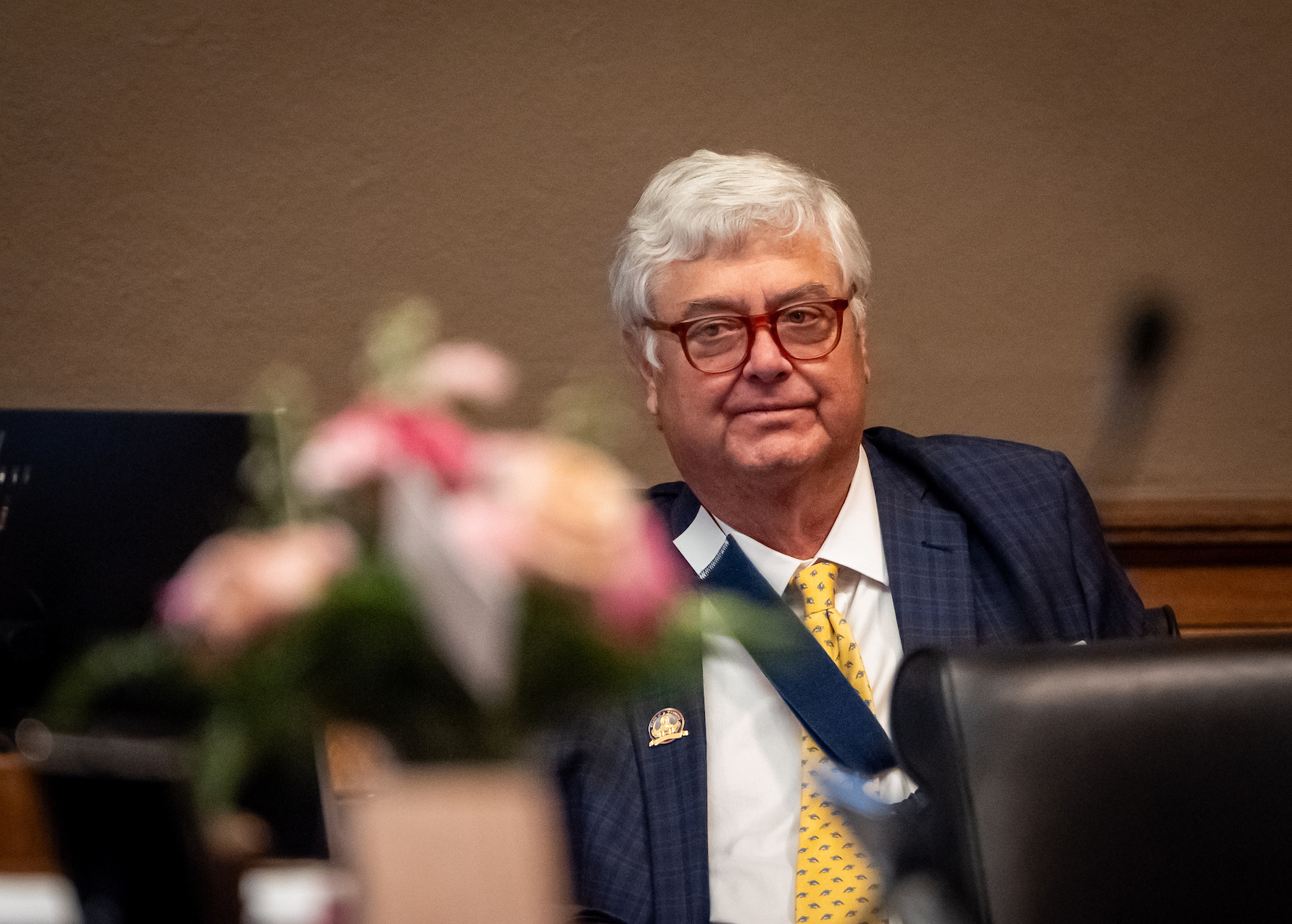
Sen. Mike Gierau, D-Jackson, questioned the approach to funding both provider rates and the waitlist simultaneously.
“Are we just kind of exacerbating a bit of a problem already? Because we’re going to end up shortening the waitlist, but we’re going to give a half a loaf to the people that are already on it,” he said.
Johansson acknowledged the complexity of the balance, stating he hopes to achieve progress toward funding both areas.
“(I am) very sensitive to our provider systems’ concerns, because funding folks off the wait list is part of where we’re going … you must have providers, whether that’s smaller individual, lower-scale or larger providers to serve the clientele we have for these programs,” he said.
Curbing errors in eligibility process
Lawmakers asked about the administrative capacity of WDH, focusing on minimizing payment errors that could result in federal penalties. WDH asked for two full-time positions to address the extreme backlog and high caseloads (more than 600 cases per individual) in the Long-Term Care Eligibility division, which manages applications for nursing homes and developmental disability waivers.
Wyoming’s State Medicaid Agent Jesse Springer underscored the severity of the delays and mistakes.
“These staff are controlling access to program costs of about $400 million a year, so 1% error rate is $4 million.” Springer noted that application processing times were nearing the 45-day federal limit, and if they exceeded that, “the timeliness error could be very costly.”
Bear also addressed the high WDH staff vacancy rate, currently at 362 positions.
Johansson confirmed the vacancies primarily occur in direct care roles, like nurses and CNAs at state facilities, requiring WDH to use limited vacancy savings to pay for expensive contract labor at rates often two to three times higher than state employee wages.

Critical access hospitals
The committee considered requests aimed at retaining critical health care services in rural areas. WDH proposed increasing reimbursement rates for Critical Access Hospitals that maintain obstetrics or labor and delivery services.
Rep. Abby Angelos, R-Gillette, noted that the primary driver for obstetricians leaving rural practice is high malpractice insurance costs, asking how the reimbursement rates would solve that issue.
Johansson clarified that while malpractice insurance is a separate policy issue, the requested rate increase is a financial incentive to sustain the services that have been rapidly disappearing from rural facilities. The proposal would increase rates to 100% cost coverage for CAHs maintaining OB services, and raise physician rates for maternity services to 105% of cost coverage, while trying to maintain every other physician service at around 90% cost coverage reimbursement.
“For those who may not remember, in the last five years, we’ve had approximately four, maybe five hospitals that have discontinued OB or labor-and-delivery coverage around the state for a variety of reasons,” Johansson said.
Chairman Sen. Tim Salazar, R-Riverton, closed the meeting by urging the department to supply additional data and reports to the committee before the final budget markup, particularly regarding the sustainability of the federal programs.
The above story may be used ONLY by members of the Wyoming News Exchange or with the express consent of the newspaper of its origin.