
Eric Williams, COO of TerraPower, called into SVI Radio’s Weekday Wake-Up to provide a detailed process of construction for Natrium Kemmerer Unit 1, which began excavation work on April 22. Williams also discussed the use of subcontractors from the Kemmerer area and around Wyoming for the project.
(0:21) How are you today? Appreciate your time. I’m doing great, Duke. Nice to meet you and (0:26) happy to be here today.
Thank you. Thank you. Now, this is the first time we’ve had you on (0:29) the air.
So tell us more about your role with TerraPower and what your position is here as the COO. (0:36) Yeah, COO for TerraPower, I have the privilege of overseeing all of the operations associated (0:43) with our reactor projects. And by far, the main project that we’re involved with is the (0:49) building of the natrium reactor in Kemmerer, Wyoming.
So I spend most of my time on that. (0:55) We also have a medical isotopes program here and are involved in a few other smaller projects, (1:01) but that’s by far the main effort that we have. All right.
Well, of course, excavation work has (1:07) begun and I had the chance to be there on site as that began last week. So walk us through the (1:13) process here and what people will begin to see over the next course of the next few months and (1:17) into the summer and fall on this project. Okay, great.
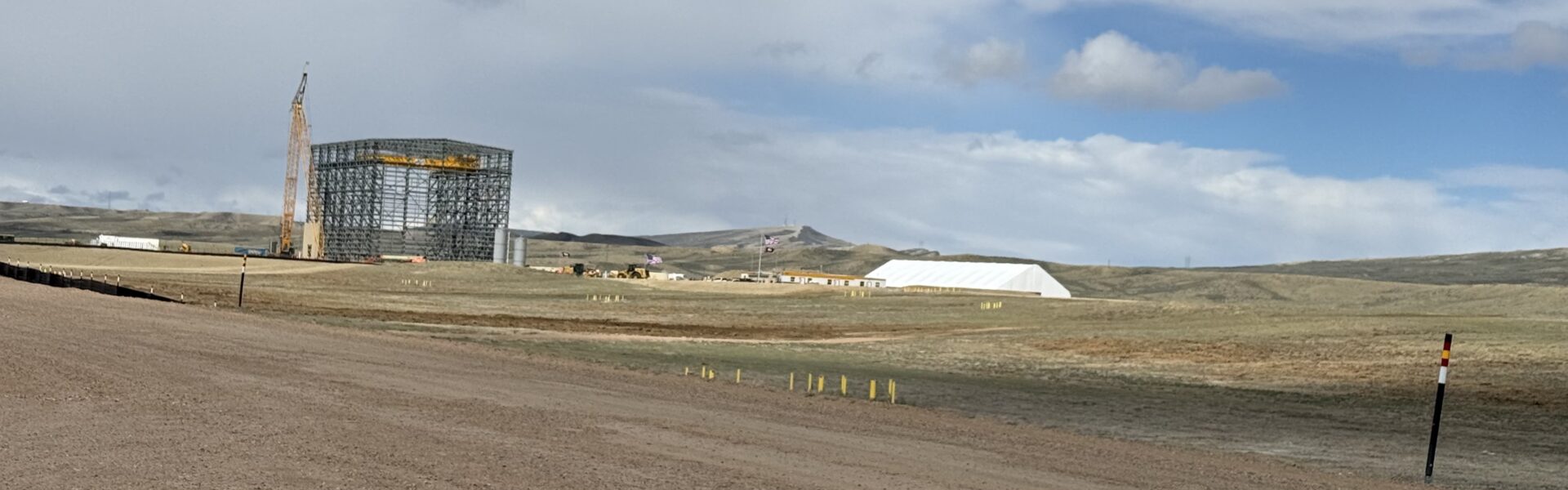
First of all, there’s been a couple of (1:25) construction works going on the site for a couple of years now. So we’ve been constructing our main (1:31) sodium test facility, which you’ll see is the largest structure on the site today. (1:37) You probably saw that, Duke, when you were out there.
So all the structural steel is up for that (1:42) and the siting is going on or was starting to go on last week. That’s where we’re going to test (1:47) full-size prototypes of equipment that’s going to go in the natrium plant in a liquid sodium (1:53) environment at reactor temperatures. And so we’ll get a lot of great data from that.
And (1:59) that facility is going to be completed in 2027 and we’ll continue to operate and produce test data (2:06) all the way up through when the reactor begins and probably will continue to be used for years (2:13) or decades after that for supporting other innovation and testing that we want to do (2:18) for the whole fleet. So that is something that will be done from Kemmerer, Wyoming (2:23) for many years to come. We’ve also been working on our Kemmerer Training Center.
And right when (2:29) you come in the site, if you look off to the right, you’ll see the foundation has been completed for (2:35) that. And that building is going to house our operator training simulator. And we actually (2:41) deliver that simulator to the site.
It’s currently being operated from a trailer while we complete (2:49) the Kemmerer Training Center building. But you’ll start to see the structural seal for that side to (2:54) go up here over the next few months throughout this year. And then, like you said, we started (3:00) just last week officially doing construction inside the plant footprint.
And so right now, (3:06) it’s been a lot of, we call it clearing and grubbing. So basically, you know, flattening out (3:12) the land, setting up lay down areas, removing vegetation very carefully as we go through that, (3:20) you know, looking for wildlife and things like that that might be in the way. And so we didn’t (3:26) find any of that.
We completed that clearing operation. And so when you go off to the site now, (3:31) it looks like a nice open piece of land that we can start doing the real work on. (3:36) So going into May is going to be a lot of what we call earthworks.
So continuing to do grading, (3:45) you know, moving earth around to prepare the various areas for further construction. There’s (3:51) also going to be some work to set up a concrete batch plant that should also be completed in May. (3:58) And that’s going to be right there on the site as you go into the right.
(4:02) And that’s going to provide the concrete for the rest of the construction project. So that’s (4:07) important to get done here in May. Going into June, you’re going to see a lot of (4:13) more excavation to start putting underground commodities in place.
We’re going to start that (4:19) on the energy island. So the non-nuclear side of the plant is going to go first. (4:24) And that’s the part of the land that you see as you first drive in.
(4:28) And so we’re going to start there and then start moving down further towards the nuclear island (4:33) site. And then in August is a pretty big milestone. We’re going to start building (4:39) another building on site.
We call our reactor fabrication building. And that’s pretty important. (4:45) That’s going to be a larger structure, about the same size, maybe a little bit larger (4:49) than the test and fill facility that I mentioned earlier.
And it’s going to be down the site near (4:55) the test and fill facility, in fact. And that’s where we’re going to deliver the major components (5:00) of the reactor and assemble them together before lowering them in the shaft when we get to the (5:07) nuclear island part of the construction. So that’s going to begin in August.
And that’ll (5:12) be the next major structure that people see on the site. And then in December is a pretty major (5:19) point as well, because we will start excavating the main reactor shaft. So that’s going to be (5:26) on the nuclear island side of the plant.
And that’s where the reactor is going to live. So (5:31) it’s very important to get that going. That’s kind of on the critical path for starting up (5:37) the whole project.
And then early in 2027, we’ll start to put the concrete in that reactor shaft. (5:45) And in the nuclear industry, that’s an important milestone too. We call it first nuclear concrete.
(5:51) So that should be in early 2027. So that gives you kind of an idea of the main milestones going (5:57) through the year for the construction. Excellent.
Excellent. Speaking with Eric (6:01) Williams, he’s the COO of TerraPower. And remind us, when is the planned final completion date (6:08) for this project? Yeah.
So commercial operation is going to be December, (6:14) 2031. We’re really excited about that, holding onto that schedule. Another key one is fuel is (6:21) going to be loaded in 2030, which will be when the reactor goes critical.
And so that’s a pretty (6:28) important milestone too, and very exciting for all of us here in the nuclear industry. (6:33) As we think of it going critical is, you know, the ultimate proof that the reactor works. It (6:40) turns on, it generates heat from nuclear fission.
So that’s pretty exciting too. (6:45) Excellent. Speaking with Eric Williams, TerraPower chief operations officer, (6:49) there’s been estimates around 1600 workers, construction workers that are going to be (6:54) involved in this project and during the construction phase.
How is TerraPower (6:59) working with local contractors? Obviously there’s a lot of technical aspects to this project, but (7:05) how are local contractors involved from right here in Lincoln County? (7:09) Yeah, that’s one of the exciting things about this project is it can have a positive impact (7:16) on the community even long before the reactor actually starts up. And so we’re very committed (7:22) to being good partners with the community in Kimmerer, and we encourage our contractors, (7:29) our main construction contractor, Bechtel, and the others that we bring onto the site to use (7:34) local talent as much as they possibly can. And that’s been happening so far, about 60% of the (7:41) subcontractors we’ve been using on site have been either local Wyoming businesses or have (7:47) offices in Wyoming as well as elsewhere.
And so that’s a pretty important aspect of how we’ve (7:54) been moving forward. It’s also a good way to get talent, you know, is to focus on the local (7:59) community. And so, you know, a couple of big ones are Earthworks Solutions from Gillette, Wyoming, (8:07) you know, is doing a lot of the earth work that I referred to earlier, that’s going to be going on (8:12) in May and June and down the road.
We’ve also got companies from, you know, from there in (8:19) Kimmerer. We’re also hiring, TerraPower’s directly hiring people from Kimmerer and, you know, have (8:25) job postings that are located in Kimmerer, and we’re moving people there. So we’ve got an operations (8:32) staff that’s building up to about 50 people that those people are living there in Kimmerer.
So, (8:39) you know, population is growing already from the project activities. (8:44) Well, Eric, appreciate your time today. Anything else about this project you feel is worthwhile (8:48) mentioning while we have you on the air today? No, just really exciting to see, you know, (8:56) the physical plant starting to go up and really taking care to do that carefully.
There’s been (9:03) a lot of work to plan this project out from a socioeconomic perspective to make sure that it (9:09) doesn’t adversely impact the community in any way. So we’re careful about that, and we keep (9:16) looking closely at that as we look at our staffing numbers. Sometimes, you know, the schedule needs to (9:22) be compressed and might need to bring even more than 1,600 workers in from time to time, but (9:28) we’re being careful to do that and make sure that we do it in the right way.
So, you know, (9:34) exciting to see the progress, and I hope everyone who drives by the plant will appreciate all the (9:40) good work that’s happening out there. And thanks to all the people in Kimmerer who support this. (9:46) I was there last week, too, and it’s always a pleasant time to go there.
They really motivate (9:51) me to do my work because of the positive welcome that we get from the community there. (9:57) That’s Eric Williams, Executive Vice President and Chief Operations Officer (10:01) with TerraPower. It’s all part of the weekday wake-up this morning on SVI Radio.