Grand Teton National Park kills black bear amid raft of early summer ursine conflict

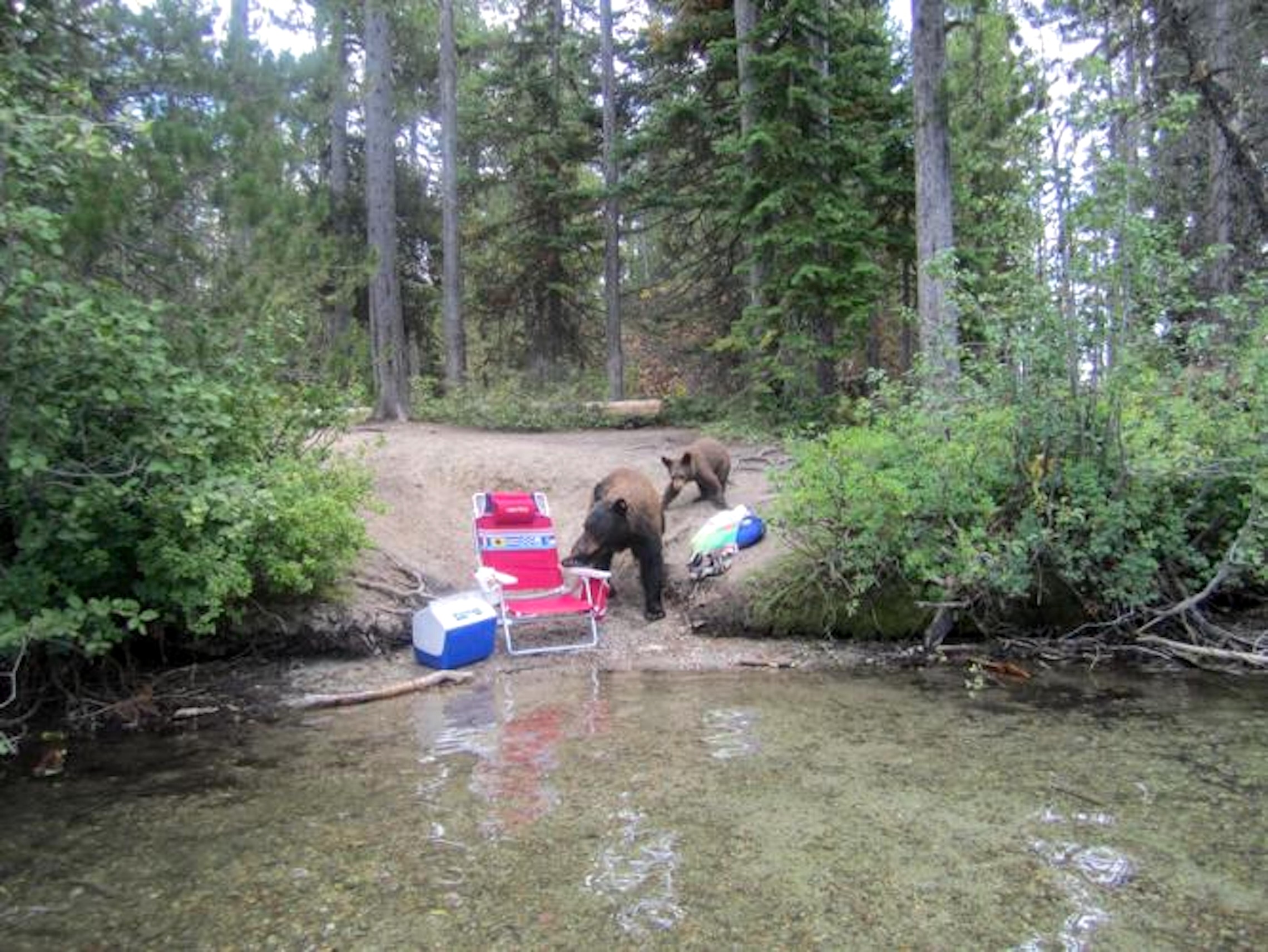
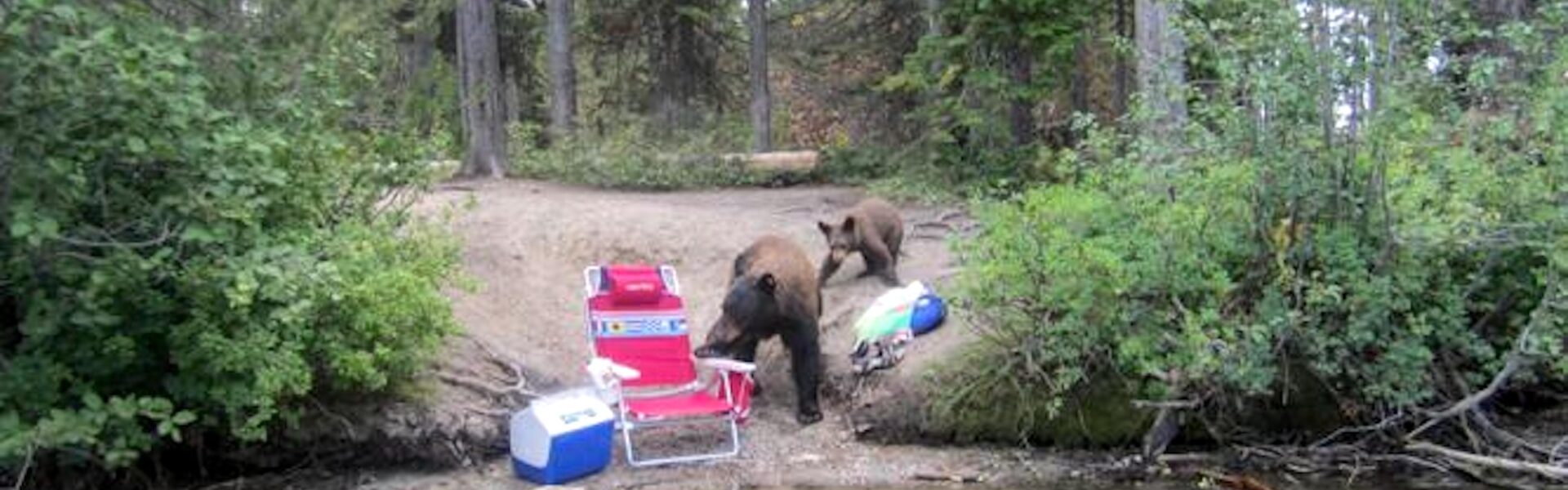
• At least five black bears have obtained human food this season.
By Christina MacIntosh
Jackson Hole News&Guide
Via- Wyoming News Exchange
JACKSON — Grand Teton National Park has seen elevated bear conflict — and bear activity — so far this summer.
On Monday morning, bear managers killed a 3-year-old female black bear that had obtained several food rewards around Jenny Lake and was exhibiting food-conditioned behavior, including approaching humans and their stuff.
That bear is one of five that has obtained a food reward or caused property damage in the past month, said Justin Schwabedissen, the park’s bear biologist.
The park has also documented one conflict involving a grizzly bear, in which a grizzly got into a backpack that was left on the shore of Jackson Lake. That backpack did not have any food in it.
“It seems like we are much more active than we typically see in the first half of the season,” Schwabedissen said.
The park has seen conflicts at Jenny Lake, Jackson Lake, Phelps Lake and Colter Bay.
At Colter Bay, a conflict involved a bear accessing trash from an overflowing trash can — which itself is a sign of how busy the park has been.
“We usually don’t see that until later in the summer,” Schwabedissen said.
The high volume of human-black bear conflicts, specifically at lakeshore areas, is aligned with the trend observed in the park in the last five to 10 years. It’s just happening earlier than it typically would, perhaps because of the low snowpack and early melt.
“We have people and bears in areas right now where we don’t typically have bears and people,” Schwabedissen said.
The park has, however, seen less bear jams than usual. Managing bear jams typically takes up considerable staff and volunteer time.
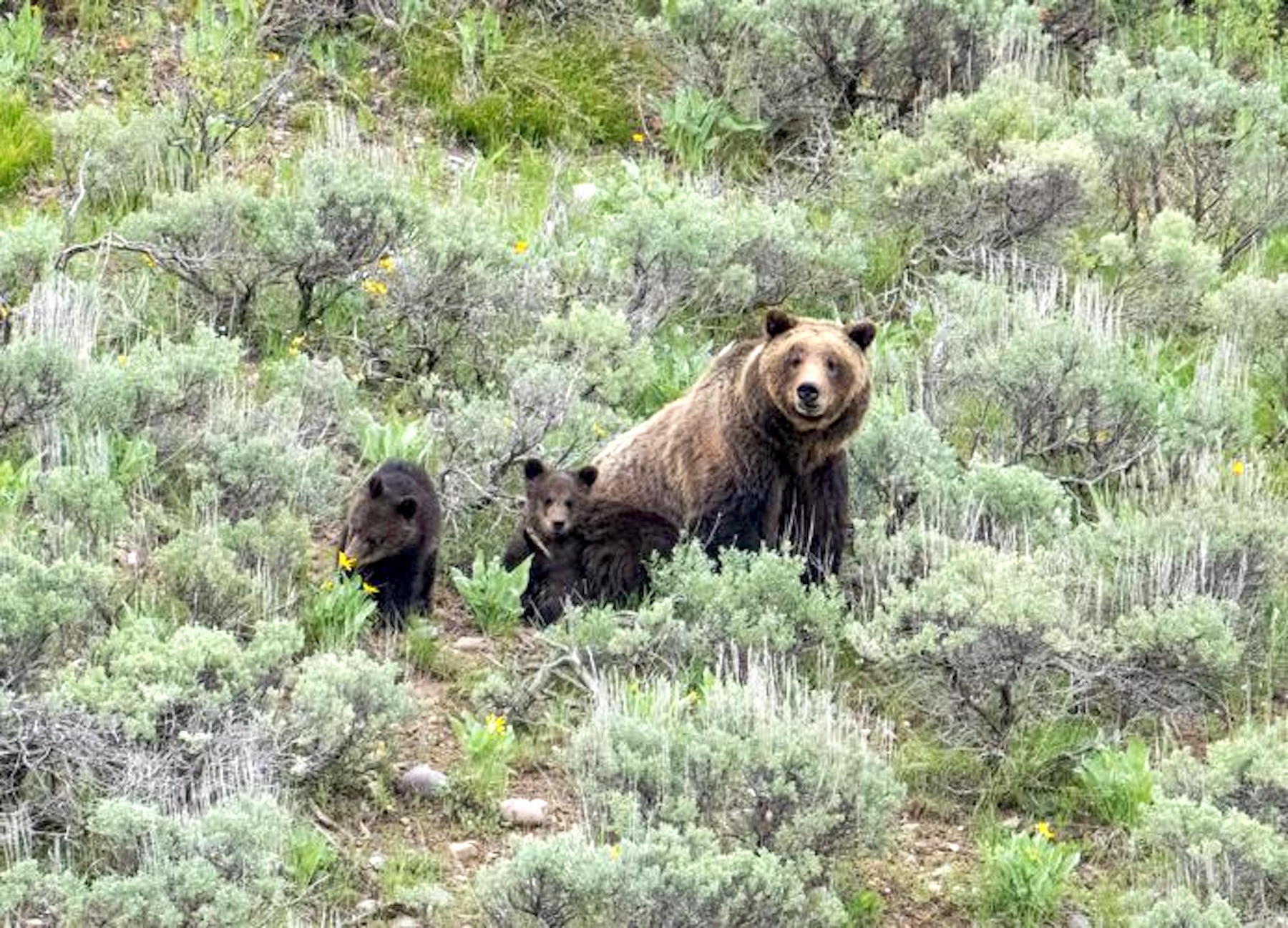
Though Grizzly 1063 and another grizzly mother, thought to be Grizzly 610, both emerged with cubs of the year this year, they have not been as visible from roadways. Wildlife photographer Tom Mangelsen has seen as much.
“You see a lot of pictures on social media, they’re all posting pictures of the bears so you think the bears are coming out of your ears,” he said. “But it’s all the same sighting from that morning or afternoon. Sightings are much more rare this year.”
BB 22112
The story of the black bear killed Monday, BB 22112, began in 2024.
Wildlife managers first handled her that summer, as a yearling, after her sibling was involved in several human-bear conflicts in the Jenny Lake area, including making contact with a visitor’s leg. Park bear managers killed her sibling because of that behavior.
Bear managers subsequently captured BB 22112 to relocate her to another part of the park. She found a spot in the backcountry and did not return to Jenny Lake for over a year.
She returned to the popular lakefront area at the end of last summer. At first, she was wary around people and kept her distance. Then, late last summer, she gained access to human food. She approached a group on the lakeshore that panicked when they saw her and fled into the water, leaving her access to their food.
The backpack contained several items, including fast food, but the bear walked off with an apple.
“I do have to give some credit to the bear, that all she took was the apple,” Schwabedissen said.
Bear managers monitored her behavior after that incident, but it didn’t appear to change. She was still focused on natural foods throughout the fall and the early part of this season.
“And then something changed in the last couple of weeks,” Schwabedissen said.
She has consumed human food a few more times and people have also sprayed her with bear spray several times. Bear managers suspect that she has gotten a hold of even more human food than has been reported, based on the bear’s behavior as captured on video and observed by park staff.
“We saw her behavior really take a turn for the worse last week,” Schwabedissen said.
Zero-tolerance policy
The park has a zero-tolerance policy for bears who show food-conditioned behavior. Bear managers are closely monitoring the four other bears that have obtained food rewards this season.
Last year, the park saw 15 conflicts between black bears and humans, down from a record 16 conflicts the year before. Park bear managers did not relocate or kill any black bears last year. Managers killed two black bears and relocated five in 2024.
The park is using its volunteers, interpretive staff and social media to help educate visitors about the importance of proper food storage.
“We need the community’s help and we need visitors’ help,” Schwabedissen said. “We all need to be making really good decisions out there with our food storage and safely recreating in bear habitat, so that we can stop this trend.”
Colter Bay grizzly
As bear managers continue to keep tabs on black bears in frontcountry lakeshore areas, they’re also monitoring a 2-year-old grizzly who spends time at Colter Bay.
Park staff are hazing the bear to encourage it to spend time outside of developed areas.
“We don’t want bears lingering in such close proximity to large concentrations of people,” Schwabedissen said.
That bear is the offspring of 1063, the one surviving member of a litter of three, after two of its siblings were killed by a male grizzly last summer. Grizzly 1063 and the surviving cub were separated and then reunited after the incident, though Grizzly 1063 kicked the yearling off shortly after.
It was weaned a year early for grizzlies in the Greater Yellowstone Ecosystem. Because it survived, wildlife watchers have named the bear “Miracle.”
Bear managers proactively relocated the bear last summer, because it was spending all of its time at Colter Bay. They observed the bear fooling around with a trash can and digging in a fire ring, though it did not obtain any food rewards.
The park has been using three Karelian bear dogs, which are specially trained to haze bears, to deter the bear from the Colter Bay area. It is the first time the park has used dogs to haze bears, Schwabedissen said.
Bear managers have seen a good response from the bear, but it has continued to return to the Colter Bay area.
As a grizzly consistently visible to the public, it has gotten substantial attention from wildlife watchers. The bear also emerged earlier than many other grizzlies, Mangelsen said.
“That was the only game in town until 610 showed up,” he said.
Wildlife watchers are also drawn to the bear because of its backstory, he said.
The park is dedicating staff time, energy and resources to the bear to try to avoid it from coming into contact with human food, given its location.
“Our concern is that it’s just going to take one or two mistakes, of someone leaving something unattended, and for that bear to get a food reward, for us to potentially start seeing a really negative change in its behavior,” Schwabedissen said.
The above story may be used ONLY by members of the Wyoming News Exchange or with the express consent of the newspaper of its origin.