Kidney disease determined as cause of fish mortality on Salt River

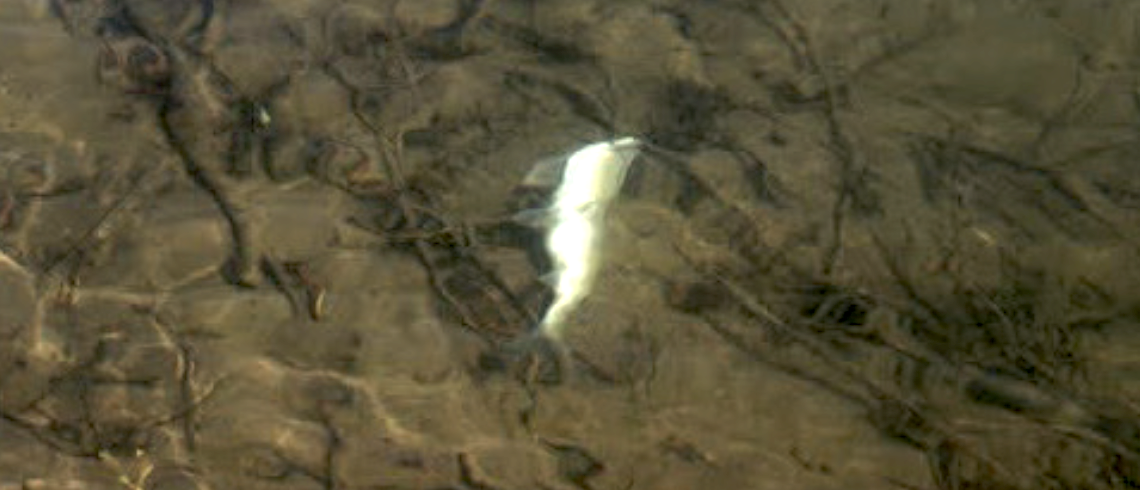
The Wyoming Game and Fish Department has determined that Proliferative Kidney Disease (PKD) is causing the Mountain Whitefish die-off in Star Valley’s Salt River. PKD is triggered by a microscopic parasite called Tetracapsuloides bryosalmonae.
After conducting specialized laboratory tests on fish from the river, the Department’s Fish Health Lab, with help from the Wyoming State Veterinary Laboratory, confirmed the parasite’s presence and evidence of parasite-induced mortality. Current findings show that mountain whitefish are the primary species affected.
“This event marks the first documented instance of a PKD outbreak causing significant fish mortality within Wyoming,” said Darren Rhea, Jackson Region Fisheries Supervisor. “While it is difficult to get an exact count, we suspect that total mortality may number in the thousands.”
“You have high temperatures on the waters, and with those high temperatures the stress on the fish or more susceptible to have that parasite infect them,” stated Interim Director Eric Wiltanger during a live interview on SVI Radio. “It’s mostly downstream towards the reservoir.”
PKD outbreaks have been previously documented in neighboring states, including Idaho and Montana. A notable outbreak occurred on the Yellowstone River in 2016, resulting in a large-scale fish kill and temporary river closures.
“These events are typically associated with environmental stressors such as sustained low water flows and elevated water temperatures, which can trigger the pathogen in fish,” said Carl Smith, Fish Health Program Manager. “The parasite lives in tiny, moss-like organisms called bryozoans that form colonies in the water. These organisms then pass the parasite along to the fish.”
Research is currently being conducted across the region in surrounding states to gain a better understanding of the complex relationships between various organisms and the environmental triggers that lead to severe clinical symptoms in fish populations. Fisheries managers in the Jackson Region have long-term monitoring data from the Salt River, and biologists plan to conduct follow-up surveys in 2027 to assess the impact on the overall whitefish population.
For now, the Salt River remains open for fishing and recreation. However, Game and Fish may implement emergency closures if the die-off continues at a rate that threatens the long-term health of the river. In the meantime, Game and Fish encourages anglers to try fishing in other areas to help reduce the stress on the Salt River’s fish during this sensitive period.