Discussions reemerge to give local authority over new gambling facility locations

By Noah Zahn
Wyoming Tribune Eagle
Via- Wyoming News Exchange
CHEYENNE — The Wyoming Legislature’s Select Committee on Gaming discussed a potential bill Thursday that, among other things, would give more authority to cities and counties over whether to allow new gambling operations to open in their area.
Stakeholders representing Wyoming counties, municipalities and the horse racing industry spoke at the meeting — mostly in support, but with some varying opinions on specific details.
The bill draft is a re-creation of House Bill 85, which unanimously passed Wyoming’s House of Representatives earlier this year but was not introduced for consideration by the Senate.
This new bill draft has a few changes from HB 85.
One is that it requires city, town or county approval for the issuance of a simulcasting permit, which is the broadcast of the horse racing events at off-track betting facilities. It would also grant local authority in determining whether or not to renew or revoke those permits.
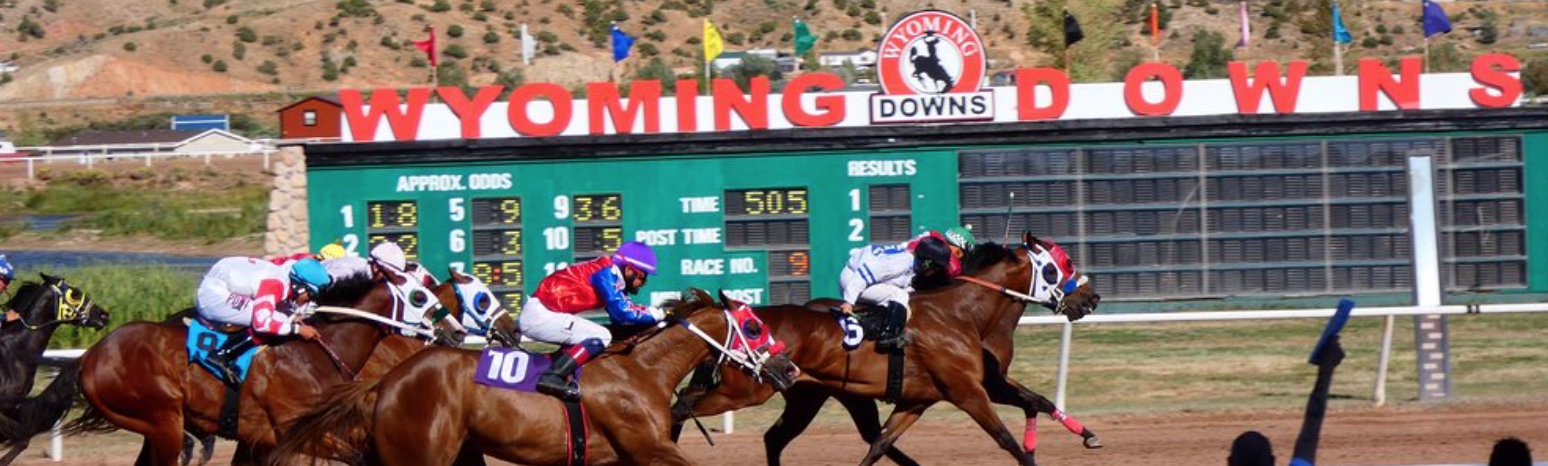
It also would repeal the existing 100-mile rule, which prohibits simulcasting within 100 miles of any live horse racing track on a race day.
Matt Murdock, the mayor of Pinedale and president of the Wyoming Association of Municipalities, said he supports the local control over issuing these permits.
“As you know, 44 of the 47 simulcast permittees (in Wyoming) sit inside municipal borders, so our cities and towns are on the front line of public safety, zoning and community character,” he said. “Therefore, local governments must have a decisive role in approval, renewal and, when warranted, revocation of every permit.”
There was discussion about including language in the bill draft to address how taxes received from the gambling industry are distributed between municipalities and counties. However, that discussion was largely tabled due to fears there wouldn’t be enough time to create clean language that would pass through the Wyoming Legislature; instead, lawmakers prioritized getting this bill draft through first and considering that as a separate bill.
Jerimiah Rieman, executive director of the Wyoming County Commissioners Association, said he supports parts of the bill draft, like authorizing more local control, but cannot support it as it is currently written.
His primary issue is with language in the draft that excludes county commissioners from having a say in the issuance of permits if the proposed location is within city limits. As written, it would leave the decision solely up to the city council.
Rieman said these locations should always consider the county’s opinion, as sometimes the county is the sole law enforcement in the area, and it would impact their finances as well.
Sen. John Kolb, R-Rock Springs, the sponsor of the bill draft, said it is important that WAM and WCCA stay in conversation on this topic and come to a compromise together.
“I doubt it’s going to be perfect, but we’ve got to find out what we can live with to improve the situation,” he said.
Near the end of Thursday’s meeting, representatives from Cowboy Racing spoke.
Cowboy Racing is currently constructing the Thunder Plains live horse racing track east of Cheyenne, with plans to begin opening off-track betting facilities in town when that is operational next year.
Affie Ellis, a Cheyenne attorney representing Cowboy Racing, said the company wholly supports bringing in local authority of permit issuance, but sees it as an opportunity that might prevent the company from being successful in the market.
She said the bill would protect existing businesses and make it harder for a Wyoming- owned business, like Cowboy Racing, to compete with established companies, some based outside of the state.
Ellis also opposed the removal of the 100-mile rule, saying she feels the existing companies have flipped the script on it with the new live horse racing track set to open near Cheyenne in 2026.
Wyoming Horse Racing operates the new Swan Ranch Horse Palace facility that recently opened in Cheyenne. One of its partners, Eugene Joyce, called the 100-mile rule “antiquated.”
At one point, former Secretary of State and Uinta County resident Karl Allred supported putting the approval of new facilities to a vote of the people in a county or municipality.
“There needs to be a way for the counties to say, ‘We don’t want this.’ And right now, we can’t. So that really comes to you guys to give us a vehicle to do that, put it to the voters,” he said. “Let the county say, ‘Hey, we’re OK with parimutuel betting, but we don’t want the slot machines.’”
Loretta Kallas, who is the Uinta County attorney but was speaking in a personal capacity, opposed this option, saying the gambling facilities are beneficial in terms of the money they bring to Wyoming from outside the state.
“We are not hurting our communities by having these machines. We are benefiting and growing businesses. We are supporting our local economy, and we’re encouraging small business and the tourist industry,” she said. “… I’m not discouraging any voting process at any time, but certainly, use objective data in any legislation that you provide.”
Ellis did not directly oppose a public vote, but she brought up an incident in Louisiana where it was put to a vote and existing gambling companies ran an anti-gambling advertisement campaign to persuade members of the public to prevent new businesses from entering the market.
The select committee didn’t make any decisions on the bill draft Thursday and was scheduled to continue discussions Friday.
The committee also requested the horse racing industry operators get together within the next 30 days and provide some ideas or proposals on mechanisms to manage the growth of historic horse racing terminals.