
Utilities brace for staggering power demands from AI, data centers in Wyoming

• The industry’s proposals for Wyoming would more than double the state’s electrical capabilities, challenging protections for the average ratepayer.
By Dustin Bleizeffer, WyoFile.com
A tsunami of demand for artificial intelligence and data computation promises to plant stacks of servers in Wyoming. Those servers will require a volume of electricity that will eclipse the state’s power generation capacity and transform the physical and regulatory utility landscape in and outside the state, some familiar with Wyoming’s utility industry say.
For example, a joint venture — Crusoe and Tallgrass — recently announced plans for a computational campus south of Cheyenne requiring 1,800 megawatts of electricity, then “hyperscale” to 10,000 megawatts. That’s equal to Wyoming’s existing generation capacity, and it’s merely the latest in a series of data center proposals targeting the state.
Prometheus Hyperscale is partnering with others to add 1,200 megawatts of electricity for data centers in southwest Wyoming, while Microsoft and Meta are spending hundreds of millions of dollars on power-thirsty data centers around Cheyenne. Local utilities say they field new inquiries weekly.
Opinions vary about whether Wyoming is prepared to meet the demand and how it might impact “legacy” or regular utility customers in the state.
“How chaotic can this get?” Gillette Republican Rep. Christopher Knapp quipped during a recent Corporations, Elections and Political Subdivisions meeting. “Eventually it’s going to affect every region and, overall, the state’s typical legacy way of regulating.”
Staggering demand raises questions about regular ratepayers
Wyoming established rules years ago that empower utilities to demand special contracts with “large load” customers like data centers. The intent was to insulate their regular residential and business ratepayers from the risks that big-load customers might pose.
For example, Cheyenne Light, Fuel and Power, and its parent company Black Hills Energy, trailblazed the concept with Microsoft back in 2015, leading to a successful series of data center additions that continues today, according to the utility’s Governmental Affairs Manager David Bush. Rather than build new power plants to feed Microsoft’s data centers, the utility acquires electricity on the open market, and its contract provides it can “interrupt” the power delivery when necessary — in the case of a major outage or grid-locking spike in power demand during, say, a severe cold snap.
The utility’s regular ratepayers didn’t have to help shoulder the cost for new power plants, and their service remains a priority when the chips are down.
Regulated utilities, as well as nonprofit co-ops and state regulators, mostly agree Wyoming’s large-load rule goes a long way to accommodate data centers while protecting the average ratepayer. But, the scale of the digital goldrush is staggering, some warn, and threatens to overrun all manner of business-as-usual.
Consider this: Wyoming’s electrical generation capacity stands at about 10,200 megawatts. All of the homes, businesses, mines, refineries and manufacturers in the state combined require only about 40% of that power, according to federal data. The rest is exported.
But that “excess” power generation doesn’t mean Wyoming’s megawatts can simply be redistributed to digital cowboys wanting to set up shop in the state. That’s not how utilities work, and besides, data center developers are making similar demands throughout the nation, scouring for whatever new source of electrical generation can be switched on the fastest — be it natural gas, wind, solar or nuclear.
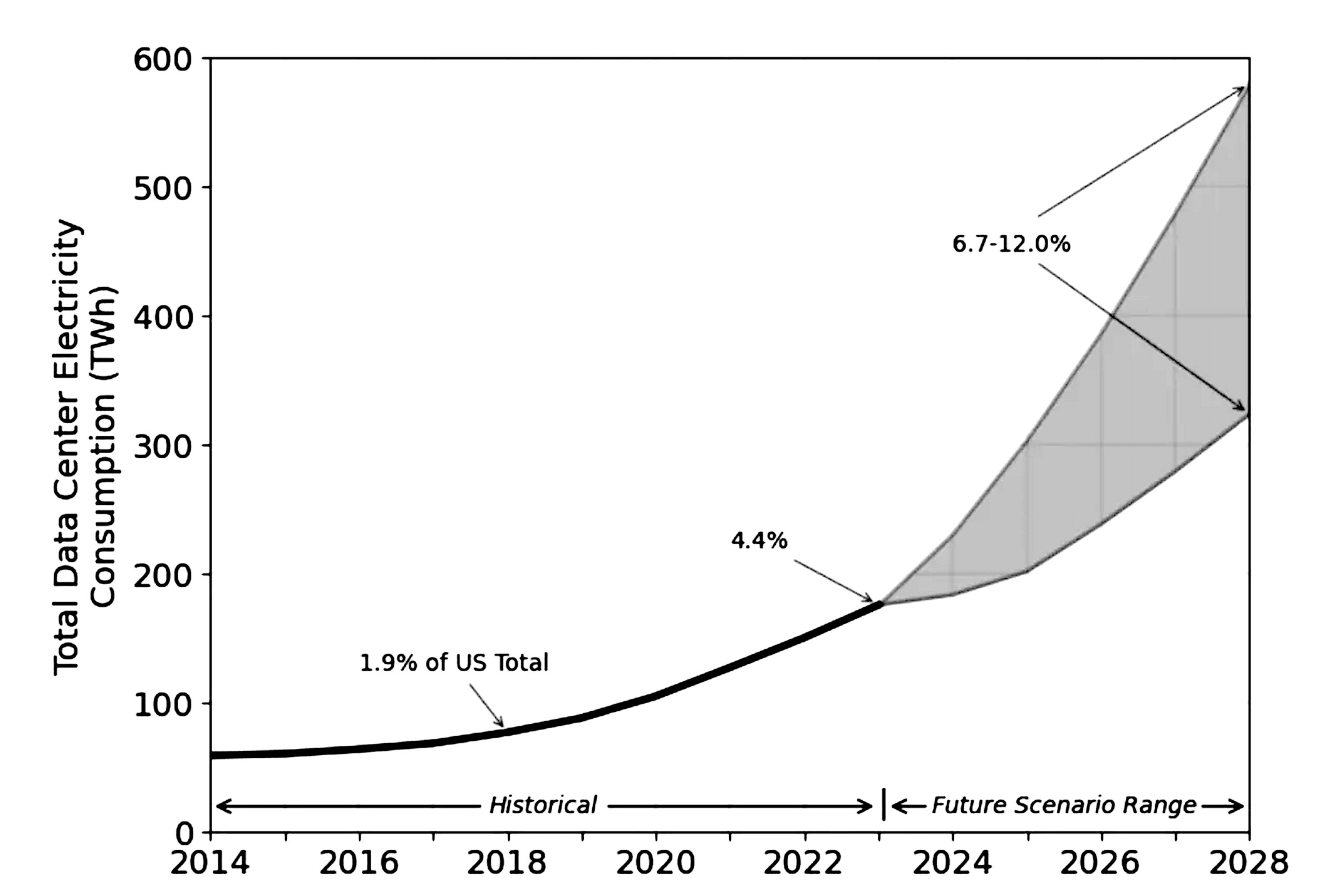
After more than a decade of relatively flat electrical demand in the U.S., AI queries, digital streaming, bitcoin mining and other computations — along with systems to cool hard-working servers — increased to account for 4.4% of all U.S. electrical consumption in 2023, according to the Department of Energy’s 2024 Report on U.S. Data Center Energy Use. The report estimates that by 2028, those computations will account for 12%.
The demand, whether it’s 50% or 100% — or more — of current electricity output in Wyoming and the surrounding region, is likely to stress regulatory safeguards and, depending on how the systems are designed, water resources and air quality.
State’s efforts
The Wyoming Energy Authority is leading a stakeholders’ working group to try to find consensus on a wise regulatory approach that takes advantage of the economic opportunities without putting regular electric ratepayers — and their providers — at risk. Most involved agree that the party that places any new cost on the system ought to pay that cost. However, nothing in the realm of utilities and regulation is quite that simple, Wyoming Public Service Commission Deputy Chairman Chris Petrie warned.
Some data developers propose bypassing existing utilities, or only relying on them for backup power, by building their own electric generating facilities, or striking a deal with a “third-party” non-public utility power generator that serves only a handful of data customers. But what happens if those plans go awry?
“One way or the other, it all has to be sorted out so that costs get allocated to the causer, and it’s a super complicated, involved affair when you’re actually doing it,” Petrie testified. “But the concept is that if you cause the cost you pay the cost.”
Wyoming Energy Authority Executive Director Rob Creager said stakeholders in the working group have not yet reached consensus on recommendations to lawmakers for how to potentially tweak Wyoming’s regulatory landscape to deal with the issue. The group plans to bring its recommendations to the Legislature’s Corporations Committee in November.
Meantime, Creager said, Wyoming must grapple with how wide it wants to open its doors to the data industry — accounting for all its benefits and risks.
“What does the state want?” Creager posed to the panel. “What kind of growth and how do we want to supply that growth? Or do we want to supply that growth?”
WyoFile is an independent nonprofit news organization focused on Wyoming people, places and policy.
2 COMMENTS
Comments are closed.




Not all data centers are created equal. Not all data centers are focused on heavy computation loads, making huge energy demands, and producing huge heat dissipation issues. Personally, I’m not sure what environmental impact we’re allowing by channeling that heat into aquifers.
A data center is a temperature controlled, always powered, clean room, where networks and data services meet. Phone Systems – your traditional landline – have always placed their equipment in their “data center”, with no community or environmental impacts. Data Storage facilities, like what’s coming to the Star Valley, will be practically invisible.
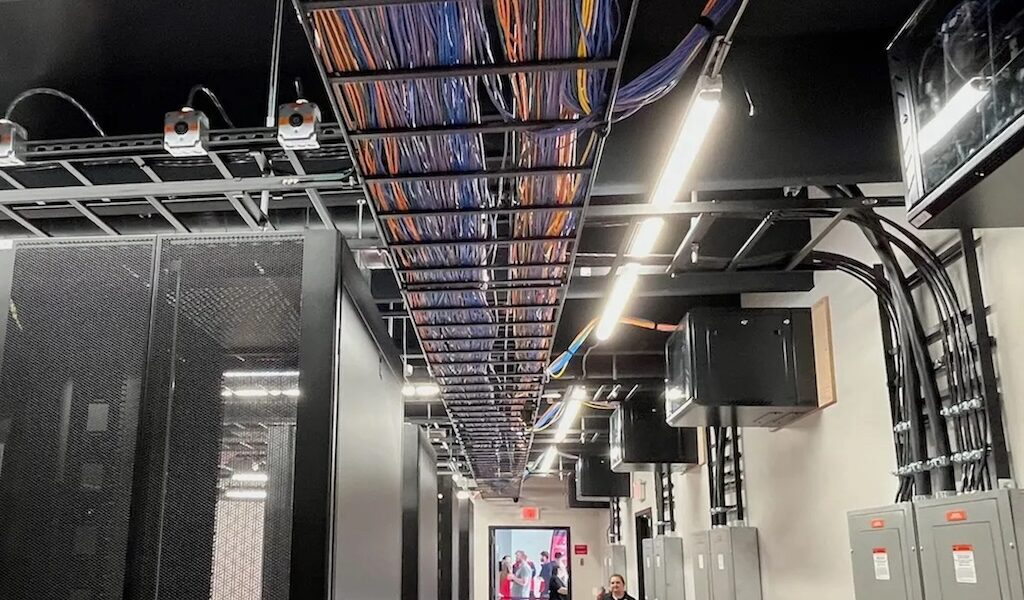
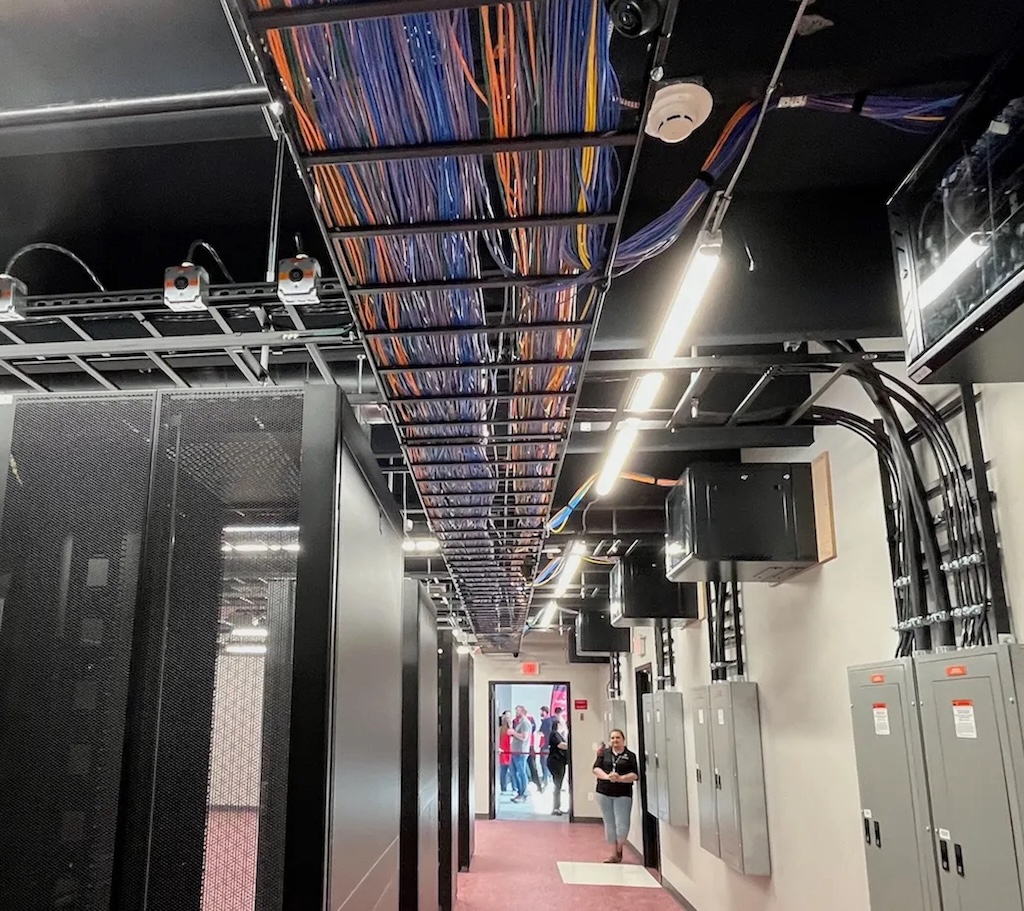
Consisting mainly as a monster offline, data jukebox, the facility is part of a decentralized system to archive backups, content like movies, music, videos, news, and medical records. The active processing power required is roughly the equivalent to a 2 story house, and has battery backup with a solar roof. This is a data center that is a far cry from the picture of this article of an Industrial Computation Center.
Wyoming is rich in energy, and blessed with unpopulated wide open spaces. Let’s not fear monger economic development.
To be fair, there are data centers and then there are DATA CENTERS; that much is true. We’ve had colocation in local and regional Data Centers for decades, as you describe. However, that’s not what is causing anxiety around the explosion of AI data centers.
The AI data centers which are the focus of this story are very different and that difference matters a great deal.
Regulators are right to be gearing up processes for ensuring that the enormous loads from AI data centers do not overload regional systems, including the very data storage facilities you describe.
It’s like powering up a pickup truck vs powering up an 18 wheeler with double trailers. True, both are vehicles, but they have vastly different power consumption profiles. You can’t tell people not to worry about diesel for their farm equipment because a Dodge Ram HD doesn’t consume that much fuel.
You don’t worry about the farm pickups. You do worry about the long-haul trucks pulling double trailers cross country.
With proper planning and investment, the growth can be managed. It’s not going to be easy or pain-free. However, Wyoming is almost uniquely positioned to take advantage of it.
I agree, we shouldn’t fear monger. What we should do is insist on long-term planning that puts the best interest of the citizens of the state in the forefront.