SVI Radio Interview: Kelly Hoffman, Lincoln County Fire Warden on restrictions

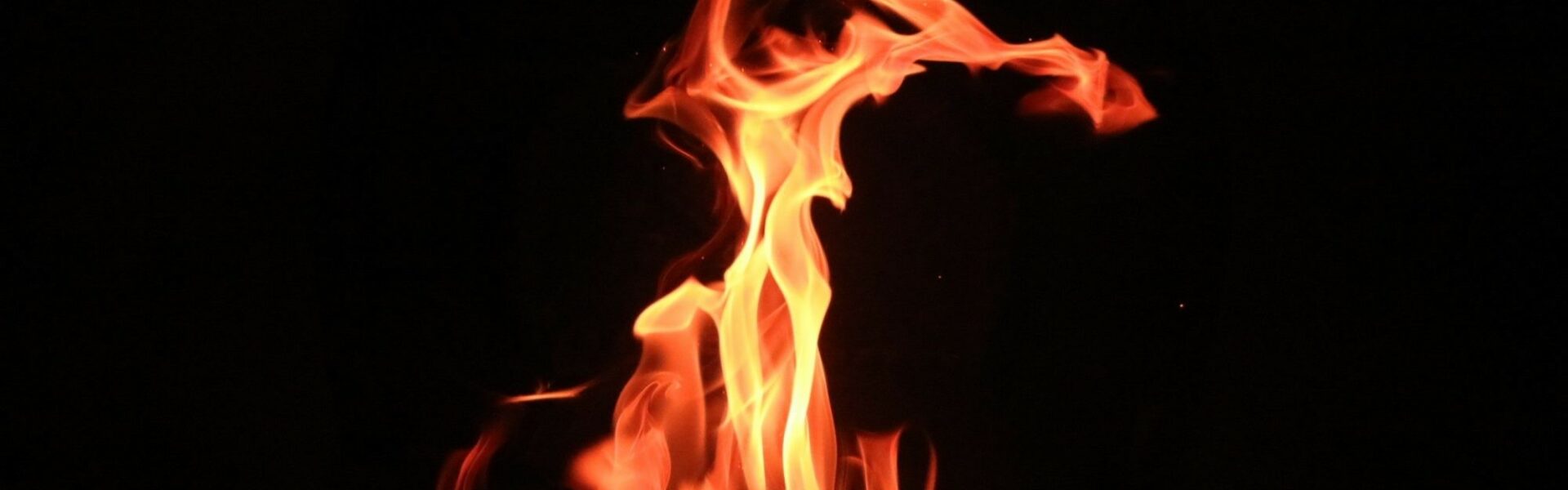
Lincoln County Fire Warden Kelly Hoffman called into the Weekday Wake-Up on Monday, July 13 to discuss the Stage One fire restrictions that go into effect at 12:01 a.m. Tuesday in the unincorporated areas of the county. The restrictions limit open burning and the use of fireworks.
The following transcript of the above interview is AI generated. Minor spelling errors are likely to occur.
(0:00) Lincoln County Fire Warden Kelly Hoffman now joining me over the air to talk fire restrictions (0:05) and the process to do those, an open burn ban and fireworks restrictions go into effect (0:11) tomorrow. Isn’t that right, Kelly? Maybe a good reminder for that. (0:15) Yes, actually it’s tonight at 12.01. That’s when we implemented it was 12.01 of the next day.
So (0:23) yeah, actually tonight that takes effect. So remind us what all is included in that ban that starts at (0:29) 12.01. I’m glad you bring that up. Actually, and that’s why we call them fire restrictions, (0:36) not bans, because what we’re doing is trying to restrict big open burning and fireworks.
(0:42) There’s still a lot of things people can do that can have, if you read that listing, (0:48) campfires contained in an established fire ring, charcoal fires with enclosed grills, (0:54) use of acetylene torches, arc welders in cleared areas, (0:58) and all those types of things. And burning garbage from 6 p.m. to 8 a.m. in places that’s (1:06) allowed with a crate over them to keep the ashes down or the sparks down. So what we’re trying to (1:12) do is keep control of the uncontrollable stuff, like people trying to light off big piles of (1:20) refuge and stuff.
And we’ve all seen the pile out in the field with a shed pushed down and a guy (1:29) sitting there with a garden hose trying to think he’s going to protect that. And those are the (1:34) types of things we don’t want happening. So these are called Stage 1 restrictions.
There’s actually (1:40) Stage 2 restrictions. And those are pretty much a full closure of burning of any kind and even some (1:48) restriction into areas set by permit. So those are pretty extreme.
I think half or more of the (1:55) counties now are in restrictions. And there is one county, I think, that’s actually in Stage 2. (2:00) And I’ve never seen them on our end. And they’re pretty rare.
But they do happen occasionally. (2:08) And that particular part of the state is in a pretty extreme weather pattern as is. (2:15) Sure.
That’s what they are. Kelly Hoppen, Lincoln County Fire Warden with us on the (2:21) Weekday Wakeup. Kelly, I know that before you implement any of these types of restrictions, (2:25) you’re constantly monitoring vegetation and water levels.
And you work closely with the BLM and (2:31) kind of tracking things. And so kind of walk us through the process of what takes place (2:37) before you recommend to the commissioners to put something in place like this. (2:41) Sure, sure.
So we work with our federal partners because we have so much intermixed land (2:48) with them. We do weekly calls with them this time of year to see how everybody’s doing. (2:55) Cameron Field Office does the fuel moisture tests that we rely on.
And they’re heavily (3:01) centered in the south end of the county. But we also monitor a couple of spots up in the north. (3:06) And they, you know, without going into great detail about the fuel moisture levels, (3:14) we have trigger points at what they are.
And the grasses and the brush are the things we’re (3:22) really looking at. They have one hour, 10 hour, and 100 hour and 1,000 hour fuels. And obviously (3:29) that depends on the size of them.
The one hour fuels are all the grasses we see growing. And (3:33) 10 hour fuels are the brush and stuff, three inches or less. And those are the things that (3:39) can really carry fire.
And just because stuff is green, especially this time of year, doesn’t (3:46) mean it’s not burnable. And so there’s always this question of what’s burnable and then what’s (3:52) critical. And we try and wait to pull restrictions in until we get down to critical.
We’re headed (4:00) that way. We’re quite there. The other thing we have to work with is commissioners’ meeting (4:05) schedules.
And so I brought the resolution to them a couple of weeks ago. I said, let’s have it ready (4:14) in case we meet this and have a discussion in your first meeting. And we had a good discussion.
(4:19) You heard it. We had a good discussion with the commissioners and gave them several options (4:25) to do it that day, to do it later, to wait and do it on the 24th or not do it at all. (4:33) And the three of them talked and said, yeah, I don’t think we’re comfortable waiting that long.
(4:38) And so we want to do it on the 14th. So they picked a happy medium in between them. And I’m (4:44) good with that.
And that process is set up in state statute that way. I provide recommendations (4:52) and the commissioners actually pass the resolution. So there’s kind of a check and balance (4:58) there as well.
Kelly, let’s talk more specifically about the fireworks side of this because there’s (5:04) also some Wyoming state statute in place that kind of trickles down to the county level as well on (5:10) when and what can happen with fireworks. Yeah, good point. So back in 1990, (5:19) the state passed a statute that said, so to back up just a second, so the counties (5:27) have historically had the right over the sale of fireworks in the county.
And the use of them, (5:35) you know, towns excluded use of fireworks. So in 1990, the legislature passed a law that said, (5:42) whatever you’re doing right now, because there were counties that had banned the sale of fireworks (5:47) and the use of them. So what county comes to mind, they did theirs like in 1988.
And counties (5:53) like Lincoln that allow the sale and use of fireworks. From 1990 on, whatever you were doing (6:02) had to be now has to be brought forth in a referendum to the voters to change. So in other (6:07) words, if the voters of Lincoln County wanted to ban fireworks, they’d have to get a referendum up (6:13) and take it to commissioners and get it on the ballot.
Gotcha. So that’s why you don’t just say (6:22) at any given time, like, all right, we can’t do fireworks anymore. I mean, that’s kind of (6:26) the process, right? Exactly.
And where that comes from, the reason I can’t do that or we can’t as (6:33) fire wardens is because our state forestry, the board of the Office of State Lands is over (6:45) forestry. And by state statute, I looked it up yesterday. The state statute says the board of (6:52) land commissioners will promulgate the rules for county fire wardens and commissioners on what they (6:58) can ban.
And so it’s in chapter nine of the rules of state land. And so when you see those things (7:04) listed in our fire restrictions, they come exactly from those. Well, nearly exactly from that list in (7:12) chapter nine of the rules of the state land.
So we are bound by the rules of chapter nine of the (7:22) state land board for the way we implement fire restrictions. So what we can and cannot restrict. (7:28) So yes, I cannot just go to the commissioner and say, I want a fireworks ban, and that’s all we’re (7:35) going to do.
I can’t do that. It won’t allow me to do that by state statute. Kelly Hoffman, Lincoln (7:40) County fire warden on the weekday wake up this morning.
So all right, Kelly. So we have these (7:43) stage one restrictions going into effect tonight. What takes place down the road when we get later (7:50) into the fall and what’s the process and what are you looking for when you go back to the (7:55) commissioners and say, okay, I think we can take this off the table now? So we’re and we’re and (8:00) we’re always looking for that opportunity, the first opportunity.
You know, as especially if it (8:06) lasts, we have monsoonal moisture coming, but we also have the problem with monsoonal moisture is (8:11) it pretty isolated and hit and miss and lightning that causes other fires. And when we just for a (8:19) second here, the reason when we talk to like the federal folks and the BLM and the Forest Service (8:24) and stuff, when we’re looking at restrictions, we also look at resource availability and things (8:28) like that. So that if fires, regardless of who starts them, if we get fires, how many resources (8:35) are available.
So, you know, like if we try and help that out by restricting a little bit of activity (8:41) because to not have the human cause stuff. So we just have to deal with the natural stuff. And (8:47) you know, sometimes that’s plenty as it is.
So anyway, that’s where that goes with that. But we (8:53) will look at these fuel moisture levels as we get into probably the middle of August from there on (9:00) in through September, we know as the nights get cooler, the days start getting a little shorter, (9:06) the fuel moisture starts to recover, even though the fuels are cured. And that’s the other thing, (9:10) you know, we talk a lot about the stage of growth of the fuels in the spring, when they’re really (9:15) green, they’re really hard to burn, even though they’re green right now, they’re, they’re curing (9:19) out and they can still, we had one in Cokeville a week or more ago where the power line broke by (9:26) the railroad dropped down in some 16, 18 inch green grass and it burned an acre of it before (9:31) we got there and put it out.
So green grass will burn this time of year once it has a source. (9:38) And so we look at those fuel moistures, we look at the weather conditions, you know, if we get (9:44) enough rain and moisture and the temperatures cool down, we will, we will look for the first (9:49) opportunity to pull them off. We don’t like hanging on to them, especially in the hunting season and (9:53) all that.
It just, at that time of year, it just doesn’t make a lot of sense. There, there have (9:57) been rare occasions we have had to because of the extreme weather, but hopefully that won’t be the (10:02) case this year. Well, Kelly, appreciate your time.
Thanks for the, the inside and updates on (10:07) everything. Anything else we missed that you’d like to mention while we have you today? No, (10:12) I don’t think so. I just think we need to remind people to be safe and respectful with fire and (10:18) with their neighbors and what they’re doing.
And, and that goes a long ways to mitigate these (10:25) problems. If we just use a little common sense and be respectful of others and our neighbors. (10:32) Kelly Hoffman, Leakey County Fire Warden this morning.
And again, those stage one restrictions (10:36) on open burning and fireworks go into effect at 12.01 overnight tonight. Kelly, thanks for your (10:41) time. Really appreciate it.
You betcha. Thanks dude. It’s all part of the weekday wake up this (10:45) morning on SBI radio.