SVI Radio Interview: Rep. Scott Heiner – School Recalibration Update

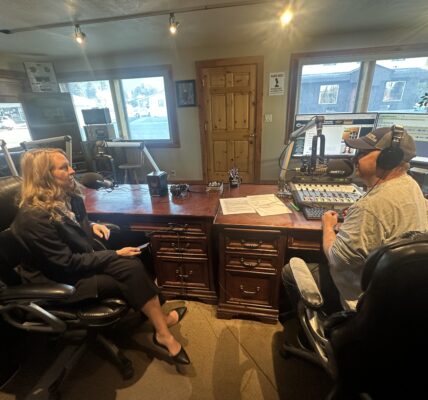
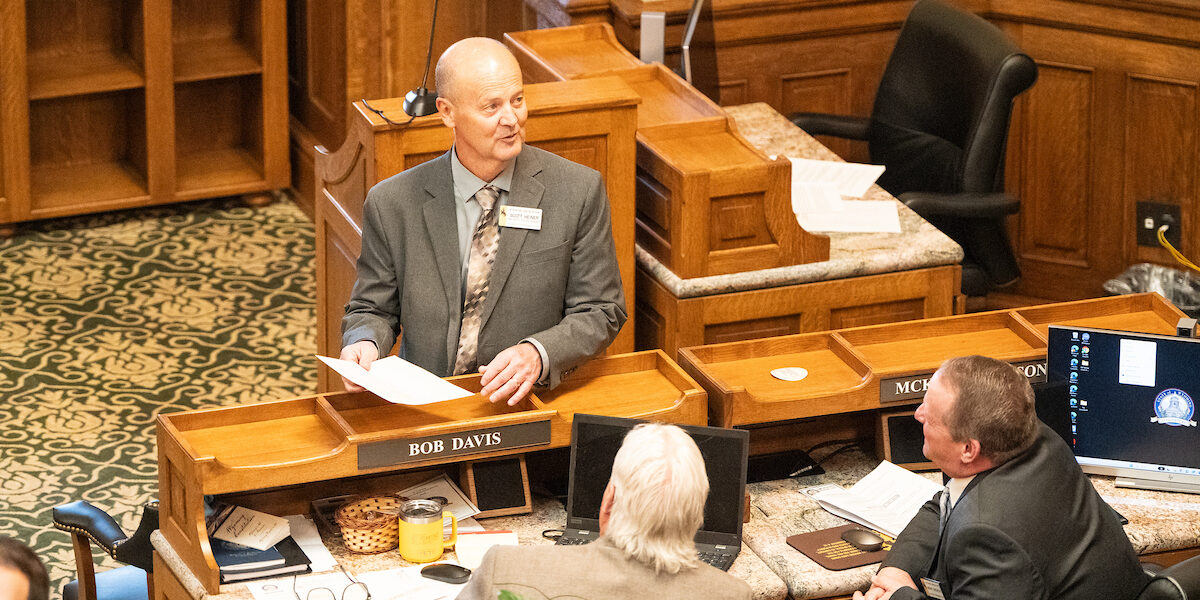
Rep. Scott Heiner (R-Green River) called into the Weekday Wake-Up on Wednesday, August 5 to provide an update on the state’s school recalibration bill following summer committee work.
Heiner is Chairman of the Select Committee on School Finance Recalibration. During the interview he invited listeners to provide feedback regarding the cost of school breakfast and lunch for all students, not just those who need financial assistance, being covered by the state. Something Rep. Heiner said is being considered at the request of a judge. Heiner also requested feedback regarding the use of technology, specifically the amount of screen time, that should be allotted in the classroom. Feedback can be give by emailing Rep. Scott Heiner at Scott.Heiner@wyoleg.gov.
The recalibration committee is scheduled to meet again on August 25 and 26 in Cheyenne.
The following transcript of the above interview is AI generated. Minor spelling errors are likely to occur.
(0:00) Heading into another guest interview segment this morning and joining me live over the phone is (0:04) Representative Scott Heiner from House District 18, of course, out of Green River, covering southern (0:09) Lincoln County within his district. Representative, good morning. How are you doing today? (0:14) Top of the morning, Luke.
It’s a beautiful day in the neighborhood. Thank you for giving this (0:18) opportunity to come on your radio program. Yeah, absolutely.
Appreciate your time as always. And (0:23) we had multiple conversations regarding school recalibration. The committee has since met over (0:29) the summer, so wanted to have you back on to update on what was discussed there.
And, of course, (0:34) Representative Heiner chairs the Select Committee on School Refinance Recalibration. (0:39) So, Representative, just recap what took place in committee when you guys met and what was discussed. (0:46) Okay, Duke, going back a little bit further, recalibration hasn’t happened for 15 years, (0:53) and so the Wyoming Education Association sued the state because those costs were (0:59) not being kept up to current conditions.
And the district judge ruled in favor of the WEA, (1:07) but then we appealed that ruling to the Supreme Court, Wyoming Supreme Court, (1:12) and the Wyoming Supreme Court put a stay on that ruling and said, basically, (1:17) hold on a little bit, let’s see what happens in the recalibration process, (1:22) and then we’ll decide what’s going to happen with this lawsuit. So, in that lawsuit, we covered most (1:29) of the typical elements of recalibration last year, but there were some points that the judge (1:37) ruled that was kind of outside the realm of a normal recalibration. And that’s what we’re (1:43) dealing with this summer.
We’ve had one meeting in Lander already. In August 25th and 26th, (1:50) we’ll have a second meeting. But those elements that we still have to deal with are school safety (1:56) personnel, school nutrition programs, and technology.
And then I’ve added one more to that (2:03) list that we’re working on is activities, because there were some errors, I feel like some errors (2:08) made with the bill last year that created some hardship with our activities. So, with your (2:14) permission, Duke, I’ll go over those four elements where we’re sitting at right now. (2:18) Yeah, absolutely.
That’d be great. Thank you. Okay.
So, school safety personnel, what the judge (2:24) ruled, and again, this has been stayed by the Supreme Court, but he ruled that every building (2:29) should have a safety officer. And so, we’re dealing with that hearing testimony, trying to (2:35) figure out what’s best, because there’s some nuances that we have to consider. If you hire a (2:41) safety officer, you got to provide the gear for them and the training, but do you provide a vehicle (2:47) for them as well? What do you do when that officer is sick or on vacation? What do you do for backup? (2:55) Do you have one in every building? Do you, you know, what do you do in the summertime (3:01) with that officer when school is not in session? So, one of the things that we’re considering is (3:07) rather than dictating, okay, we’re going to put one person in every building, we just allocate (3:12) some funds to each school district and let the local school board decide how to use that.
(3:18) But we’ll earmark that to be specifically for safety, and they can use that to work in (3:25) collaboration with the police force, the town police force or the county sheriff’s office (3:32) to get some coverage in the school buildings. And that way, some of those police (3:39) officers get to have face-to-face moments with the kids and get to know them, and the kids will (3:46) get to know the police officers. So, we’ll leave that, probably leave that up to the school boards (3:51) to decide how to spend that money.
Maybe they want to put in some metal detectors or more video (3:56) surveillance, whatever, but we’ll just dictate that that money has to be spent for safety. (4:02) Now, Representative, along those lines with that, for example, District 2, I know that they (4:10) contract out or are in partnership with the sheriff’s office for a school resource officer, (4:16) and they kind of work it through in partnership that way. I assume this would still allow for (4:20) that to happen? And that’s the way I’d like it, (4:23) in my personal opinion, that’s the way I see this going.
Let them contract out with their local (4:30) police force, and so you have coverage, and then the police force can rotate different people (4:35) through the school so that the students get to know those police officers, and the police officers (4:43) get to know the students, and so they’re not so distant. And then they can have coverage with (4:50) different people and training, and, you know, we’ve got to have somebody during the activities (4:57) after school hours, so the school board will have to decide that, but I think every school (5:03) district is going to be different, and so from a state perspective, that would be hard for us to (5:09) say, okay, we’re going to do this, and all school districts will do the same. (5:14) Representative Scott Hiner, House District 18, with the school recalibration update with us (5:18) this morning.
Representative, continue with those other points. (5:21) Okay, next one is school nutrition. The judge said that we need to provide (5:26) meals for all students, whether they are disadvantaged or not.
Right now, we pay for (5:32) meals for low-income students from families that have a hard time paying for the meals, (5:40) but what the judge has said is all students need to be paid for nutrition, and that’s not only (5:46) for lunch, but breakfast as well. So we’re struggling with that one a little bit, Duke, (5:52) because most of our school districts don’t follow the USDA plan. The federal government (5:58) will pay for a lot of these meals if they follow the USDA-recommended guidelines for (6:03) meals, and some of the school districts said, well, the kids don’t like those meals.
(6:08) So as a recalibration committee in Lander, we went and ate lunch with the elementary school (6:16) and had one of those USDA-certified provided meals, and I thought it was very good. It was (6:24) chicken nuggets. They’re not the processed chicken nuggets like you get at McDonald’s.
(6:29) This has to be meat and muscle, and then we had salad and carrot sticks and pickled beets, (6:38) and sitting there with the children, we had a good conversation, and they ate most of the food. (6:46) We’re doing a little research on that. I went to another school district a couple of months ago, (6:52) and I saw the menu for breakfast that they had, and they don’t follow the USDA guidelines, (6:59) but for breakfast, the menu for Tuesday was donut holes and bacon.
So, you know, is that (7:06) a nutritious meal for our kids? I’m not so sure that that is providing the benefit that we’re (7:13) after. So, Duke, one of the questions, one of the asks that I’m going to make is when you post (7:21) this on your website, I would like parents and teachers to comment what they feel would be best (7:29) here. Do we provide nutrition for all, and the state paid for that, or do we continue to provide (7:35) nutrition for those that are in the low-income bracket? So I’d like to hear from the teachers (7:41) and from the parents specifically.
Yeah, absolutely. That’s a great question. (7:46) Okay, the next one is technology.
The judge ruled we should have computers for every student (7:53) from kindergarten all the way through senior and high school, and this stems from COVID when a lot (7:59) of our schools were shut down, and we had federal money, and we provided computers for everyone, (8:03) but now the judge says that’s the new norm. Every student, when they enter the school system, (8:10) should get a computer, and we’ve struggled with this one, too, because, well, we had a (8:17) nationally known neurologist came to Cheyenne and testified that said screen time is actually (8:24) hurting education. Too much screen time is bad, and he showed us the data that the more screen time (8:33) you have, especially the younger ages, their learning test scores go down.
So, you know, (8:42) do we follow what the judge and the WEA wants, or do we start going with science a little bit more (8:49) with that? Sweden actually pulled all of their computers out of their school system over in (8:55) Sweden. For nine years, they had one-to-one computers, and they found out that it just (9:00) wasn’t working very well, so they pulled them all, and the largest school district in the nation, (9:05) the Los Angeles School District, put out some, just this summer, put out some new guidelines (9:10) that severely limited how much screen time younger ages have in school. They only allow (9:17) 20 minutes per day for the younger ages, and then it goes up from there as the students get older, (9:24) but here again, I’d like to hear from the parents.
Do they want more screen time for their children? (9:30) Or do they want less screen time? Do we want to get back to the pen and paper that we used to have? (9:36) And, you know, maybe it’s something in between. Maybe we have little or no screen time for the (9:41) younger ages, K through 3, and then, you know, once you get into high school, you need (9:47) computers. You need to be able to do AutoCAD and some of these learning apps that are on (9:53) computers, but I’m concerned about the lower grades.
Are we trying to put more screen time (10:00) than what is good for those young kids? Again, I’d like to have the comments from the (10:06) teachers and the parents. What would be best for them? (10:09) Perfect. Speaking again with Representative Scott Heiner this morning, House District 18.
He’s (10:14) chairman of the Select Committee on School Refinance Calibration, so getting a recalibration (10:18) update from summer committee work. Representative, of course, the activities funding. We mentioned, (10:23) and we’ve talked about this before, how the new model hurts smaller schools and big districts (10:29) like Cokeville, for example, took a huge cut in activities.
So what’s been the discussion there? (10:35) So, yes, you’re exactly right. The new funding formula actually changes the way we fund (10:41) activities, student activities, and most of the school districts got more money. (10:46) Duke, there’s some school districts that got 25 to 30 percent more money for their (10:52) activities with this new formula.
So those legislators that represent the areas of (10:58) these school districts got more money, they’re hesitant to change anything. They’re saying, well, (11:04) you know, this is actually, we like the new formula. We got 30 percent more money.
We don’t (11:09) want to change a thing. So this is something that it’s not going to be really easy to change, (11:16) but I have talked to these individuals, I’ve talked to my committee members, and they all see (11:21) that, yeah, there’s something that needs to be changed. But we’ve got to figure out a way to do (11:26) this so that all of these legislators will support us.
So you get this group, majority of them, (11:34) getting more activity funding, like, I’ll give you an example. Niobrara got 27 percent more (11:42) money. Uinta Lyman got 26 percent more activity funding.
Mountain View got 18 percent. (11:52) Kemmerer got 7 percent, so not quite as much. But on the other side of the bracket, Afton (11:57) lost 27 percent of their activity funding, and that was very hurtful, especially for Kemmerer, (12:05) or for Cokeville especially.
So what I’m proposing and we are proposing as a committee is we, (12:14) rather than going back to the old formula, which some of these legislators will not go for (12:18) because of that, that they got more money with the new formula, we will do a greater of, (12:24) so you take both formulas, and based on the calculation from the old formula or the new (12:31) formula, take whichever gives them the most activity funding. So that’s where we’re at right (12:36) now is a greater of the two formulas. And I’ve got consensus amongst the recalibration committee, (12:45) and we’re working on that.
One of the other requirements I put in there as we were (12:52) asking LSO to draft the bill is I said this needs to be retroactive to the 2026-2027 school year, (13:00) because we won’t get this passed as law until March of next year. And I said it has to be (13:05) retroactive. And our Wyoming legislative service office looked at me and says, well, that’s never (13:10) been done before.
And I told them, well, we’re smart enough, we can figure out how to do that, (13:16) and they said, yes, Mr. Chairman, we will figure out how to do that. So we’ll make it (13:21) retroactive as well. And when you say make it retroactive, a lot of school districts are going (13:25) into their savings to make things work this year.
When you say retroactive, does that mean (13:31) they get paid back for that, that it will cover the cost of this year? That’s exactly right, (13:37) Duke. We will pay those costs back for this year that they have dipped into their savings to cover. (13:43) Gotcha.
Representative Scott Hiner, thank you so much for the update. You mentioned a lot of this (13:48) committee work happening in June, and you’re meeting again in August, correct, for more (13:53) committee meetings? We have one in August in Cheyenne, and then the last one will be in October (13:59) in Casper. Perfect.
Anything else we missed on this topic you wanted to discuss today? (14:07) So with the activity funding, Duke, this is something that all the legislators are not behind (14:12) on this, are not in favor of changing, because they don’t want to lose the additional funding. (14:18) I have the connections with these legislators. I have built up a good relationship with them.
(14:26) My position as in leadership, I can get this changed. But if I’m not there, I have serious (14:32) doubts that our activity funding will be fixed. I don’t think it will be fixed, and it may hurt (14:39) our local school districts here on the west side of the state.
So I want to continue to be the (14:44) voice for the western side of the state, and I want to get this through to the finish line. (14:49) That’s Representative Scott Hiner, House District 18, this morning on the Weekday Wake-Up. (14:52) Representative, thank you for the update, and we’ll talk again soon.
(14:56) All right. Thank you, Duke. (14:57) It’s all part of the Weekday Wake-Up this morning on SVI Radio.