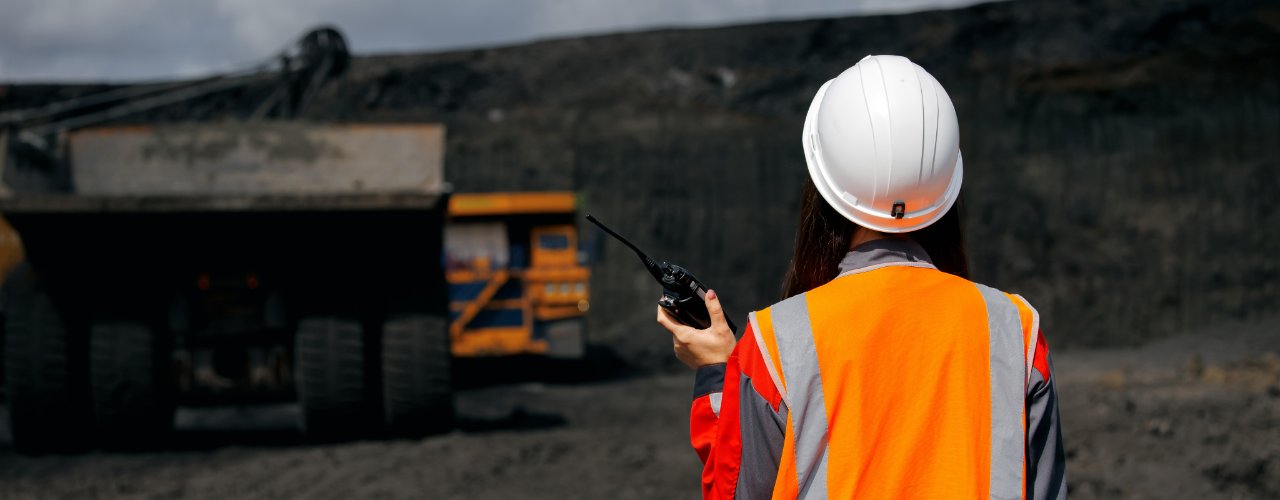

Industrial workplaces can expose employees to moving equipment, sharp materials, excessive noise, airborne contaminants, falling objects, and other hazards. In sectors such as coal mining and natural gas production, those risks can change considerably from one task or work area to another.
Personal protective equipment (PPE) is the final layer between a worker and hazards that cannot be adequately controlled in other ways. OSHA emphasizes that PPE should be used alongside engineering controls, safe work practices, guards, and other measures rather than treated as a substitute for them. Understanding the essential PPE every industrial worker should have can help employees recognize why each piece of equipment matters and why selecting protection for the specific hazard is more important than simply wearing whatever equipment is available.
Hard Hats and Head Protection
Head protection is one of the most recognizable parts of industrial PPE. Hard hats can protect workers when there is a risk of falling or flying objects and, depending on the equipment selected, certain electrical hazards.
The appropriate head protection depends on the work being performed. A hard hat also needs to be in serviceable condition. Cracks, damaged suspension systems, or other deterioration can compromise its effectiveness, so routine inspection should be part of everyday safety practices.
Safety Glasses and Face Protection
Industrial tasks can send dust, debris, sparks, fragments, or liquid toward a worker’s face. Safety glasses or goggles provide an important barrier for the eyes, while face shields may be appropriate when a hazard affects a larger portion of the face.
The equipment needs to match the exposure risk. For example, protection suitable for flying particles may not necessarily be appropriate for a splash hazard. OSHA identifies safety glasses, goggles, and face shields among common forms of PPE and requires workplace hazards to be assessed when determining what protection employees need.
Workers should also keep the lenses clean and replace badly scratched or damaged eye protection. Clear vision is itself an important part of working safely around equipment and moving vehicles.
Task-Appropriate Work Gloves
Hands routinely come into contact with tools, machinery components, cables, rough surfaces, and materials with sharp edges. That makes gloves an important form of protection in many industrial jobs, but no single glove is appropriate for every hazard.
A worker handling sharp material, for instance, might need cut-resistant protection. Someone working with chemicals or heat may require a completely different glove.
Cut resistance also varies among products. Workers and supervisors evaluating hand protection should understand everything there is to know about cut-resistant gloves to better determine how materials, coatings, designs, and protection levels relate to different tasks. Gloves should still be selected according to the employer’s hazard assessment and the specific work being performed.
Fit matters as well. Poorly fitted gloves can interfere with grip and dexterity, while damaged or heavily worn gloves may no longer provide the intended protection.
Hearing Protection
Heavy machinery, drilling, processing equipment, engines, and other industrial operations can produce substantial noise. When noise exposure reaches hazardous levels and cannot be sufficiently reduced through other controls, hearing protection becomes an important part of the safety program.
Earplugs and earmuffs are common options, but workers need to know how to wear them properly. OSHA guidance stresses that employee training should address why hearing protection is necessary, its limitations, when it must be worn, how it should be fitted, and how it should be maintained. Hearing damage can develop gradually, which makes consistent ear protection particularly important even when excessive noise has become familiar.
Protective Footwear
Industrial work can involve heavy objects, uneven surfaces, slippery conditions, sharp materials, and equipment capable of causing serious foot injuries. Appropriate work boots or safety shoes can help address the hazards identified for a particular job.
Features may include protective toes, puncture-resistant components, slip-resistant outsoles, or other task-specific protection. Conditions should guide the selection; footwear that is appropriate in a dry facility, for example, may not provide the same performance in mud, snow, water, or oily conditions.
Regular footwear inspection is worthwhile, too. Worn tread, damaged uppers, or separated soles can reduce protection, making footwear replacement necessary.
High-Visibility and Protective Clothing
Visibility is critical around hauling trucks, loaders, service vehicles, and other moving equipment. High-visibility garments make workers easier to identify against complicated industrial backgrounds and in reduced-light conditions.
Other jobs may require specialized protective clothing because of heat, chemicals, weather, or another identified hazard. Industrial workers should therefore avoid assuming that a standard vest or pair of coveralls is appropriate for every task.
Clothing also needs to fit correctly and remain compatible with other PPE. A safety system works best when its individual pieces can be worn together without interfering with worker movement, visibility, or protection.
Respiratory Protection When Required
Dust, fumes, gases, vapors, and other airborne contaminants can create respiratory hazards in some industrial environments. Respiratory protection, however, is more complex than simply putting on a mask.
The correct respirator depends on the contaminant and working conditions, and respiratory protection is governed by specific requirements beyond general PPE guidance. Employers should identify airborne hazards, apply appropriate controls, and provide suitable respiratory protection when required.
OSHA notes that respirators are PPE but addresses them through specific requirements. Workers should follow their employer’s respiratory protection procedures rather than independently choosing equipment based on appearance or convenience.
PPE Works Best as Part of a Larger Safety System
Having the right equipment is only part of workplace safety. OSHA states that required PPE should fit properly, be maintained in reliable condition, and be supported by training covering when equipment is necessary, how to wear it, its limitations, and proper care.
That makes PPE inspection an important daily habit. Cracked eyewear, worn gloves, damaged hard hats, and deteriorated footwear should not simply remain in service because the equipment is still wearable.
Ultimately, the essential PPE every industrial worker should have is not a universal shopping list. The right combination depends on the hazards associated with each job, which is why workplace hazard assessments, training, proper equipment selection, and safe work practices all matter. When PPE is treated as one part of a broader safety system, each item has a clear purpose: protecting workers from the hazards that remain after other practical controls are in place.