
SVI Radio Interview: Travis Osmond – Lincoln County Weed & Pest

Travis Osmond with the Lincoln County Weed & Pest stepped into the SVI Radio studio on Wednesday, May 6 to discuss the impacts the early spring has had on local vegetation and what noxious weed property owners should be on the lookout for this time of year.
(0:00) Let’s head into the guest interview segment for this morning and joining me in studio today with the Lincoln County weed and pest (0:07) That’s Travis Osmond and we’ll be talking weeds and noxious weeds and everything Travis. Good morning. How are you today? (0:14) Good morning, Dukes.
Great to be here with you. Appreciate you swinging by (0:16) So here we are 1st of May and a few weeks ahead of schedule in our spring if you will a few weeks (0:23) Like we’re two months ahead of schedule. Oh my goodness.
So yeah, we do have of course the the the mild winter and early spring (0:32) So what does that done with with plants and weeds? What have you kind of seen everything blooming a little early, huh? (0:38) Everything is growing right now as if it was June 1st. It’s exactly the same year (0:43) Everything has just moved up a month literally a month. So I mean right now we’re already seeing dires (0:49) Whoa, that’s six to eight inches tall (0:52) Normally we wouldn’t see that until literally the first part of June.
We’ve got thistles coming out of the ground our roadways are (1:01) Need a lot of help. We’re behind there. It’s just it we’re just literally ahead way ahead (1:07) So when we talk what you what landowners should be looking out for? (1:11) I mean dires wode one that of course has been your mortal enemy for a long long time and we start doing the dires (1:17) We kind of late is mid late June (1:19) But it sounds like that one may be bumped up a little this year (1:22) It would not surprise me if we move that up two to three weeks (1:25) I mean, that’s the kind of year we’re in right now.
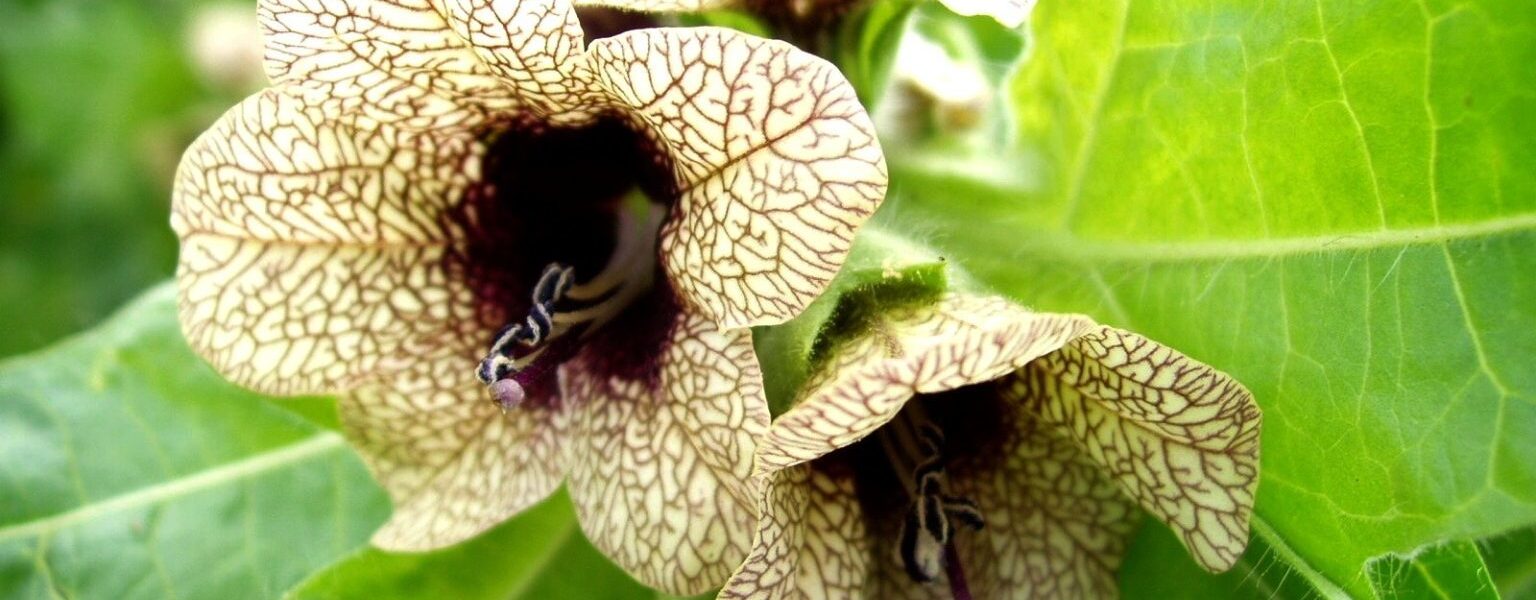
So landowners right now. I mean they need to just be just be (1:31) Cognizant of what’s happening in their yard weeds are best controlled when they’re young green and growing, you know (1:37) Most people what they look out there and they think oh everything’s two to three inches tall (1:41) I don’t really have a problem until it gets to be ten to twelve inches tall (1:44) Then they think oh I have a weed problem, but a lot of times by that time. They’re already starting to set seed (1:49) They start to harden off because the dry and heat and it’s harder to control (1:53) So if you want to get some control in your weeds right now is the time to do it (1:56) so other than dires world, what should people be looking out for right now this time of year, so (2:02) Obviously the thistle species are gonna be a big one right now and they’re gonna be big this year (2:06) Especially if we turn off and stay dry your musk thistle your Canada thistle your bull thistle (2:12) Those are gonna be really big this year (2:15) Another one that’s gonna be really bad is the black henbane (2:19) It we’ve seen we saw that in Thane last year where an individual (2:23) Didn’t realize they had a problem until it was too late (2:25) And then by that time they were three feet tall and about the only thing you can do at that point is a chainsaw (2:30) so again (2:33) If you need help identifying these weeds (2:34) We’re happy to come to your place and look at your place and show you what kind of invasive species (2:40) You’ve got so that you can get on them early (2:43) But it’s just you’ve got to be on top of things (2:45) You got to be watching and seeing what’s what’s going on (2:48) If a plant doesn’t look right and it doesn’t look like it’s supposed to be there (2:51) It’s probably not supposed to be there and let’s take care of it.
There’s lots of different ways (2:56) Herbicides one digging is one. I mean, there’s just so many things that we can do to remedy the problem (3:03) When you talk about the weed and pest role in this it’s it’s to help and inform and educate right local property owners (3:10) You guys don’t go spray the weeds for them on their own property (3:13) That’s something they either need to hire out or do on their own, correct? That’s that’s correct (3:17) We’re here as a support for everybody in Lincoln County. Obviously you can come get (3:22) Pesticides and information from us.
The pesticides are at a discounted rate you can get (3:28) Information is free and and we’re here as a support role to help you take care of your weeds (3:34) Absolutely. Now we live in this AI world and you mentioned identifying weeds (3:39) It’s really easy to just take a quick picture (3:41) Throw it into our good friend chat GTP if you will and it’s it’s pretty easy to identify stuff right now, right? (3:49) Surprisingly, it really is and in fact (3:52) You it’s it’s becoming so easy. I’m getting people now coming in and telling me what plants are (3:58) So it’s it’s it’s made this huge shift (4:01) And in fact, I had one lady come in a couple weeks ago and say this is Oh (4:07) Cervantes Alice alimonious or something like that and I’m like what I’ve never had anybody come in and give me the actual (4:14) Species and genus name of a plant before so obviously when that happens, I know they’ve been reading too much on the internet (4:21) Love it.
Now you mentioned (4:24) As far as control, there’s there’s multiple ways and and a lot of times depends on the on the plant (4:30) I’m the best way to take care of it, right? Yes (4:32) Before you start just whip it around roundup (4:35) It might be good to check in and see what the best way to do it (4:38) Education is key with anything that we do with with our soil and it and we as landowners and stewards of the of our land (4:45) Need to make sure that we’re doing it the right way. We talked about Internet (4:50) Sometimes the Internet is not the best thing to do. For example chat GPT.
It’s a good question (4:56) so I pulled up chat GPT the other day and I said chat GPT does roundup cause cancer and (5:01) I get this. Well, no, but there’s been you know, all these different cases. I’m like, okay (5:07) Well, that’s really interesting because everybody I hear comes into my office tells me that roundup causes cancer (5:11) So then this other lady pulls up this this other search engine.
I don’t know. There’s three or four of them (5:17) I guess yeah, I’m new to this isn’t my kids are teaching me. Yep, and she asked it did route does roundup cause cancer? Yes (5:23) Duh, buh, buh, buh.
So then we said well was has there ever been a ruling by a judge? (5:28) That stated roundup causes cancer. Well, no, I mean, it’s just amazing. So the Internet is still the Internet (5:35) So just take it all with a grain of salt come in and talk to somebody that’s been there and done that before (5:40) Obviously plants in our yards.
They’re different growing habitats (5:44) Different species different growth patterns summer annuals summer biennials summer perennials summer short-lived perennials (5:52) And so the each plant sometimes requires a different strategy to control them (5:57) Pesticides are not always the best solution (5:59) and so it just kind of depends on what you’ve got and how you want to go about treating them and (6:05) Ultimately what your goal is is this a spot there you want to reclaim and put in a nice lawn? (6:10) Is this a horse pasture? (6:11) Is this a place you’re putting your fainting goats a lot of these noxious weeds that we deal with are extremely poisonous to livestock (6:18) and so (6:20) If I think education is the key (6:24) We’re really nice guys at the office. If you want to come down give us a call set up an appointment (6:29) we’ll run out to your place check it out tell you what you got and (6:33) We can go from there. Perfect.
Travis Osmond, Lincoln County weed and pestle right now thistle and black henbane (6:40) Dyer’s woad Dyer’s woad and white top the the the mustard species white top is one that’s new to the upper (6:48) Part of Lincoln County. We only have it in a very few places up here in the Star Valley area (6:53) I can think of four places off the top of my head (6:55) So that’s gonna be a big one it grows about six to eight inches tall has a really nice (7:00) Humble flower shape on the top of it. It’s a perennial very (7:05) Extremely difficult to kill if you try to dig it up you make two plants instead of one plant (7:10) it’s one of those that you just don’t want to mess around with or you will suffer the rest of your life with it and (7:16) Why is it so important that we take care of these well (7:19) We look around us and I mean every day people are moving into Wyoming (7:23) I I used to know my neighbors and now you know (7:26) Everybody’s moving here.
And the reason they’re moving here is because it’s so beautiful and it’s because Wyoming back in 1969 (7:34) Put this noxious weed law in effect that keeps this ground beautiful pristine (7:39) Natural and we protect it from outside invaders (7:42) And so the the citizens that have lived here for for a long period of life (7:48) They they understand their role in keeping their place clean and pristine and beautiful and natural (7:53) But the people that are moving in don’t understand that they think that Wyoming is just beautiful because it’s it’s it’s just not (8:01) California or it’s just not Nevada or whatever it is (8:04) But it is the fact is we work really hard to keep this place beautiful. Absolutely (8:08) Yeah, and so do your part just because you’re not educated is not an excuse not to (8:14) keep your place clean if you come in and buy an acre of ground or if you come in and buy five acres of (8:18) Ground or if you come in and buy 20 acres of ground you are now the steward of that land (8:23) You can’t just let it go wild (8:25) We’ve already messed that part up in Mother Nature’s system (8:28) You need to make sure that you keep the noxious weeds clean because once they’re introduced and once they’re allowed to propagate (8:34) You’ll lose your feed value. You’ll lose your land value.
You’ll lose the opportunity to put livestock on your place. It’ll be (8:42) Hard to duck hunt whatever kind of hunting you like to do because you’re gonna get birds all over you (8:47) It’s just one of those things Duke (8:49) It’s just it’s it’s a good thing that that Wyoming does this to keep the noxious weeds out (8:55) Travis has been leaking County weed and pest (8:57) Travis appreciate your time (8:58) And if anyone has any questions go contact the Lincoln County weed and pest offices in Cokeville or Afton. Yeah, please come see us (9:05) Perfect.
It’s all part of the weekday. Wake up this morning. It’s on the SBI radio network



3 COMMENTS
Comments are closed.