
SVI Radio Interview: Sheriff Johnson & Deputy Hunting – Treatment Court Program

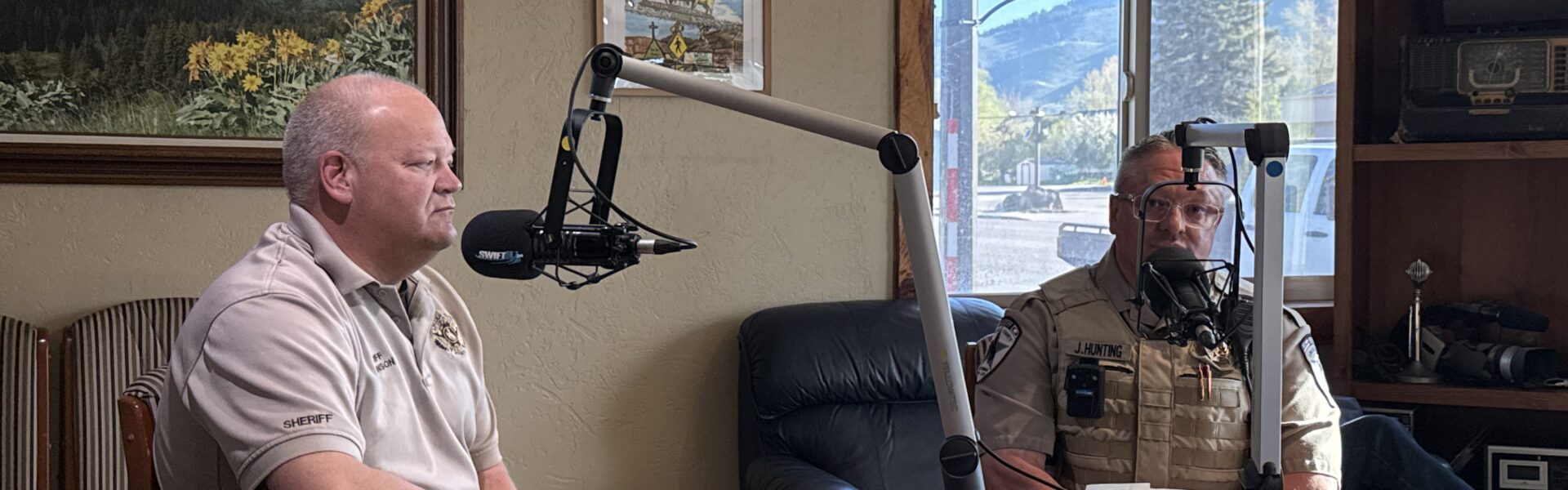
Sheriff Johnson and Deputy Hunting with the Lincoln County Sheriff’s Office stepped into the SVI Radio studio on Tuesday, May 12 to discuss the Treatment Court Program and how it’s helping the residents of Lincoln County overcome substance abuse addiction.
(0:00) Our Valley, Kemmerer and Bridger Valley, thanks for starting your day with the weekday wake (0:05) up on the SBI radio network. (0:07) Heard about you all over town actually. (0:09) 8.35 this morning on SBI radio, Swift 98 and The Spur heading into our first guest interview (0:14) segment this morning in the monthly report from the Lincoln County Sheriff’s Office.
(0:18) Sheriff Shane Johnson joined with Deputy Hunting in studio today to talk about the treatment (0:25) court program. (0:26) Sheriff Johnson, Deputy Hunting, appreciate your time. (0:28) Sheriff, let’s start with you.
(0:30) Tell us what is the treatment court program in Lincoln County. (0:34) Yeah. (0:34) Thanks for having us Duke.
(0:35) So the treatment court program is a program where we are able to address those individuals (0:43) that we’ve run across with possibly a DUI or a conviction for substance abuse. (0:51) We’re able to get them into a program that’s done in-house in the county that gets them (0:57) all the tools that they need on a road to recovery. (1:01) So it’s unique in the fact that we have a Deputy Hunting involved with the judges involved.
(1:07) There’s a counselor involved, High Country has a counselor assigned to it. (1:12) There’s an attorney for the client or the person that’s in treatment court and then the (1:18) prosecutor and it’s actually a team that works together to get that person back on track. (1:25) And it happens over a period of time.
(1:26) I think the Deputy Hunting will talk about it, but I think 13 months is the soonest that (1:31) you can graduate. (1:32) So it’s a serious commitment. (1:34) But for the people who are looking for that structure and for that support, it’s a great (1:40) program to get them back on track.
(1:42) And so we’re pretty proud of the program and the things that we’ve done here in Lincoln (1:46) County with the treatment court program. (1:48) Heavily pushed and I shouldn’t say pushed, but endorsed and supported at the state level (1:54) with the Supreme Court as well. (1:55) Okay, fantastic.
(1:56) So Deputy Hunting, let’s bring you in on this. (1:59) Sorry, I might have you tilt that mic up just a little bit and see if we can, there we go. (2:04) Tell us what your role is with this program.
(2:07) I serve as the coordinator on the team and just like the Sheriff said, it’s a team approach (2:12) and it allows people that have history with drug and alcohol abuse and they’re currently (2:21) haven’t been sentenced. (2:23) It allows them an opportunity to, instead of just jail time, to be at home and still (2:30) have treatment, get them set up with some treatment and have them set those goals and (2:35) then meet with the first phase. (2:37) It’s a five phase program.
(2:39) And with that first phase, they get to meet with the team every two weeks with the judge (2:42) and sit down with us and we get to ask them, how are things going? (2:46) How can we help? (2:47) And it’s really a program, a supervised court program to help them meet their goals in sobriety. (2:54) Yeah, absolutely. (2:55) So I mean, because it helps avoid the revolving door of incarcerate and release, right? (3:01) And I may be good alternative.
(3:03) Yeah, yeah, absolutely. (3:04) So maybe give us obviously, just generically speaking, maybe some some positive experiences (3:10) that you’ve seen with this. (3:12) You know, I’m thankful for the last about three and a half years to to have this experience (3:20) in law enforcement.
(3:21) We get to see a lot of things, but it’s neat to see positive changes, people to make those (3:28) goals and to to meet those goals so that they’re personally in their own personal life with (3:34) their family at work and in the community. (3:37) And that’s also kind of the saddest things when those, you know, people relapse and whatnot, (3:42) but but it’s been some of the neatest things to watch people better themselves. (3:47) Absolutely.
(3:48) Sheriff Shane Johnson in studio with Deputy Johnson or sorry, Deputy hunting in studio (3:53) as well as the Lincoln County Sheriff’s Office. (3:54) So what’s what’s the process look like? (3:56) You mentioned five steps. (3:57) How does it begin? (3:58) And what are those steps that they go through? (4:00) So just like the sheriff had mentioned, for those that have been arrested for alcohol (4:04) or drug violations, haven’t been sentenced, it’s it’s an opportunity for them to apply (4:10) for that.
(4:11) And if they get accepted into the program, it’s a five five phase program and last about (4:18) approximately 14 months. (4:21) But it gives them an opportunity to get set up with treatment and help them if they don’t (4:28) have work. (4:29) We help them find work.
(4:30) If they don’t have their GED, we help them to get avenues to get that. (4:35) But it’s it’s just a wonderful program. (4:37) And it’s supervised, just like it says, there’s mandatory supervision through UAs, ankle monitors (4:44) for alcohol, so we can help them meet those goals.
(4:48) Perfect. (4:48) And and so it sounds like it’s so much more than just getting them clean. (4:53) It’s it’s really helping them get back on their feet, then that’s that’s correct.
(4:57) It just gives them a program to do so. (4:59) And it’s one step at a time. (5:02) Five phases and and it’s not just us.
(5:06) It’s like he said, the county attorneys, the Lincoln County Circuit Court judge. (5:11) He’s the head of our team, high country counseling. (5:17) It’s the whole team effort.
(5:19) And so they’re not alone. (5:20) They’re not doing this alone. (5:22) And that’s kind of the beauty of it.
(5:24) You’re not by yourself. (5:26) But with a team effort, we’re helping them to meet their goals in their sobriety. (5:30) Sheriff Johnson, I’m sure you’ve seen a lot of success stories with this over the years.
(5:34) Yeah, there’s been some I get the opportunity. (5:37) I’m not involved in on a day to day basis, but I get the opportunity to to see benchmarks (5:43) along the way. (5:43) And then of course, when a graduate when there’s a graduation, Deputy Honey and always make (5:47) sure I’m aware of that so I can attend and interact and observe the the person that’s (5:53) that’s graduated the treatment court program and made the changes in their life to be (5:59) able to move on and the support again, it’s it’s it’s neat to see a different setting (6:04) with the judge because a lot of times when you’re in front of the judge, you don’t have (6:08) that interaction.
(6:09) I mean, he’s he’s there to hold you accountable. (6:11) And he is in this case, too. (6:13) But he’s there to encourage you as well and be part of the team that helps you get better.
(6:19) So it’s it’s been a great thing. (6:22) It’s not for everybody. (6:23) This is for people that that recognize there’s an issue and want to get help, then we can (6:28) help them.
(6:28) If the answer for some is jail, and that’s just the reality. (6:33) And we do that, too, by the way, you probably knew that. (6:36) But for the people that want help and the people that recognize that they just need (6:42) a they just need a support system to get there, then then we’re able to provide that through (6:46) the treatment court treatment court program.
(6:49) It’s also I would just mention, it’s supported at the county level and the state level funding (6:56) as well. (6:56) So there’s some sort of a certain amount of funding that comes from the state to help (7:01) us do it. (7:01) And then the rest is provided by the county budget.
(7:04) Do you have any maybe rough numbers or even just estimates of of the percentage of how (7:09) many people graduate from this program that stay out of the system as opposed to those (7:16) who find themselves back in? (7:18) I’d say, from what I’ve seen, just locally, I would say it’s about a 90%. (7:24) You know, you’re always going to have those that obviously relapse and go back. (7:31) But you know, those that I’ve worked with and seen that have graduated, you know, there’s (7:37) a percentage that goes and you know, I’m not have that percentage wrong, but it’s neat (7:43) to see those that continue and carry on.
(7:44) And with the things that the goals that they’ve made, and that’s just awesome, awesome to (7:49) see. (7:50) Yeah, significant. (7:51) We number those.
(7:52) We don’t, we don’t just say, Hey, you need to quit doing that. (7:55) We give them all the tools to cope with when they want it when they want to relapse. (8:00) So that’s why the success rate is so high as is part of it is just giving giving them (8:04) the tools to handle it and make themselves more confident and, and be able to make those (8:12) changes in their life to stay clean.
(8:14) So it’s a great program. (8:16) Sheriff, you mentioned at the beginning, this is a program that’s been heavily endorsed (8:18) at the state level. (8:20) So is this something that that kind of started in Lincoln County that’s now being used as (8:23) a model across the state? (8:25) Or how did that come around? (8:26) It’s actually a nationwide program treatment courts are a little different everywhere.
(8:31) But but Lincoln County’s history in the treatment court program goes way back. (8:36) I think we are the second county to start it in the state. (8:40) And I don’t know if every county is doing it.
(8:42) Maybe Deputy honey knows but but I would guess that majority of the counties are the vast (8:47) majority are and in some cases in some of the bigger counties, they have a, you know, (8:52) several people involved in it. (8:54) And again, what our our goal is to get people healthy and help them contribute to the community. (9:02) You know, it’s it’s not for everybody for someone that’s ready to make a change.
(9:05) We can give them those tools. (9:07) So someone out there listening right now feels like they are someone that they know maybe (9:11) would benefit from this. (9:13) I’m assuming you don’t have to get arrested first, right? (9:16) How do you how do you get in the program? (9:18) So they’re welcome to call me up the office 307-885-4955 is my desk phone, give me a call.
(9:24) I can see if you know, help them with the application process and they can apply for (9:30) it. (9:30) But yeah, it is for those that are currently do have a history with drug and alcohol abuse, (9:35) and are currently do have a case. (9:37) So perfect.
(9:38) Anything we missed about this program that you’d like to mention? (9:41) We’re just just thankful for the opportunity to be here and give a plug out, you know, (9:46) for this program. (9:47) It’s been here ever since I’ve been here. (9:49) I’ve been here 18 years and I know it was here before then.
(9:52) It is a nationwide program and and we’re doing it here in Lincoln County. (9:56) So perfect. (9:57) That’s Sheriff Shane Johnson and Deputy Hunting with the Lincoln County Sheriff’s Office detailing (10:01) the treatment court program in Lincoln County.
(10:03) It’s all part of the weekday wake up this morning on the SBI radio network.



2 COMMENTS
Comments are closed.